
4 Minutes
When the usual suspects don’t explain a mystery, researchers look deeper. In this case, the suspects were familiar gut bacteria. The surprise was something much smaller — a virus tucked inside those microbes that appears to track with colorectal cancer.
Teams from Denmark and Australia reexamined a long-standing puzzle: why Bacteroides fragilis, a common inhabitant of healthy intestines, keeps turning up in people with colorectal tumours. The bacterium itself is not rare. It lives quietly in many guts. Yet investigators kept seeing it alongside malignancy. What if the answer wasn’t the bacterium alone but a hidden passenger it carried?
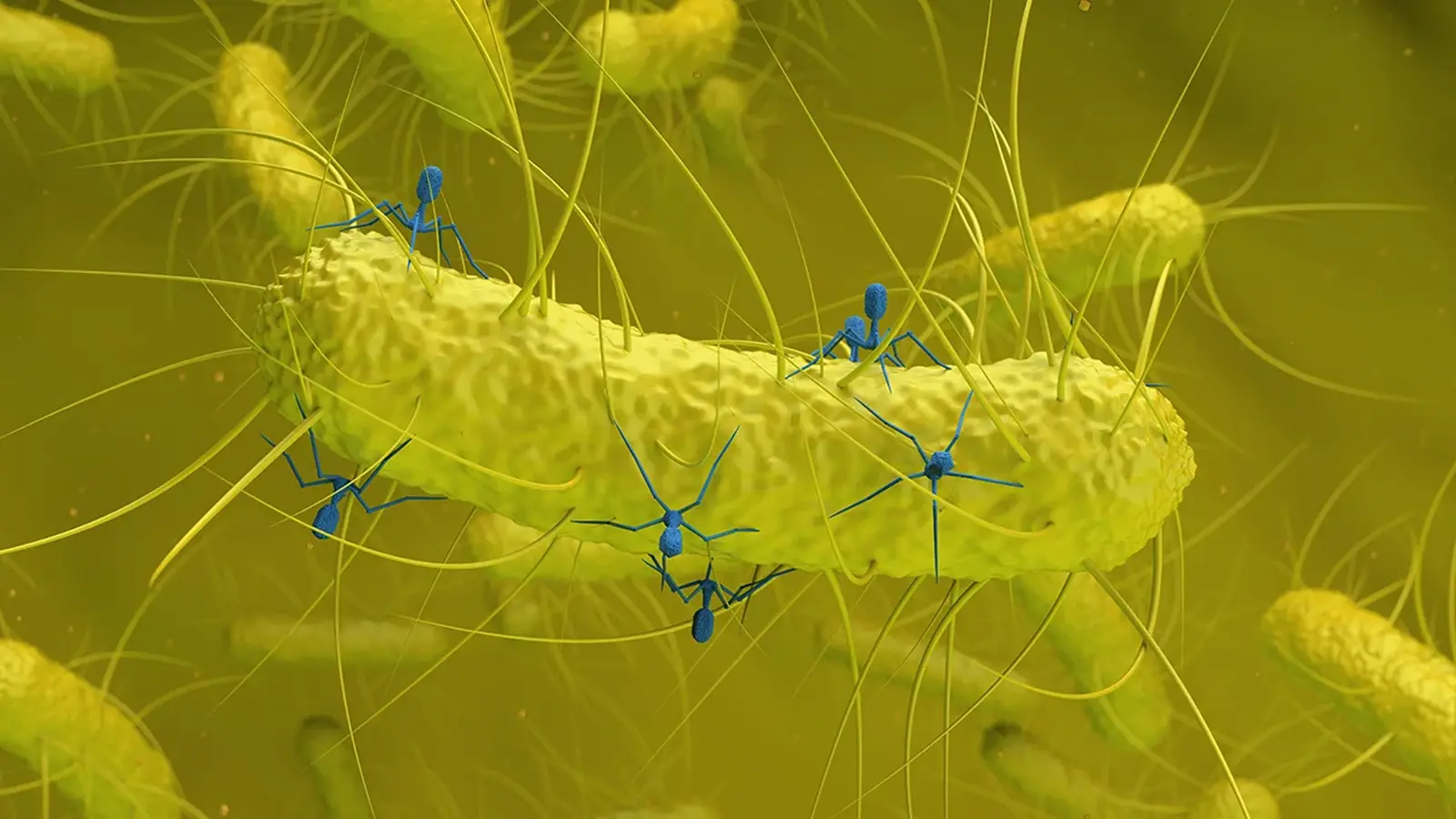
Using high-resolution genetic sequencing on samples drawn from a large Danish population study, the researchers began cataloguing not only bacterial species but the viruses that live inside them — bacteriophages. The result was a striking lead. In people with colorectal cancer, B. fragilis frequently harboured a previously undescribed bacteriophage. Follow-up analysis in a larger cohort of 877 participants confirmed the signal: people with cancer were roughly twice as likely to have detectable levels of this virus within their B. fragilis populations.

'It has been a paradox,' says microbiologist Flemming Damgaard of Odense University Hospital, 'that the same bacterium turns up in healthy people and in those with colorectal cancer. We suspected something else was changing — and we found a virus.'
This bacteriophage doesn't match any well-known viral catalogue. That makes it intriguing — and tricky. Phages are tiny molecular puppeteers; they infect bacteria and can change the way those cells behave, sometimes by turning genes on or off or by transferring genetic material between microbes. Could a phage alter B. fragilis so the bacterium nudges the surrounding tissue toward malignancy? The team cannot say yet.

The study shows a strong association but does not prove cause and effect. That caveat matters. The virus might be an active participant in cancer development, a passive marker of a shifted gut ecosystem, or even a byproduct of tumor-related changes in the gut environment. Teasing apart those possibilities will take targeted lab experiments and longitudinal studies that follow people over time.

Why does this discovery matter? Environment and lifestyle are estimated to account for roughly 80 percent of colorectal cancer risk, and gut microbiome composition is a major piece of that puzzle. Microbial communities can influence inflammation, metabolite production, and immune activity — all processes linked to cancer. Now there’s an extra layer: the gut virome, and specifically viruses that nest inside bacteria, could be shaping those microbial effects.
Studying the gut is like walking through a dense, living library where most of the books have no titles. Researchers have catalogued bacterial species for years. But the pages inside those books — the genetic scripts of resident viruses — have been harder to read. By looking inside bacteria, the team has opened a new chapter.
Practical applications are already on the table. If future work confirms that this bacteriophage reliably signals increased cancer risk, it could become part of noninvasive screening. A stool test that picks up viral signatures inside B. fragilis might flag people for closer surveillance long before symptoms appear. That is speculative today but promising.
There are hurdles. Phage–bacterium interactions are complex and context dependent. Lab studies will need to show whether the phage changes B. fragilis behaviour in ways that promote tumour development — or whether tumours create an environment that simply allows the phage to thrive. And even if the phage plays an active role, translating that knowledge into therapies will take time.

For now, the work — published in Communications Medicine — widens how researchers think about microbial contributors to cancer. It also offers a reminder: sometimes the key to a big health question hides in small places. The next step is to figure out whether the virus is a villain, a witness, or a red herring — and how that knowledge might be used to prevent or detect colorectal cancer earlier.

Leave a Comment
Comments (2)
Interesting find, feels a bit overhyped. Phage might just thrive in tumor guts not cause it. Lab tests, animal models first pls
wait, a virus inside B. fragilis linked to colon cancer? sounds plausible but also could be just a marker. need time, longitudinal work pls