
5 Minutes
Imagine pointing a camera into the crowded heart of the Milky Way and suddenly finding a treasure trove of worlds you never knew existed. That is the promise hanging over NASA's Nancy Grace Roman Space Telescope: not a trickle, but an avalanche of exoplanets from regions we’ve barely explored.
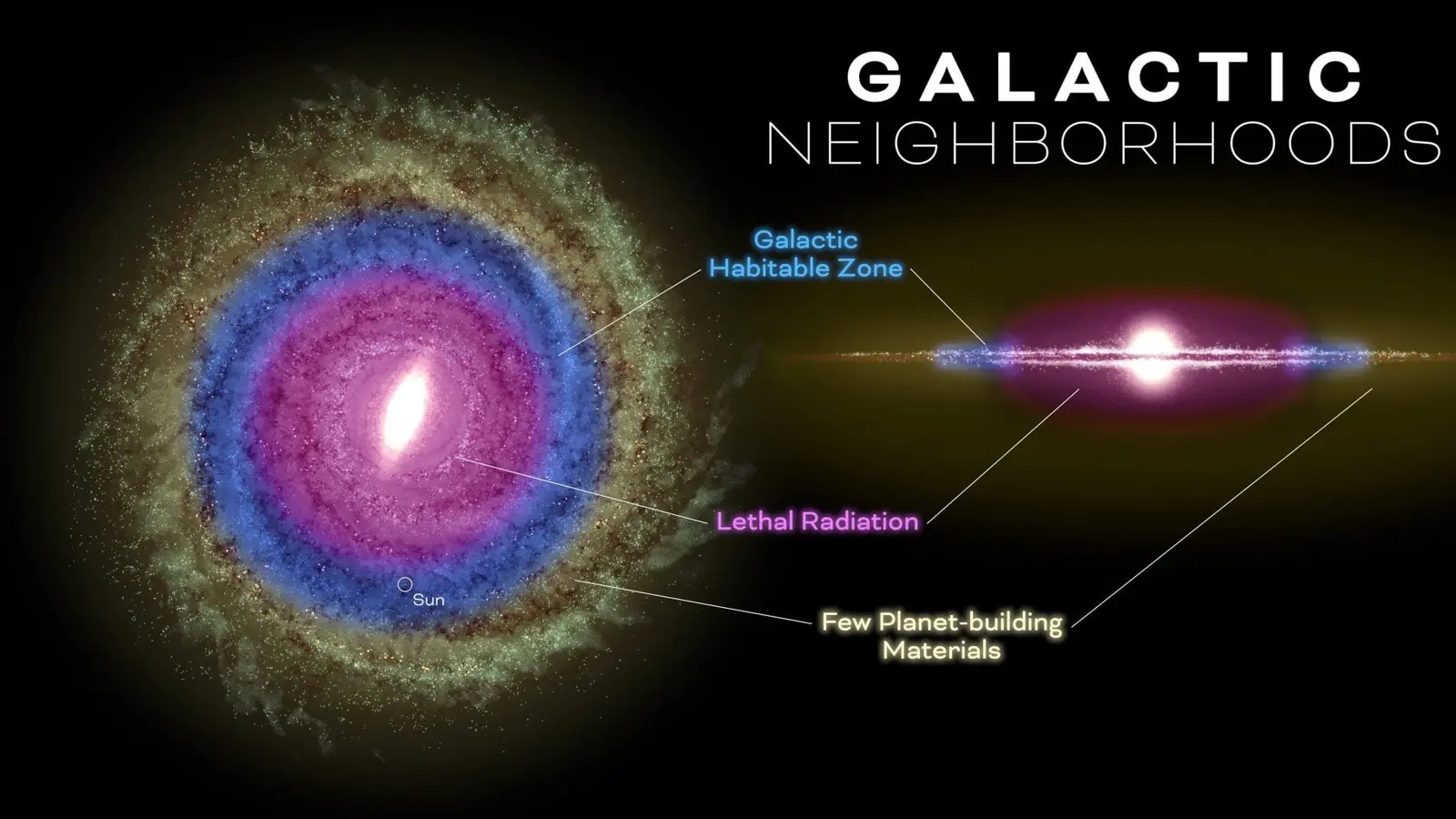
Why does this matter? Because almost all of the nearly 6,300 exoplanets discovered so far orbit stars in our local stellar neighborhood. Roman will break that pattern by staring much farther across the galaxy, through the dense stellar thicket of the galactic bulge and out toward the far side of the Milky Way. The payoff is more than numbers. It’s a chance to see how planet formation changes in different galactic habitats—places richer in heavy elements, places battered by intense radiation, places with very different stellar histories.

Roman will watch millions of stars. It will look for two subtle signatures of distant planets: tiny dips in starlight when a planet transits its star, and ephemeral brightening caused by microlensing, where a foreground star and its planets bend and magnify light from a background star. Each technique catches different kinds of planets. Transits are ideal for hot, close-in giants that eclipse their stars often. Microlensing is uniquely sensitive to planets far from their stars—cold worlds in wide orbits, even planets as small as Earth or Mars, and objects lurking in the star’s habitable zone that other methods often miss.
Roman could add roughly 100,000 transiting planets and more than 1,000 microlensing detections to our catalog, transforming the demographic map of worlds across the Milky Way.

There’s a larger narrative running underneath the detection tallies: chemistry and history. Stars nearer the galactic center tend to be richer in elements heavier than hydrogen and helium—the building blocks of rocky planets and gas-giant cores. Farther out, on the spiral-arm fringes where our Sun sits, stars are metal-poor in comparison. Those differences influence the kinds of planets that form, their sizes, and perhaps even their architectures. In short: place matters.
Roman’s survey of the galactic bulge will probe regions where stellar density, metallicity, and radiation environments differ drastically from the solar neighborhood. Will planets be bigger there? More numerous? Scarcer? The telescope won’t answer every nuance, but by sampling millions of distant stars it will let astronomers compare entire populations—statistical weather rather than single-case studies.
.webp "NASA Confirms 6,000 Exoplanets: Mapping New Alien Worlds")

There’s also an atmospheric angle. Roman isn’t a replacement for telescopes like James Webb when it comes to fine-grained chemical fingerprints, but it has an important, complementary role. The telescope’s infrared instruments will capture secondary eclipses and phase variations of thousands of transiting worlds—especially hot Jupiters—revealing temperature contrasts between day and night sides, hints of winds, and broad patterns in atmospheric behavior across a massive sample. Think of Webb as a detective interrogating individual suspects; Roman will be the census taker collecting trends across a city.
And the techniques themselves will open doors to objects we’ve barely glimpsed. Microlensing can reveal free-floating planets, rogue worlds untethered to a host star, and it separates a planet’s gravitational signal from that of its star—allowing detections of low-mass planets at large separations. Those are the kinds of systems that resemble our own solar system more closely than the hot, compact systems many surveys have favored.
Preparing to process the flood of data is already a major effort. Teams are building synthetic datasets, running simulations, and training machine learning pipelines to sift real signals from impostors. The goal is to be ready the day Roman’s images begin to stream back. And because all Roman data will be released publicly, professional astronomers and citizen scientists will be able to dive in together. Expect surprises. Many of them.

There’s a historical echo to this mission. The Kepler Space Telescope changed everything by showing that planets are common—more common than stars. Kepler taught us to expect variety. Roman will take that lesson deeper and farther, into galactic neighborhoods Kepler never saw, watching roughly 100 million stars in the bulge and beyond. If Kepler was the revolution in local planetary census, Roman may well be the expansion of that revolution into the wider Milky Way.
What will we learn about our own origins? Our solar system sits where it does now, but stellar chemistry hints that it may have formed nearer the galactic center and migrated outward. By comparing planet populations across regions with different chemical fingerprints, Roman will help test theories about where solar systems like ours are likely to form, and how common—or rare—our path might be.
In practice, this means new kinds of follow-up science: targeting intriguing Roman finds with high-resolution telescopes, using statistical samples to refine models of planet formation, and expanding atmospheric studies beyond a few marquee targets to thousands of worlds. The telescope arrives not to close a book, but to blow the dust off entire shelves we hadn’t opened.
Roman’s mission will not only amplify our planetary census; it will rewrite questions about where planets live, how they form, and how they behave when bathed in different galactic conditions. The first data will be a deluge—and for those who watch the skies, the best part will be sifting through it in real time, looking for the unexpected.

Leave a Comment
Comments (2)
Hmm, 1,000 microlensing detections sounds great but is that realistic? dust, blending, selection bias... if they're off by 10x that's huge. curious tho
Whoa, Roman could map 100k transiting planets across the bulge? Mind blown. If microlensing finds rogue Earths too, that'd totally change the stats. Hope the pipelines cope