
4 Minutes
Imagine a factory that learns. Fast. It doesn't just follow a checklist — it reasons, adapts and reconfigures itself as parts arrive, machines age, and customer orders change. That is the promise behind the new collaboration between NVIDIA and LG: a network of AI-first factories and data centers designed to accelerate robotics, autonomous systems and cloud GPU services.
The deal pairs NVIDIA's deep strengths in simulation, GPU compute and robotics software with LG's decades of manufacturing know-how and consumer reach. On paper it sounds like a simple match. In practice it's a push to rewire how products are designed, tested and delivered — from smart appliances to home robots and mobility platforms.

At the heart of the effort are three practical moves. One: build high-performance compute hubs that give LG teams the power to train large AI models and run physics-accurate simulations. Two: use those simulations to create high-quality synthetic datasets so robots can learn without breaking real equipment. And three: fold digital twins and automation into production lines so engineers can trial changes virtually before touching the hardware.
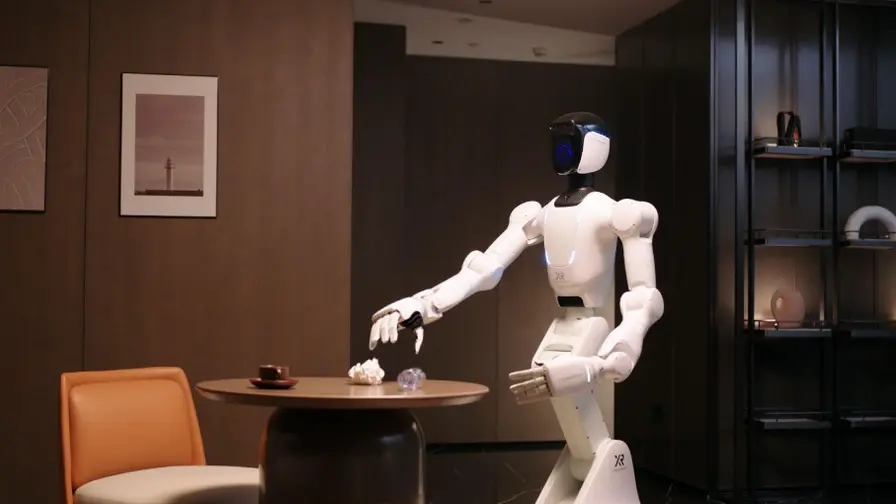
LG is already prototyping the concept with household robots like CLoiD. Those machines get smarter not just by collecting real-world experience but by running millions of virtual trials using tools such as Isaac Sim and Isaac Lab. Simulation compresses time. It exposes edge cases you might never see in the physical world. It is how a robot learns to handle a fallen glass or a snagged curtain without damage.
Critical to those simulations are models such as NVIDIA's Isaac GR00T and the broader NVIDIA Cosmos toolset. These aren't marketing names; they're engines for teaching robots to perceive and plan in ways closer to human reasoning. When you combine simulated sensor data with realistic physics and terrain, the training data becomes far more valuable than raw footage from cameras alone.
LG CNS — LG’s IT and systems arm — is building the software stack that will make this capability accessible on factory floors and logistics centers. The idea is to lower the bar so companies can deploy AI-powered robots without becoming machine learning specialists. That means modular platforms and interfaces tuned for operations teams rather than research labs.
Another layer of the plan is the use of digital twins at full factory scale. Think of a virtual twin that mirrors an entire production line: conveyors, robots, human stations, and environmental conditions. Engineers can iterate in a perfect replica. Break it. Fix it. Roll the update to the real world only when the model proves robust. This reduces downtime and reduces costly trial-and-error on the shop floor.

Then there is the physical infrastructure. NVIDIA and LG plan to build data centers and manufacturing sites aligned with NVIDIA DSX standards, stacking the latest GPUs into efficient clusters that rely on advanced liquid cooling. High compute density with energy-conscious design. That combo matters: training large models demands power, and running fleets of simulated scenarios requires steady thermal management to keep hardware reliable.
Why does this matter beyond factories? Because the same pipelines that teach a vacuum robot to navigate a cluttered living room will teach an autonomous vehicle to merge into traffic, or a logistics robot to pick fragile goods. Synthetic datasets from simulation bridge the data scarcity gap that often slows robotics projects. With better training data, deployment cycles shorten and capabilities leap forward.
There are obvious risks. Overreliance on simulated behavior can miss real-world quirks. Integration across hardware, software and supply chains is messy. Still, pairing LG’s manufacturing scale with NVIDIA’s simulation and GPU stack reduces many of those frictions. The partnership aims not just to pilot technologies but to make entire business units AI-native.
So what should we watch for next? Expect to see deeper integration of NVIDIA's robotics platform into LG's product lines, more centralized GPU farms tailored to industrial workloads, and pilot factories that showcase fully automated supply chains — from procurement to delivery — driven by live data and continuous simulation. The result could be factories that think on their feet, and products that learn before they leave the line.
The quiet hum of servers and the soft whir of robot arms might soon be the sound of manufacturing catching up with the digital age.


Leave a Comment
Comments (2)
Nice concept, but is simulation enough? Real world quirks, supply chain, human ops — sounds a bit overhyped, prove me wrong.
This is wild, factories that learn? ok big power draw but vacuums that actually learn. If LG NVIDIA pull it off, chaos & awesome. Hope they handle quirks tho