
4 Minutes
Minimal changes, familiar performance: spy shots of the 2028 Cayenne Turbo E-Hybrid
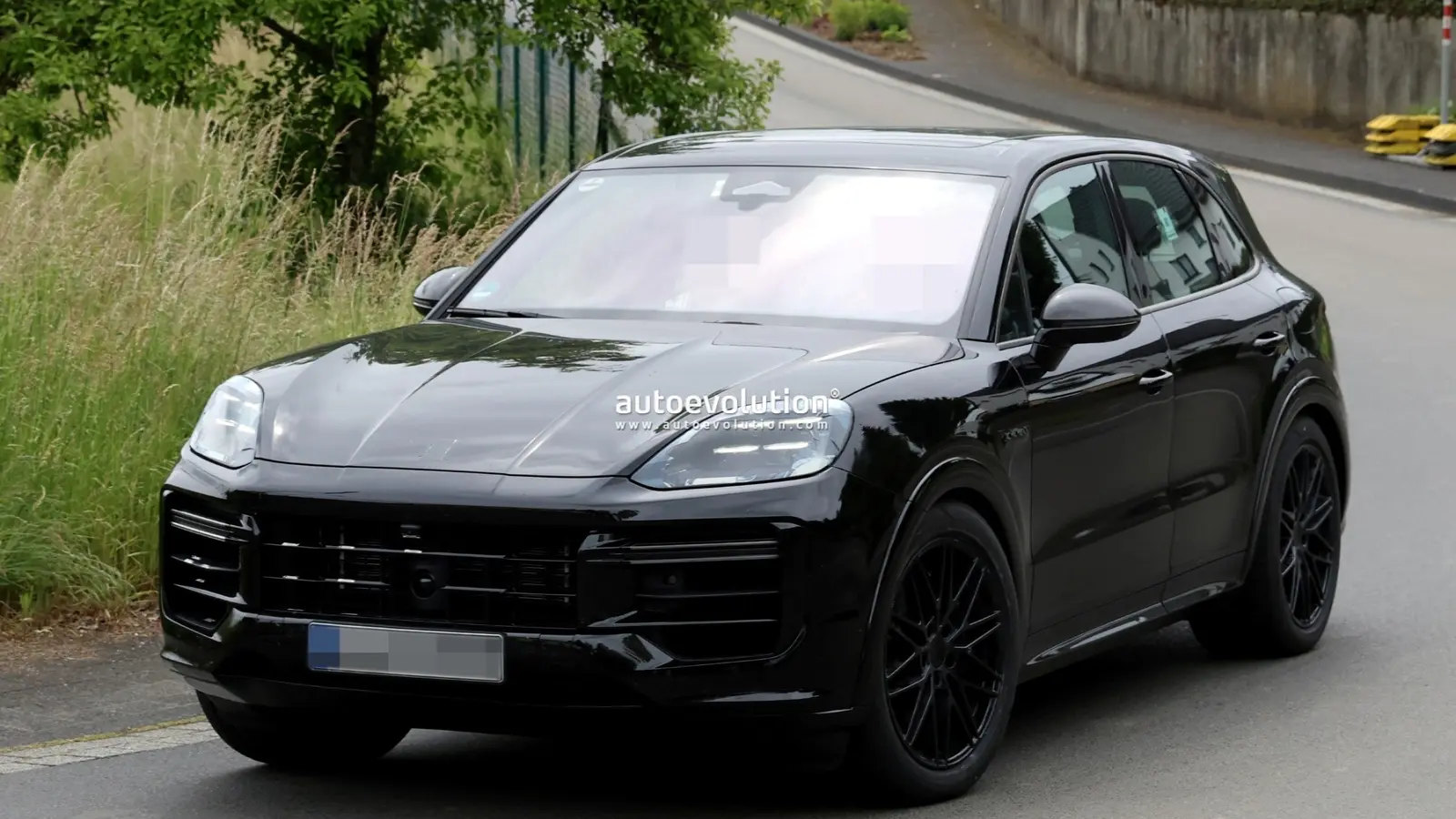
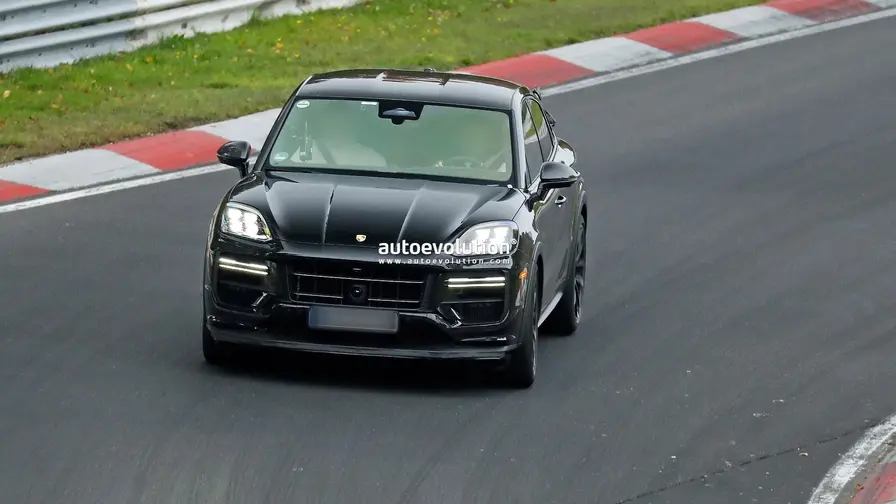
Spy photos of a lightly camouflaged Porsche Cayenne Turbo E-Hybrid prototype reveal what looks like a very subtle second facelift for the current-generation Cayenne. Spotted in near-production trim, the test mule gives away only a few details—enough to show Porsche is evolving the model, not reinventing it.
What the camo hides (and what it reveals)
Only specific areas wear camouflage: the front and rear lighting clusters, parts of the front grille and bumper side intakes, plus the rear bumper corners. All exterior badges, including e-hybrid emblems on the front fenders, are masked. The prototype rides on black multi-spoke wheels and displays slightly updated internal graphics for the headlamps.
From these clues, Porsche seems to be nudging the combustion-powered Cayenne closer to the visual language of its full-electric sibling. Expect refinements to the radiator grille and side intakes rather than a wholesale redesign. Those design changes likely serve a dual purpose: aesthetic alignment with the electric Cayenne and practical upgrades to meet upcoming emissions and particle rules.

Euro 7 and powertrain updates
With Euro 7 testing changes arriving, manufacturers are retooling combustion engines to comply with stricter measurement methods. The new rules focus less on lowering absolute NOx figures and more on how emissions are tested, especially during cold starts and particulate output.
Porsche's turbocharged V6 and V8 engines in the Cayenne are expected to be compatible with Euro 7 upgrades. That typically means enhanced gasoline particulate filters and improved catalytic converters to meet the tight soot particle threshold.
There is also chatter that Porsche could migrate from the older MLB Evo architecture to the Premium Platform Combustion used across the Volkswagen Group. If that happens, the Cayenne might adopt Audi-derived mild-hybrid tech, including a 48-volt electric assist, further improving efficiency and responsiveness.

Interior direction: borrowing from the electric Cayenne
Inside, expect the combustion Cayenne to borrow heavily from the high-tech layout of the electric model. The Flow Display—an OLED screen that flows into the center console with an upper information band and lower control band—could be adapted for the plug-in hybrid. Porsche designed this split-screen concept to be used with a wrist rest and an optional passenger display that visually integrates with the center touchscreen.

This interior convergence closes any perceived tech gap between gasoline and electric models and helps unify the Cayenne family while preserving Porsche’s driver-focused ergonomics.
Performance: still the range-topping combustion Cayenne
As of mid-2026, the Cayenne Turbo E-Hybrid is the most potent internally combusted Cayenne offered new. It pairs Porsche’s EA825 twin-turbo V8 with a plug-in hybrid system, producing up to 729 horsepower under ideal conditions—high-octane fuel and a charged battery.
Key performance figures:
- Power: up to 729 hp (with optimal conditions)
- 0-60 mph (0-97 km/h): 3.5 seconds with Sport Chrono Package
- Only the lighter, coupe-bodied Cayenne Turbo GT is quicker, claimed at 3.1 seconds
These numbers keep the Turbo E-Hybrid competitive against other high-performance luxury SUVs, offering both blistering straight-line pace and the drivability expected from Porsche.

Market implications and positioning
The Cayenne remains crucial to Porsche’s global sales mix, closely following the Macan as a top seller. This facelift is clearly strategic: small visual tweaks, emissions-compliant mechanical upgrades, and interior tech transfers preserve the model’s appeal and ensure relevance well into the next decade.
Porsche appears to be taking an evolutionary approach—refining aerodynamics and cooling, tightening emissions hardware, and importing EV-inspired cabin tech—so buyers get the best of combustion performance and contemporary luxury features.
Highlights
- Light camouflage indicates conservative exterior updates
- Euro 7 compliance drives particulate and catalyst upgrades
- Interior to adopt Flow Display traits for a unified cabin feel
- Turbo E-Hybrid remains Cayenne’s peak combustion performance model
For enthusiasts and shoppers, the message is clear: Porsche will keep the Cayenne fresh and competitive without sacrificing the performance DNA that made it a segment leader. The 2028 facelift looks poised to extend the current generation’s life and relevance beyond 2030 while aligning it more closely with Porsche’s electric future.

Leave a Comment
Comments (2)
Euro7 is coming, so yeah upgrades needed. But switching platforms mid cycle? risky move. Audi 48V tech could help mpg, yet will customers notice? curious
Wow, subtle facelift but it hits the right notes. Flow Display in a hybrid? yes pls. Fingers crossed they dont kill the V8 sound with filters… if that's real then wow