
4 Minutes
Volkswagen trims T‑Roc Cabriolet production at Osnabrück
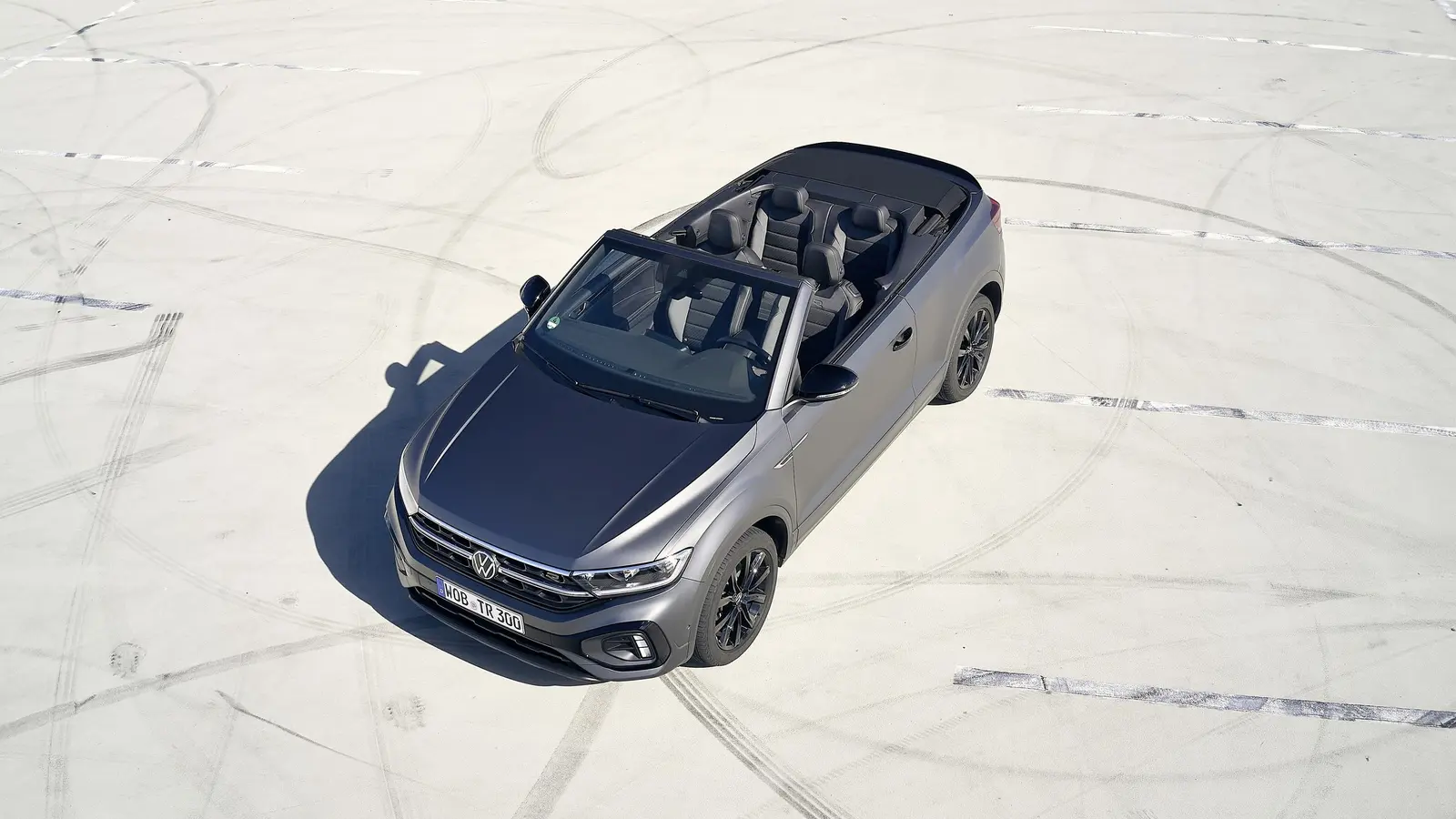
Volkswagen has begun scaling back production of the T‑Roc Cabriolet at its Osnabrück plant in Germany as consumer demand for the open‑top crossover weakens. With a starting price north of €37,560 and shrinking interest in convertibles and roadsters across Europe, the company says the model no longer justifies a full redesign on the MQB Evo platform.

Why production is being reduced
The decision is driven by two straightforward market realities: limited buyer appetite for a premium-priced rag‑top crossover and a long‑term decline in demand for convertibles. Reuters confirmed that Volkswagen will lengthen the factory’s traditional summer shutdown by one week and will add further non‑production days in the months ahead.
Osnabrück currently employs roughly 2,300 people and will effectively move to a four‑day working week as a result of the cutbacks. The T‑Roc Cabriolet is the only vehicle produced at this facility, leaving the site exposed now that volumes have fallen. Company management has not named a replacement model or new manufacturing assignment for the plant beyond the mid‑2027 horizon, the date by which the T‑Roc Cabriolet is expected to cease production unless sales improve.

Plant future: uncertain, with strategic options on the table
Volkswagen executives have reportedly discussed alternative uses for the Osnabrück site, including retooling to serve defense contractors or other security‑sector clients. No final decision had been announced as of June 2026, and a number of scenarios remain possible—from reallocation to other group projects to a longer‑term repurposing of the facility.
Highlights:
- Extended summer shutdown at Osnabrück
- Additional non‑production days and four‑day week planned
- Plant only builds the T‑Roc Cabriolet (approx. 2,300 employees affected)

How this fits into the wider VW Group strategy

The move at Osnabrück is part of broader consolidation within the Volkswagen Group. Volkswagen has already closed operations at the Dresden facility and the Brussels‑area plant that once built Audi’s Q8 e‑tron family. In Germany, the group is targeting a reduction of about 50,000 roles by 2030 as it reshapes costs around shifting market demand and the EV transition.
Despite Volkswagen’s retreat from mainstream convertible crossovers, some premium and niche brands inside the group continue to pursue open‑top models. Porsche is preparing the next generation of the 718 lineup—Boxster and Cayman—which is expected to offer both internal combustion and electrified options. Lamborghini has been spotted testing Spyder prototypes of the Temerario, and Bentley still sells ultra‑luxury convertibles such as the V8‑powered Continental GT Convertible.

Market context and what it means for buyers
Convertibles are no longer mainstream volume drivers. Higher costs, stricter emissions rules, and changing consumer priorities (SUVs, crossovers, electrification) have all pressured demand. For buyers who still want a small convertible crossover, the T‑Roc Cabriolet provided a unique proposition: coupe‑like styling, elevated ride height, and a soft top. Yet, the price point and limited market appeal now make the model a marginal business case for Volkswagen.
Specs and trim overview (marketed trims in Germany):
- Trims: Style (base), Energy (mid), R‑Line (sport‑oriented appearance)
- Powertrains: 1.0‑liter TSI with manual gearbox; 1.5‑liter TSI with 110 kW (148 hp) mated to a DSG

What could happen next?
If demand does not rebound, Volkswagen may retire the T‑Roc Cabriolet ahead of the previously anticipated mid‑2027 end date. Possible outcomes for Osnabrück include a temporary idle period, retooling for a different Volkswagen Group model, or a strategic conversion to non‑automotive production. Any transition will be watched closely by workers, local authorities, and suppliers.
For enthusiasts and potential buyers, the situation is a reminder that niche body styles—especially convertibles—are increasingly concentrated in premium brands rather than mass‑market ranges.
"The adjustment at Osnabrück reflects shifting customer preferences and our need to align production with demand," a company representative said through media channels. The final chapter for the T‑Roc Cabriolet will depend on market response and corporate planning over the coming months.


Leave a Comment
Comments (2)
Is this even true? 4-day week, retool for defense? Smells like corporate spin. Who pays for retraining, local folks??
Wow, didnt expect VW to downsize a cabriolet plant. Sad for workers, and kinda obvious tho. Pricey car, niche market, hope they find new use for Osnabrueck