
3 Minutes
Memory is quietly becoming the bottleneck in the race for faster AI inference. SK hynix just moved the needle — shipping samples of its new HBM4E to partners and turning up the pressure on memory bandwidth in accelerator design.
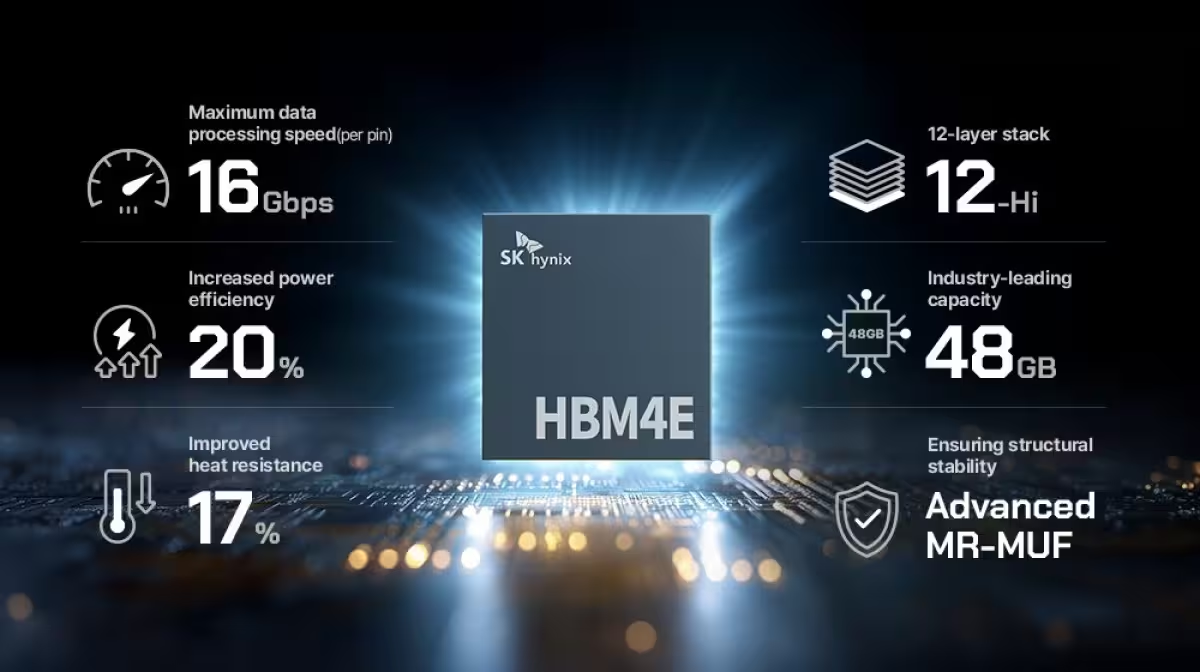
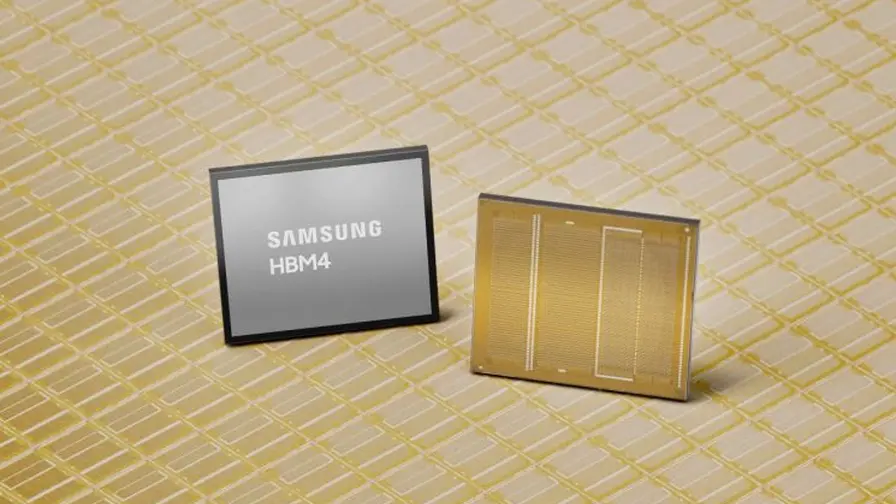
Short story: it's faster. SK hynix's HBM4E hits 16Gbps per pin, up from 10Gbps in the earlier HBM4 spec. Samsung, not to be outdone, began sampling a 14Gbps design about a month earlier, but SK hynix’s jump is notable because performance gains often come with painful trade-offs. Not this time.
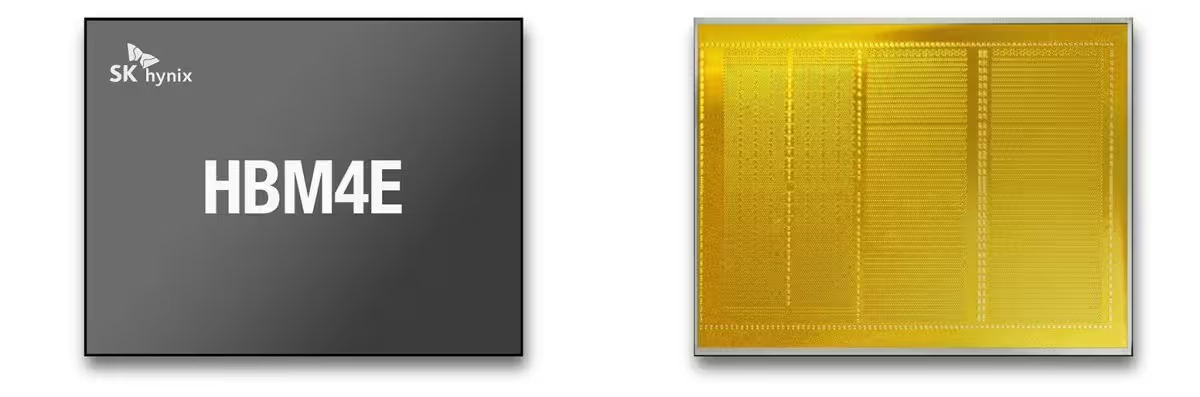
SK hynix’s HBM4E reaches 16Gbps per pin and 48GB per 12-die stack.
The company stacks 12 dies into a single package, yielding 48GB per stack. That matters because most AI accelerators don't rely on just one stack; they stitch multiple HBM stacks together to feed massive on-chip matrices. More capacity per stack simplifies board design and reduces the packaging complexity for dense accelerator modules.
Power is where this generation makes a pragmatic statement. SK hynix says HBM4E is roughly 20% more power efficient than the previous HBM4. Improved efficiency is the unsung hero of AI deployability — you can add bandwidth, but if you can't shed the heat, practical gains vanish. SK hynix uses a Mass Reflow Molded Underfill process (MR-MUF), injecting protective liquid between silicon dies to stabilize the package. The result: about 17% lower thermal resistance versus the older approach, which helps cooling systems breathe easier.
Why does thermal resistance matter so much? Because in a world where racks are stuffed with accelerators, every watt saved and every degree shaved off junction temperature extends reliability and simplifies datacenter cooling budgets. Engineers hate surprises. Lower thermal resistance is the sort of predictable improvement they can build product roadmaps around.
There are broader implications, too. Faster pins and higher-density stacks let chip architects rethink interposer layouts and memory channels. They can either push raw compute harder or scale models that previously tripped over memory ceilings. In plain language: larger models, denser inference, or the same models running cheaper and cooler.
SK hynix framed the sample shipments as an on-schedule milestone backed by its production experience. The messaging is clear — the company expects partners to start qualification work and move toward mass production. Timing matters for customers planning silicon and module launches; getting early access to samples shortens that loop.
Not every AI workload needs the bleeding edge. But for hyperscalers and AI hardware startups chasing peak throughput, HBM4E's combination of bandwidth, capacity, and thermal gains will be tempting. Will it reshape the next wave of accelerators? Perhaps. The next question is how quickly the ecosystem — interposers, coolers, and system architects — adapts to exploit the margin these stacks provide.
If you care about the future of AI hardware, keep watching memory. It often changes the race without making a lot of noise, until suddenly it doesn't.











Leave a Comment
Comments
No comments yet. Be the first.