
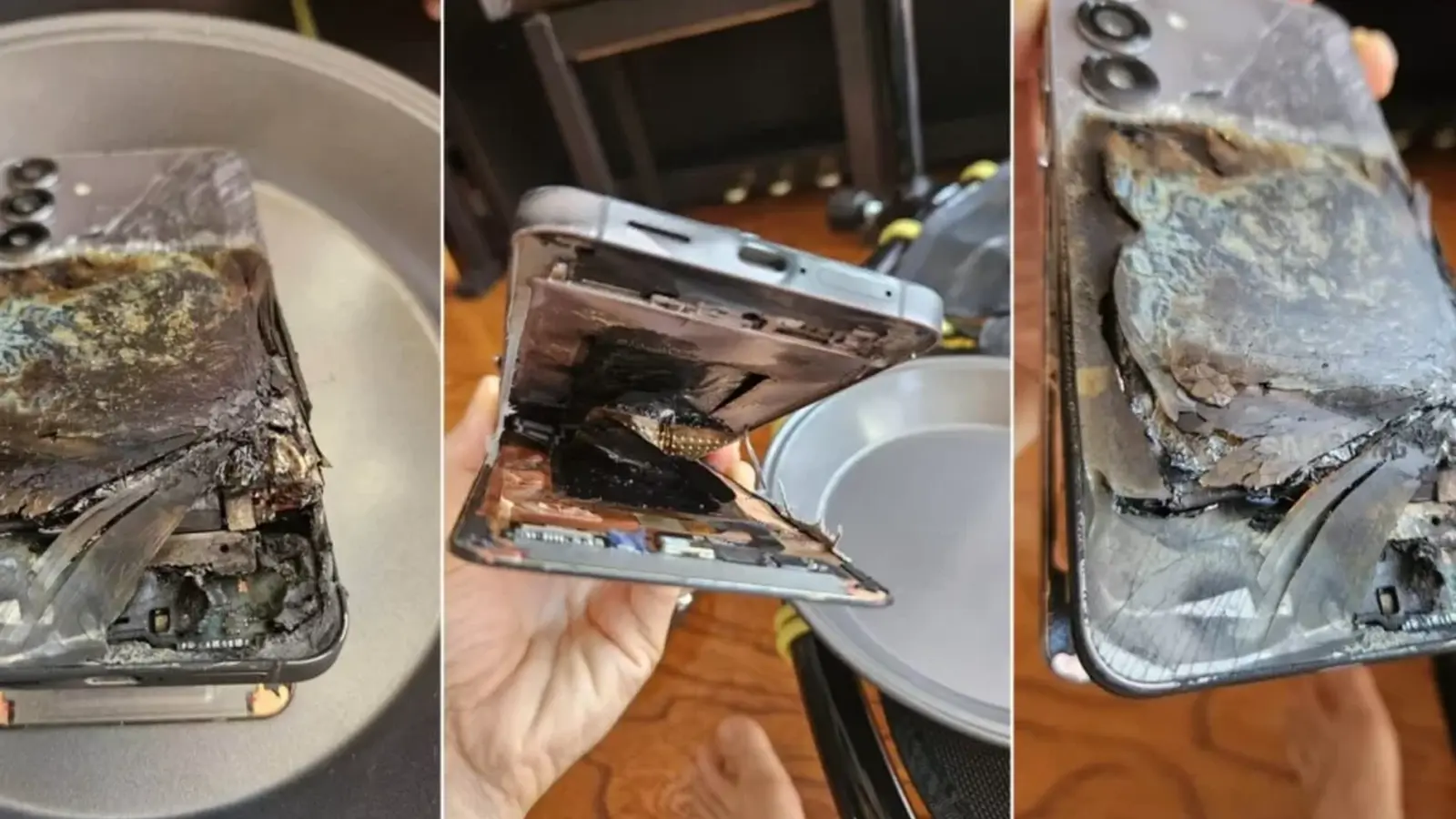
It wasn't the charger that first drew attention; it was the smell of burning plastic in the middle of the night. On July 31 a Galaxy S25 Plus in China went up in smoke while charging overnight. The owner woke to a noise, saw smoke, acted fast, and a potentially dangerous situation was contained without injuries.
The handset had been purchased two years earlier through South Korea's carrier LG Uplus. The owner reported the incident to Samsung on August 1 and the device was transported to a Samsung service center in South Korea for analysis.

On August 12 Samsung published its final technical assessment. The company concluded the phone had been dropped before the fire, producing a puncture to the battery cell. According to the report, that localized damage triggered a chemical reaction when the device was later plugged in, leading to ignition. Samsung labeled the root cause as user negligence and rejected any claim for compensation.

The owner disputes that narrative. He says Samsung did not present credible technical evidence that the battery had been pierced in a prior fall, and argues that the cracked back glass was a consequence of the battery overheating and burning—not proof of an earlier impact. Who is right? The disagreement centers on physical forensics: a dent or micro-perforation in a battery can be hard to demonstrate conclusively once thermal events change the phone's structure.

This is not the first time S25 models have attracted heat-related headlines. Isolated reports of short circuits and overheating have circulated since the series launched. Still, Samsung's posture is shaped by history: after the Note 7 battery crisis, the company has strong incentives to be transparent about manufacturing defects, because a cover-up would carry massive reputational and regulatory risk.

So the scenario Samsung outlines—external impact leading to hidden battery damage and later ignition during charging—sounds plausible. Physical trauma can introduce internal deformation or micro-perforations that remain invisible until the damaged cell is stressed by charging currents and heat. But plausibility doesn't erase the ambiguity in any single case when the evidence can be interpreted two ways.

If your phone has taken a severe hit, assume the battery may be compromised until proven otherwise. Small cracks, internal delamination or unseen punctures can manifest later as swelling, overheating, or, in rare cases, combustion. That makes a simple habit wise: after a hard drop, avoid overnight charging and have the device inspected by an authorized service center before regular use.
For most users this incident should not be read as proof of a design-wide flaw in the Galaxy S25 line. Instead, treat it as a reminder: physical impacts can hide trouble inside the battery pack, and charging will expose those vulnerabilities. If nothing else, the episode reinforces a basic truth about smartphones—durability isn't just about shattered glass; it’s about what you can’t see.

Leave a Comment
Comments
No comments yet. Be the first.