
Market reaction: shares slip as analysts withhold price target
SpaceX shares slid more than 10% in early U.S. trading after new analyst coverage left investors without a price target. The move intensified debate over whether the company's sky-high valuation after its blockbuster IPO is justified, even as the business retains clear growth drivers such as Starlink and potential AI-related revenue streams.
Analyst stance: balanced risk-reward, no target
KeyBanc began coverage of SpaceX with a Sector Weight (neutral) rating but declined to publish a target price, saying the company’s upside appears largely reflected in the current market value. The broker highlighted that SpaceX is poised to remain the dominant launch provider for years, but cautioned that strong expectations for growth may already be baked into the stock price.
"SpaceX has multiple disruptive growth avenues, but we see a balanced risk-reward at today’s valuation," the note said, according to reporting on June 22. That cautious framing put the focus back on whether investors are paying a premium for scale and future possibilities rather than current earnings.
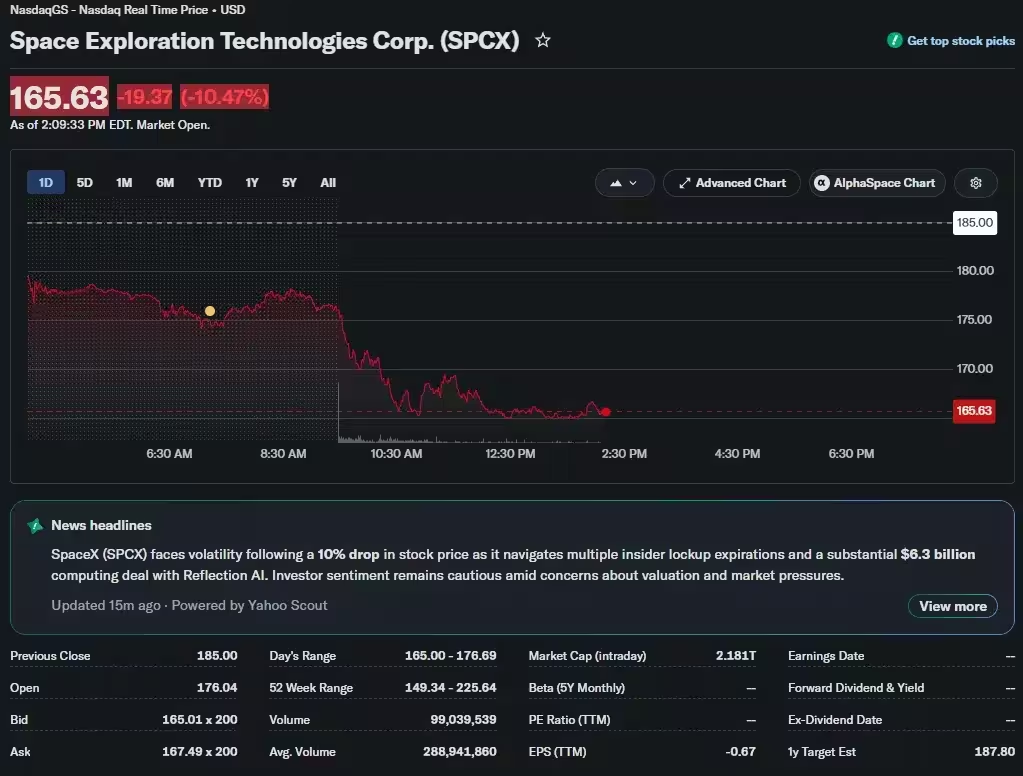
Growth engines vs. valuation concerns
Analysts continue to point to Starlink—the company’s satellite broadband network—as a primary revenue engine for SpaceX, alongside opportunities tied to artificial intelligence, which could expand demand for satellite connectivity and edge compute. Still, some investors and researchers argue fundamentals don’t yet support the multi-hundred-billion dollar market cap assigned after the IPO.
Independent valuation work from Morningstar, for instance, estimated a fair value substantially below recent trading levels. That divergence between perceived intrinsic value and market pricing has turned attention to who stands to benefit from the listing: long-term holders betting on disruptive, scalable technology, or traders expecting short-term momentum.
Implications for tech and crypto investors
The SpaceX story is resonating in broader tech and cryptocurrency circles. Crypto funds, institutional investors, and retail traders who chase high-growth assets may treat SpaceX as an alternative way to access the same themes—AI, Web3 connectivity, decentralized finance (DeFi) infrastructure, and new data channels for blockchain networks. Volatility in SpaceX shares could ripple into risk assets like Bitcoin and high-beta crypto tokens as capital rotates between sectors.
Bond sale adds another layer of scrutiny
SpaceX’s first-ever bond offering has complicated the picture. Reports indicate the company is issuing senior unsecured notes to repay bridge financing and for general corporate purposes. At the time of reporting, SpaceX reportedly held approximately $100.8 billion in cash and planned to use bond proceeds to shore up its balance sheet after the IPO.
Investors were also told the June 12 IPO raised roughly $85 billion after underwriters exercised the greenshoe. Media coverage has suggested SpaceX could seek even larger debt raises, with speculation of bond packages up to $20 billion as demand persists among investors wanting exposure to Elon Musk’s space and AI ventures.
Why the debt move matters
A sizable debt issuance can be read two ways: as prudent treasury management to refinance short-term obligations, or as a signal the company is leaning on markets to fund ambitious expansion. For fixed-income and equity investors alike, the details of covenants, maturity profiles, and use of proceeds will determine how the debt impacts overall credit risk and equity valuation.
Investor takeaways: recalibration or deeper correction?
The central question now is whether the pullback represents a healthy price correction after an extraordinary IPO rally, or the start of a longer period of re-rating driven by valuation skepticism. Traders should weigh SpaceX’s durable competitive advantages in the launch market and Starlink’s monetization path against lofty expectations embedded in the stock price.
For crypto-focused readers, SpaceX’s moves underscore how traditional capital markets, large-scale tech players, and blockchain ecosystems are converging—particularly around connectivity, AI-enabled services, and token-native infrastructure. Risk management, diversified exposure, and attention to fundamentals remain crucial as volatility travels across stocks, bonds, and crypto markets.
As analysts remain split between long-term confidence and near-term valuation concerns, market participants will be watching earnings cadence, Starlink subscriber metrics, bond terms, and any strategic capital raises for clues about how high future growth can lift or justify today’s market capitalization.

Leave a Comment
Comments (2)
wow didnt expect the slide, Starlink is massive but you cant value hope alone. Debt raises a red flag, could be buy the dip or messy re-rate. watching closely
Is this even true? No target price and now a 10% dip - feels like hype more than fundamentals. Who's really buying at these levels, and why? smells risky, tbh