
2 Minutes
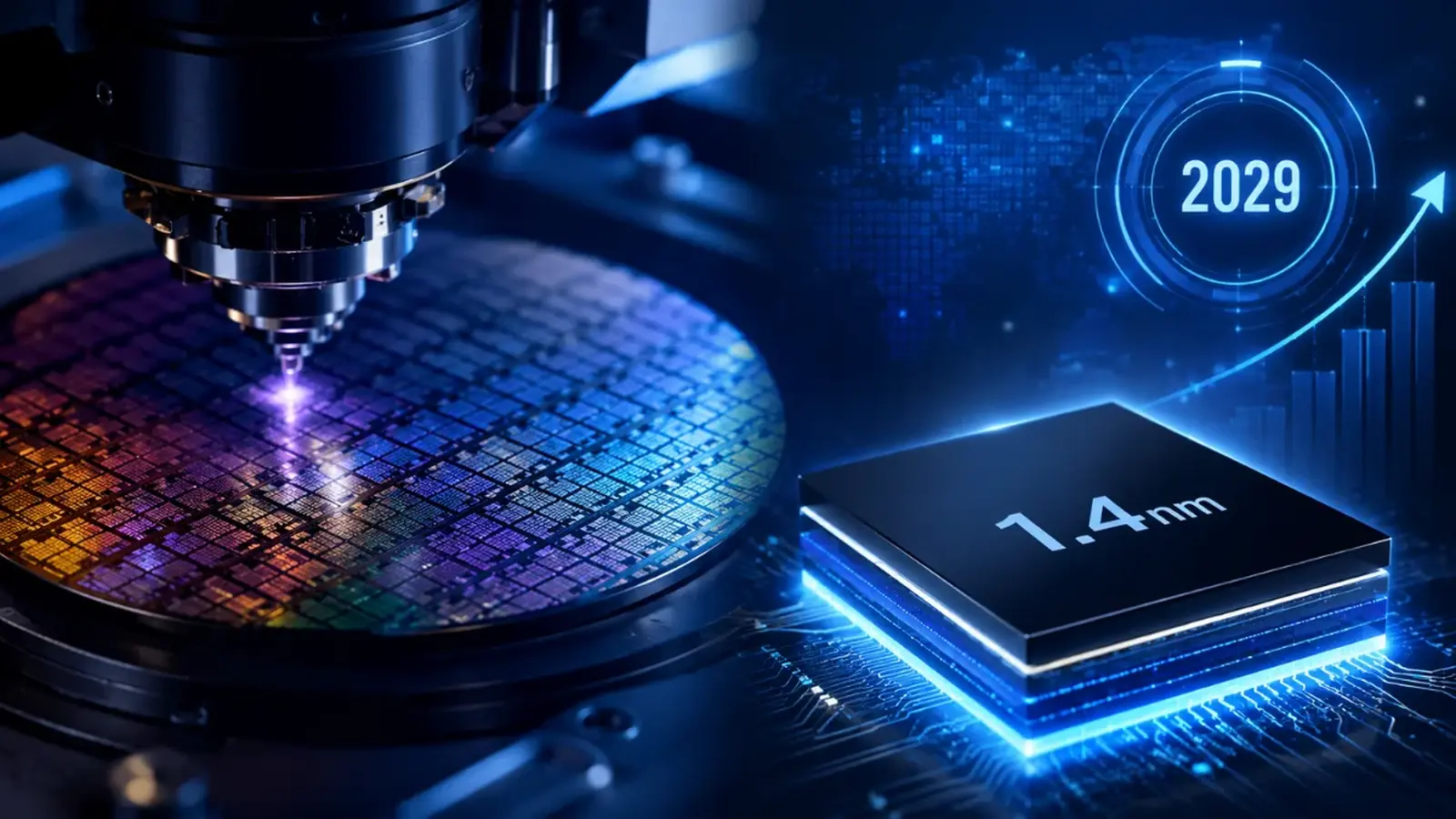
Samsung is quietly restarting a race it briefly stepped back from. The company has reignited development of its SF 1.4 process—even if the finish line has been moved further out.
According to The Bell, Samsung has asked equipment partners to begin early work on tools for the SF 1.4 node, but the mass-production timeline has slipped. What was once eyed for 2027 is now targeted for 2029. Samsung delayed SF 1.4 to double down on 2nm yields and strengthen its competitive position before scaling the next node.
This isn’t a simple restart. TSMC and Intel already claim leadership in the 1.4nm-class arena—TSMC with its A14 roadmap and Intel with its 14A family—and each approach is technically distinct. Samsung’s playbook is to accelerate equipment development through close collaboration with Applied Materials and Lam Research, routing initial tool deliveries to NRD-K, its advanced semiconductor R&D hub.
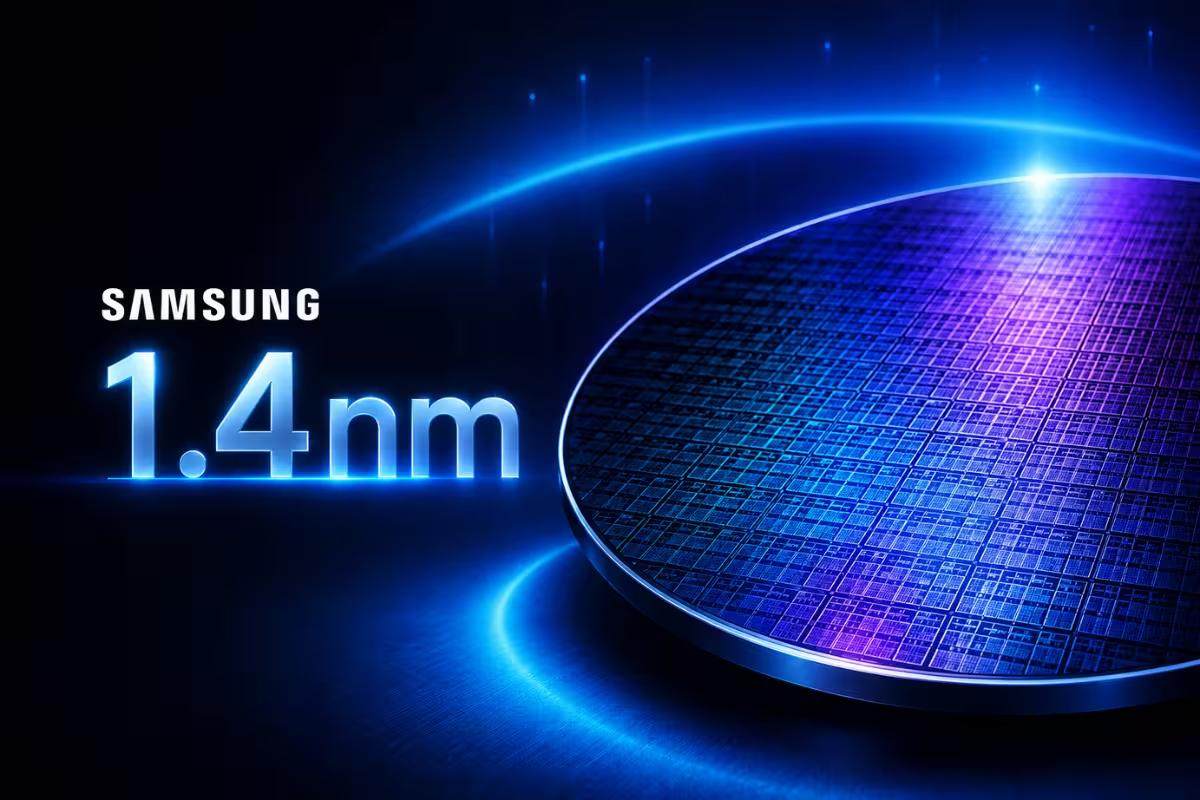
Notably, ASML has shipped next-generation High-NA EUV gear to NRD-K. Samsung plans to use that machine selectively, layer by layer, beginning with the 1.4nm stack. At the same time, engineering orders have gone out for next-generation V12 NAND work, a program that Samsung expects could hit full-scale production around 2030.
The timing tells a story. Samsung spent the last stretch perfecting SF2 and SF2P, hitting high yields and even locking in orders for next-gen AI accelerators, including work tied to Tesla. With that foundation set, the foundry team can turn attention back to 1.4nm—only now with a more deliberate cadence.
Still, the rivals aren’t standing still. Intel plans 1.4nm output as early as 2027, and TSMC aims for broader production in 2028. Samsung’s 2029 target leaves a year or two of lag, but the High-NA advantage gives Seoul a technical edge that TSMC hasn’t fully deployed yet. Equipment partners, lithography choices and yield engineering will determine whether that edge narrows the gap—or just changes the terms of competition.
It’s a strategic pivot more than a panic. Samsung is balancing immediate commercial wins at 2nm with a longer build toward 1.4nm sophistication. The foundry race remains a test of engineering, supply-chain choreography and timing. Can Samsung convert its R&D momentum into production parity? The next few years will tell.






Leave a Comment
Comments
No comments yet. Be the first.