
3 Minutes
Samsung’s next Pro model was flirting with the idea of being a compact Ultra. Rumors hinted at a Privacy Display for a 6.47-inch panel, and whispers compared its ambitions to a smaller Galaxy Ultra. Reality, however, has other plans.
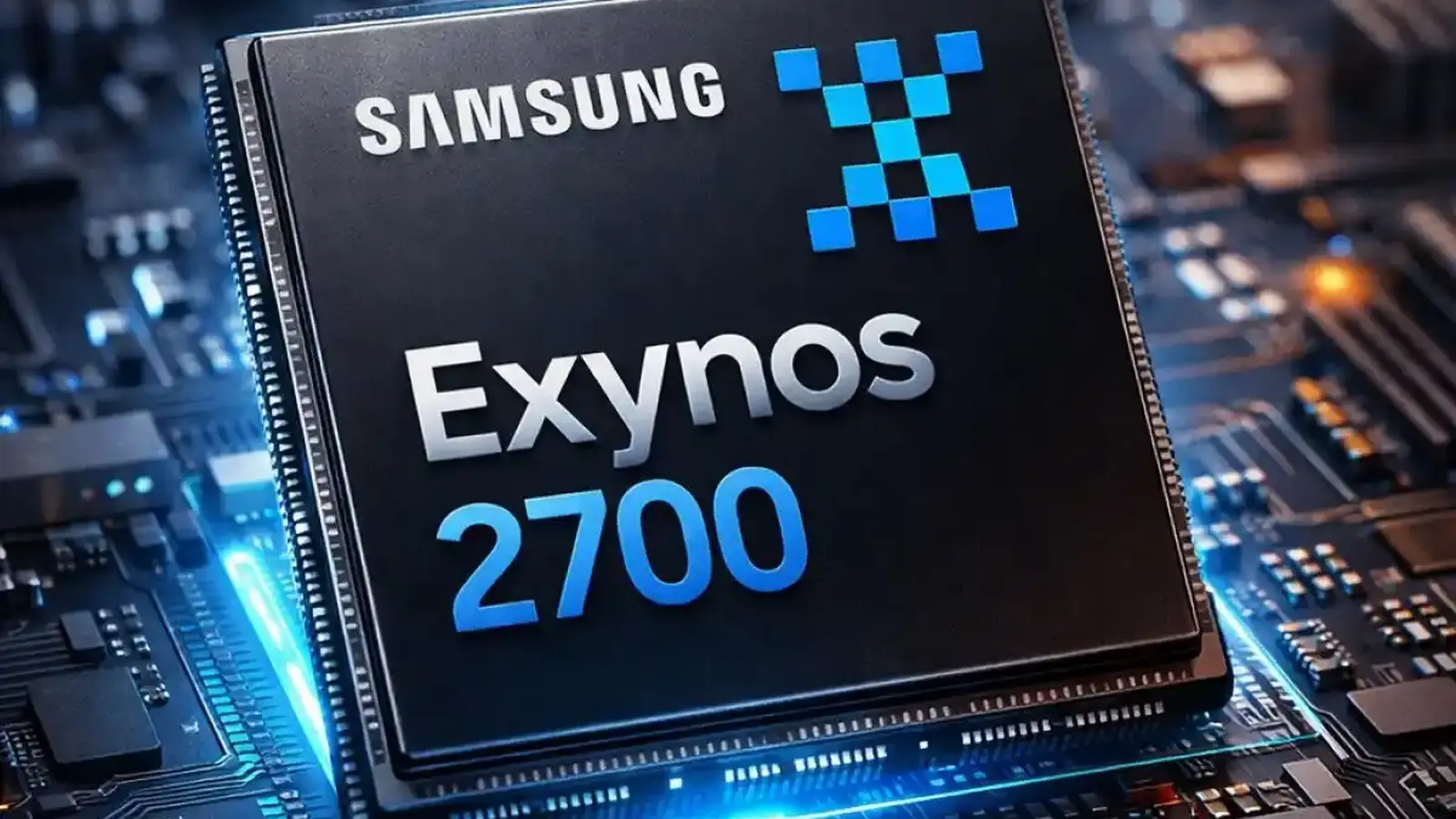
According to Korea's Money Today, the Galaxy S27 Pro will ship with an Exynos 2700 outside North America, while the S27 Ultra gets Snapdragon Elite globally. That single sentence dashes the hope that the Pro would bridge the gap and act as a true mini Ultra.
So what does that mean under the hood? The Exynos 2700 is built on Samsung's SF2P process node. Samsung pitches it as more efficient — about a 26% power cut — and a bit faster, with a roughly 15% uplift in clock speed versus the Exynos 2600's SF2 node. Small increments on paper can translate into tangible battery life and thermal behavior in real use.

There’s a hardware twist, too. Samsung is reportedly abandoning the traditional stacked package where DRAM sits on top of the SoC. Instead, the Exynos 2700 uses a side-by-side layout, placing DRAM next to the chipset and linking them with a silicon interposer. The payoff is mostly thermal: heat no longer has to travel through the DRAM to reach the cooling block, which should improve heat dissipation during sustained loads.
Benchmarks from early samples didn’t set the world on fire. But there’s context. Those chips ran at conservative clocks — the top core was only reaching 2.88GHz in one early sample, while the Exynos 2600 prime core had hit 3.8GHz in prior runs. The Exynos 2700 is said to target up to about 4.2GHz on an ARM C2 Ultra core in its full configuration, which explains why early results felt muted.
Camera packages further underline the divide between Pro and Ultra. The Pro and Ultra will share main, ultra-wide, and selfie sensors, but telephoto systems will differ. So even if the Pro looks like a compact Ultra at first glance, its ambitions are calibrated differently.
And it’s not just the Pro. Reports suggest the vanilla S27 and S27+ will also rely on Exynos 2700 in most regions, with North America — and possibly China — getting alternative Snapdragon variants as usual. China’s allocation often follows its own script, so the absence of a explicit mention in the report leaves room for change.
For buyers and enthusiasts, the takeaway is simple: expect divergent experiences across regions. The Galaxy S27 lineup will feel familiar in design and camera DNA, but the performance and thermal signatures will vary depending on whether your handset carries Exynos or Snapdragon silicon. Choose your market wisely, or at least check the chipset before you buy.














Leave a Comment
Comments
No comments yet. Be the first.