
2 Minutes
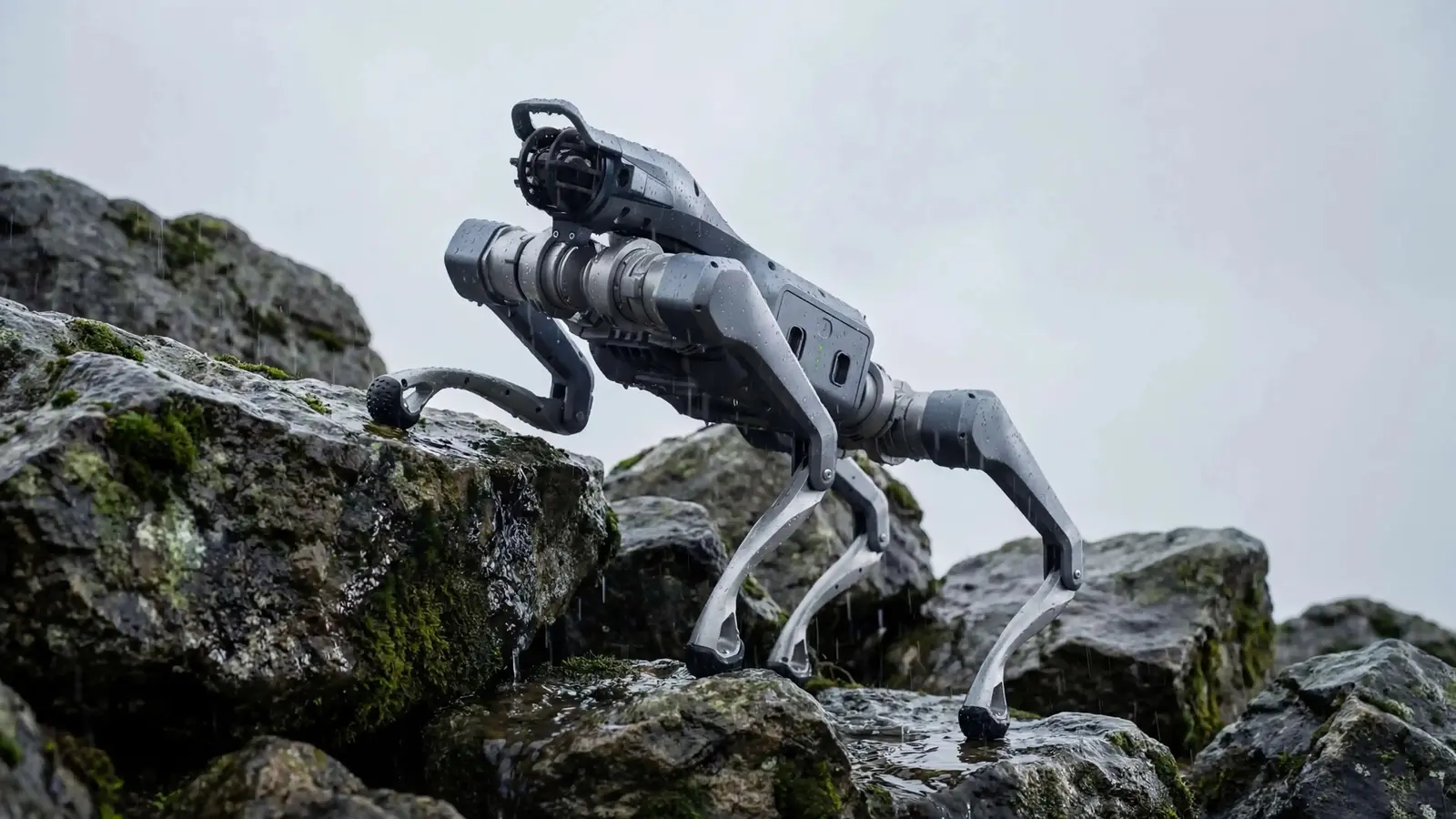
Picture a robot that can sprint across a factory floor, then roll smoothly over a gravel patch without missing a beat. That's the image Unitree Robotics wants to sell with its latest Super Athlete AS2-W.
Part leg, part wheel. The AS2-W adopts a hybrid design where wheeled modules work with articulated limbs, letting the machine blend speed and obstacle clearance in a single chassis. The result is a platform that, according to Unitree, can carry a continuous payload of 16 kilograms and travel more than 30 kilometers on a single charge when unloaded.
Those numbers matter. Sixteen kilograms is enough for small parcels, sensors, or inspection gear. Thirty kilometers is a range that pushes this robot out of the lab and into practical logistics or field research applications. Short hops between charging stations? Not necessary. Longer patrols or extended runs across large sites? Now plausible.

Under the skin there are powerful motors and sophisticated motion control algorithms. The company says the AS2-W preserves balance across slopes, rough terrain, and obstacles while handing off between wheeled locomotion and legged maneuvers. In other words: more speed than a pure-legged machine, and more agility than a pure-wheeled one.
Unitree hasn't revealed pricing or availability. That pause is familiar; the firm has steadily iterated on quadrupeds, humanoids, and mobile platforms aimed at industrial, research, and logistics customers. The AS2-W fits neatly into that roadmap, targeting use cases where payload, range, and terrain adaptability are all required.
Will it change how facilities move goods and data across uneven environments? Maybe. If the real-world performance matches Unitree's specs, this could be one of those quiet upgrades that reshapes automation on the shop floor.


Leave a Comment
Comments
No comments yet. Be the first.