
3 Minutes
Picture a handshake that retools whole data centers. Short on ceremony, long on scale.
Samsung and Broadcom have inked a staggering $200 billion pact that runs through 2030. The deal isn’t a single product order. It’s an industrial playbook: memory supply, foundry production for Broadcom-designed ASICs on Samsung’s 2nm node, collaboration on next-generation high-bandwidth memory, and a deep tie-up around advanced packaging and process nodes below 2nm.
Under the agreement, Samsung will supply memory for Broadcom’s upcoming AI accelerators, manufacture Broadcom’s custom chips on its 2nm process, and collaborate on advanced packaging and sub-2nm technologies through 2030.
Why does this matter? Because AI chips are not just about raw transistor density anymore. They’re about how memory, compute blocks and interconnects stack and talk to each other. High-bandwidth memory (HBM) sits right next to logic these days, and who makes the memory can shape the overall performance and power envelope of an accelerator. That’s the strategic edge Broadcom is buying.

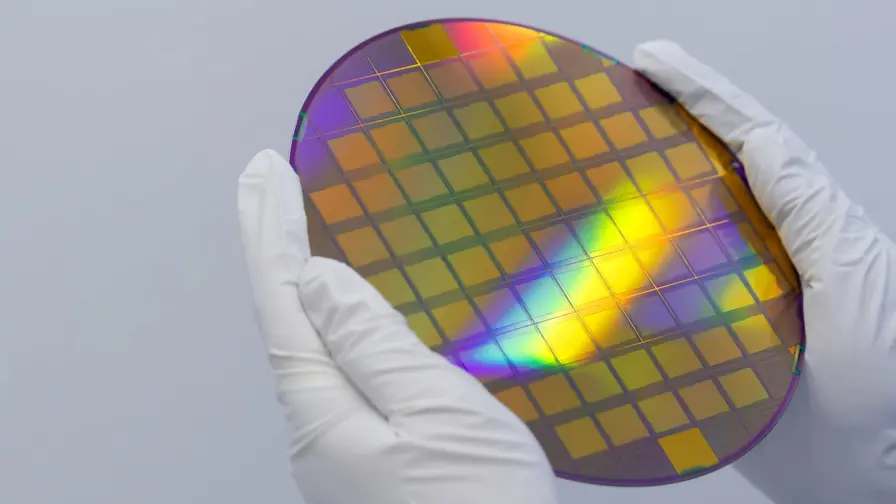
Expect advanced packaging techniques—think 2.5D interposers and dense 3D stacking—to play starring roles. Those technologies let multiple chiplets and memory stacks behave like a single monolith while saving energy and boosting bandwidth. Samsung’s foundry will also produce next-generation communications silicon designed for blistering data transfer rates, positioning Broadcom to fortify both AI compute and networking products.
There’s a chessboard here. TSMC still holds the lead in contract chipmaking. Samsung’s foundry has trailed in market share and mindshare. But Samsung brings something TSMC can’t claim in equal measure: dominant memory manufacturing. Marrying that strength with advanced node logic and packaging turns Samsung into a rare one-stop supplier for many AI workloads.
For Broadcom, the contract guarantees capacity and integration across memory, logic and packaging—elements that matter when you’re chasing dense, power-efficient accelerators. For Samsung, it’s a bet on capturing more of the AI silicon stack and narrowing the gap with the foundry leader.
There are risks. Seismic supply agreements like this depend on yields, geopolitical steadiness and the pace of next-gen process rollouts. But if Samsung hits its performance and production targets, this deal could redraw parts of the semiconductor map—especially for companies that need tightly integrated memory-plus-compute solutions.
Who wins? The short answer: ecosystem players that prize tightly coupled memory and compute. And the long answer? That will be decided in fabs, packaging labs and the racks of future AI clusters.
Keep an eye on this partnership. It’s less a single product launch and more a long march toward reshaping how AI silicon is built and supplied.

Leave a Comment
Comments
No comments yet. Be the first.