

Sen. Elizabeth Warren urges robust crypto regulation, rejects current CLARITY Act
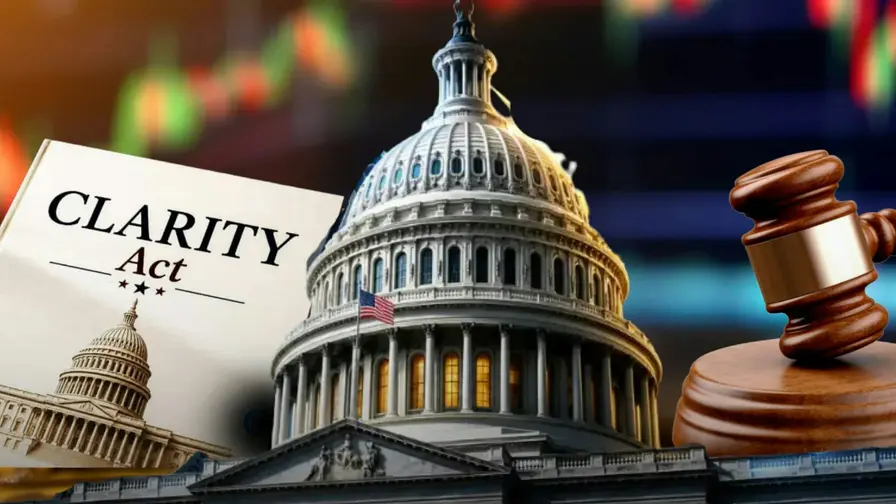
Senator Elizabeth Warren signaled clear support for federal crypto regulation but rejected the CLARITY Act in its current form, arguing the bill leaves critical gaps in consumer protection, anti-corruption measures, national security safeguards and financial stability. Her stance underscores the ongoing tensions in Washington over how best to regulate digital assets, including cryptocurrencies, stablecoins, and decentralized finance (DeFi) platforms.
Why Warren says the CLARITY Act falls short
Warren praised the goal of legal clarity for blockchain businesses and crypto markets, but warned that ambiguous or weak provisions could empower large firms to exploit regulatory arbitrage between federal agencies. She singled out several shortcomings:
- Insufficient protections against political corruption and conflicts of interest that could let officials influence rules affecting their own holdings.
- Gaps in consumer protection that leave retail crypto investors exposed to fraud, market manipulation, and platform insolvency.
- Inadequate national security safeguards related to illicit finance, sanctions evasion, and cross-border risks tied to crypto networks.
- Potential threats to financial stability if systemic crypto firms escape robust oversight or if stablecoins are not properly regulated.

Division of agency authority and the role of the SEC and CFTC
The CLARITY Act attempts to delineate responsibilities among the Securities and Exchange Commission (SEC), Commodity Futures Trading Commission (CFTC) and other agencies for token classification, trading platforms, custody, and derivatives. Proponents argue that clearer jurisdictional rules would reduce legal uncertainty for U.S. crypto businesses and improve market integrity.
But Warren and other critics fear that ambiguous or overly permissive language could weaken enforcement or create loopholes that major crypto firms could exploit. The debate highlights competing objectives: supporting innovation in blockchain and DeFi while ensuring robust regulation for investor protection and systemic risk mitigation.
Conflict-of-interest concerns flare amid disclosures about presidential crypto income
Warren’s opposition follows her prior scrutiny of President Donald Trump’s disclosed crypto-related income. In late June, filings showed substantial income tied to the Trump family’s crypto ventures, which prompted Warren to request additional voluntary disclosures to assess potential conflicts of interest. Those disclosure questions have become a prominent sticking point in negotiations and feed into broader discussions about ethics rules for senior federal officials with digital asset holdings.

Legislative process stalls as Senate leaders weigh next steps
Senate Majority Leader John Thune did not file cloture on a motion to proceed with the CLARITY Act this week, effectively dimming prospects for a near-term weekend vote. Without a cloture filing to limit debate, the timeline to bring the bill to the floor before the August recess narrowed considerably. Instead, Senate leaders filed cloture on unrelated matters, leaving continued negotiations among Republicans, Democrats and the White House.
Key negotiation points
Lawmakers are still bargaining over several high-stakes issues that could determine Democratic support needed to clear a 60-vote threshold in the Senate. These include:
- Stronger conflict-of-interest and ethics provisions for federal officials.
- Clearer consumer protection rules for retail crypto users, custody, and disclosures.
- Tighter illicit finance controls to deter money laundering and sanctions evasion via crypto rails.
- Scope of CFTC authority versus the SEC’s role in classifying tokens and overseeing exchanges.
- Rules around stablecoins, yield farming, and DeFi protocols that could pose systemic risks.
Markets and prediction platforms react
Prediction markets have lowered the odds of the CLARITY Act becoming law in 2026. Polymarket placed the bill’s chance at roughly 17% on Thursday — a notable decline that reflects growing skepticism among traders and observers about reaching a bipartisan compromise before Congress adjourns.
What’s next for crypto policy in the U.S.
Warren’s conditional support for federal crypto rules but firm rejection of the current CLARITY Act version highlights the continuing challenge of balancing crypto innovation with investor safety and national security. For the bill to gain the necessary Senate support, negotiators will likely need to strengthen consumer protections, tighten anti-corruption and ethics rules, clarify agency authority, and address illicit finance risks without creating regulatory gaps that could be exploited by large digital asset firms.
As the August recess approaches, industry stakeholders, regulators, and lawmakers will watch negotiations closely. The outcome will shape the U.S. regulatory landscape for cryptocurrencies, stablecoins, DeFi, and the broader blockchain ecosystem — with implications for market structure, investor confidence, and cross-border compliance.
For ongoing coverage of crypto regulation, DeFi oversight, and stablecoin policy, check back for updates as the Senate revisits the CLARITY Act and related proposals.

Leave a Comment
Comments (2)
Good goal, but this bill feels half baked and rushed. Stablecoin rules vague, and ethics stuff? meh. Need real teeth, not PR fixes
Wait, so CLARITY Act might let big firms pick agencies? sounds risky... Is Warren right to block it? regulators need teeth, not loopholes