

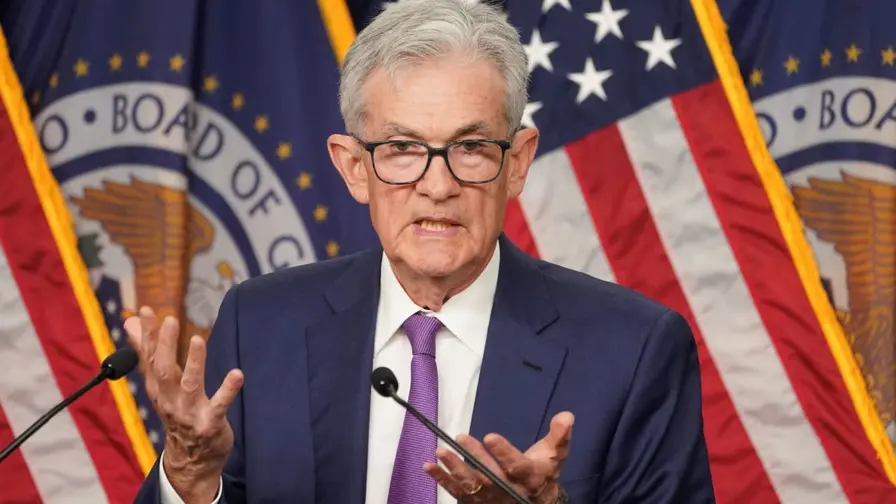
President Trump’s top economic adviser has renewed calls for Jerome Powell to leave the Federal Reserve’s Board of Governors after an inspector general’s review flagged management failures tied to the Fed’s Washington headquarters renovation. The development has reignited debate over the Fed’s leadership and what a change at the board level could mean for monetary policy, interest rates, and risk assets—most notably Bitcoin. This analysis explains why Powell’s status matters, how markets have already reacted to recent Fed activity, and whether a Powell exit would materially alter the macro setup for cryptocurrencies and digital-asset investors.
Hassett’s Remarks and the Inspector General Report
Kevin Hassett, director of the White House National Economic Council, told Fox News it was time for Powell to “move on” after the Fed inspector general identified shortcomings in the management of a $2.4 billion renovation project. President Trump also publicly called for Powell to be "forced to resign from the Board." The watchdog did not find criminal wrongdoing, but it did point to organizational lapses and cost overruns that have drawn political scrutiny.
Why the controversy matters
Beyond personnel headlines, the debate is significant because Jerome Powell did not step away from the Fed after his chairmanship concluded in May. He remains a governor and a voting member of the Federal Open Market Committee (FOMC). That continued presence means Powell still influences interest-rate decisions. If he were to vacate his seat early, the White House could nominate a replacement subject to Senate confirmation—creating a potential shift in the balance of views at the Fed.
Powell’s Ongoing Role at the Fed and the Path to Replacement
Powell’s decision to stay on the Board after handing over the chair role to Kevin Warsh is a break from more common practice where former chairs depart the institution. Because Powell retains a governor’s term, his early resignation would open a vacancy on the seven-member Board of Governors. Any new nominee would need to be confirmed by the Senate before influencing monetary policy votes.

Nomination dynamics and Senate confirmation
Even if the White House moves quickly to nominate a candidate who favors lower rates, the Senate confirmation process can be lengthy and politically contested. The eventual market impact would therefore depend not simply on Powell’s departure but on who replaces him and whether that person materially changes the FOMC’s voting arithmetic or market expectations for the future path of interest rates.
Recent Fed Action and Market Context
The FOMC raised the federal funds target range by 25 basis points to 3.75%–4.00% on Sept. 16, marking the first hike in three years. That decision reflected persistent inflation above the Fed’s 2% target. Yet since the hike, market pricing has shifted a bit: weaker-than-expected U.S. payroll data for September and dovish commentary from some Fed officials have reduced the odds of an October increase while leaving the chance of another hike later in the year intact.

Fed officials and market expectations
Federal Reserve Vice Chair Philip Jefferson suggested policymakers may need more time before acting again, while New York Fed President John Williams said another hike could be required but is not urgent. By early October, traders had pushed the probability of an October move down substantially—into the low double digits—while still pricing a meaningful chance of a December increase.
How Bitcoin Has Reacted to Recent Fed Moves
Bitcoin has shown sensitivity to changing expectations about Fed policy throughout the year. The September rate rise initially pressured crypto markets, but BTC recovered as investors returned to spot Bitcoin ETFs and institutional buyers re-emerged. After the Sept. 16 hike, U.S. spot Bitcoin ETFs suffered net outflows of roughly $746.3 million across Sept. 15–16, then recorded net inflows of about $2.65 billion in the five sessions through Sept. 23. Institutional activity also included sizable on-chain buys; one strategy added roughly 950 BTC between Sept. 14–20 for around $75.7 million.
Why Bitcoin’s response isn’t one-directional
Higher rates and elevated Treasury yields typically pose headwinds for risk assets like cryptocurrencies because they increase the opportunity cost of holding non-yielding assets. However, if institutional demand and ETF inflows are strong enough, they can offset some of that pressure. Bitcoin’s post-hike rebound illustrates that sustained buying, particularly from large institutional vehicles, can mute the negative impact of monetary tightening—at least temporarily.
Would Powell’s Exit Help Bitcoin?
A Powell resignation by itself would not automatically translate into easier monetary policy or a fresh liquidity surge for Bitcoin. The key channel is expectations: if a replacement nominee signals or is perceived as more dovish—raising the likelihood of lower rates or a pause in hikes—that change could lower Treasury yields and support higher-risk assets, including Bitcoin.
Transmission channels to crypto prices
There are three primary ways in which a board change could influence crypto markets: 1) altered interest-rate expectations that lower discount rates for risk assets; 2) a decline in Treasury yields that reduces the attractiveness of government debt relative to speculative investments; and 3) a change in investor sentiment and risk appetite driven by perceived policy easing. Without a clear shift in policy outlook, a personnel change alone is unlikely to move prices meaningfully.
Treasury Yields: A Persistent Constraint
One of the most significant macro headwinds for Bitcoin remains high U.S. Treasury yields. Long-term yields, including the 10-year Treasury, have stayed elevated and recently moved above 5.3%, keeping financial conditions tighter even as markets reduced the odds of an immediate Fed hike. When yields are high, investors can earn attractive returns in lower-risk assets, which can dampen demand for volatile cryptocurrencies.
Why yields matter more than headlines
Even if Fed rhetoric softens, the bond market’s reaction will determine much of the macro backdrop for risk assets. If yields persist at multi-year highs, the opportunity cost of holding Bitcoin remains elevated. Conversely, a sustained decline in yields—potentially triggered by a genuinely dovish shift in Fed policy—would be more supportive for crypto than political pressure on individual governors.
Short-Term Tests: Labor Data and the October Fed Meeting
Immediate focus for markets will be incoming data and the Fed’s next meeting. Weak September nonfarm payrolls—up only 29,000—helped push traders toward pricing a pause at the October meeting, which would be constructive for Bitcoin. Still, inflation is above target, and many officials caution that another hike before year-end remains possible. Bitcoin’s price action around payrolls and rate-sentiment shows how closely crypto can track macro surprises.
Legal and Oversight Implications
The Justice Department said it would not reopen a criminal investigation based on the Fed inspector general’s findings, which stopped short of alleging criminal activity related to the renovation project. The watchdog’s report emphasized management deficiencies, and the Fed has planned an outside audit to review the renovation costs. Powell has said threats of a criminal probe influenced his decision to remain on the Board despite political pressure.
What Market Participants Should Watch
Investors monitoring the situation should focus on several indicators that would determine whether an administrative change at the Fed could matter for Bitcoin and other risk assets:
- Who the White House nominates and how that nominee is viewed on rates (hawkish vs. dovish).
- Senate confirmation prospects and the expected timeline for any replacement to assume a vote on the FOMC.
- Movement in Treasury yields and the U.S. dollar, which directly affect the opportunity cost of holding crypto.
- Institutional flows into spot Bitcoin ETFs and on-chain buying by corporations or funds.
- Key macro releases—especially nonfarm payrolls, CPI, and PPI—that alter the Fed’s policy calculus.
Conclusion
Kevin Hassett’s call for Jerome Powell to step down has renewed attention on the Fed’s governance, but investors should be cautious about assuming an immediate market impact for Bitcoin. The most important variable is not whether Powell leaves, but who replaces him and whether that successor meaningfully changes rate expectations. High Treasury yields remain the dominant macro constraint on crypto, and only a clear pivot toward easier policy that meaningfully lowers yields would provide sustained tailwinds for Bitcoin. In the near term, incoming data, ETF flows, and the Senate confirmation process will shape how this story plays out for markets.
Note: This article synthesizes public comments, market moves and watchdog findings through early October. Cryptocurrency markets are volatile; readers should treat this as informational, not investment advice.

Leave a Comment
Comments
No comments yet. Be the first.