
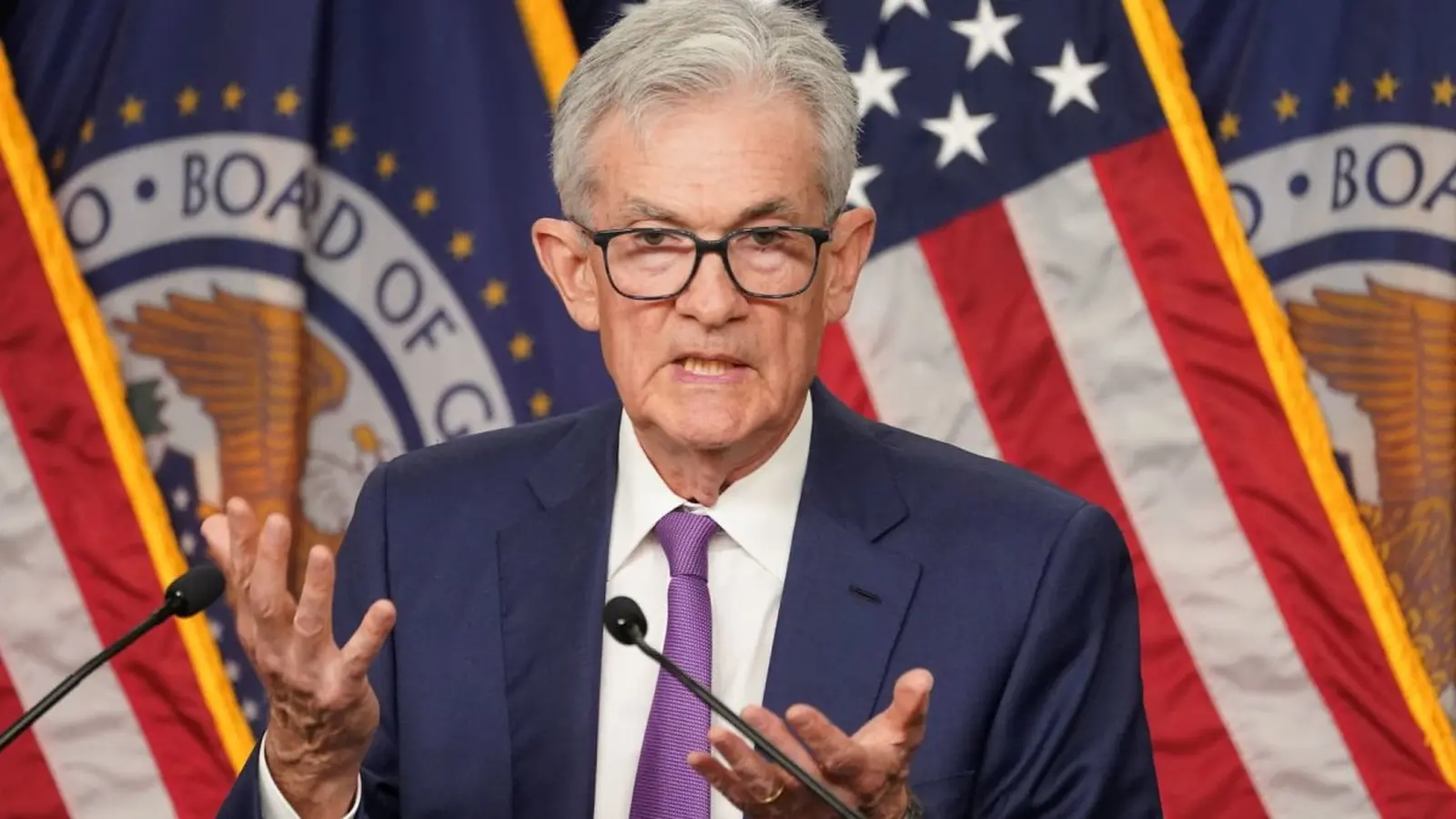
Fed's wavering stance and what it means for Bitcoin
Federal Reserve Vice Chair Philip Jefferson signaled in an Oct. 1 address at the University of Virginia that policymakers may want more time before moving interest rates again. Markets reacted quickly by lowering the odds of a rate increase at the Fed's October meeting to roughly 25%, refocusing attention on December as the next likely window for any additional tightening. For crypto markets—where investor appetite for risk assets and macro drivers like Treasury yields and inflation expectations play outsized roles—this shift could relieve near-term pressure on Bitcoin (BTC).
What Jefferson actually said
Jefferson told attendees that future policy decisions should be guided by incoming data, the economic outlook and the evolving balance of risks. He explicitly noted that he and his colleagues "may need more time" to form their judgments about the appropriate path for policy after the Fed’s September 25-basis-point increase. His remarks echoed comments from New York Fed President John Williams, another voting member of the Federal Open Market Committee, who said an additional hike this year could be appropriate but did not appear urgent.
Immediate market reaction
Traders pared back the probability of an October liftoff to about one-in-four, pushing some market focus to December instead. That repricing coincided with a volatile move in U.S. Treasury yields: the 10-year yield had already reached roughly 5.20% on Sept. 24, climbed above 5.34% on Oct. 1 during intraday trading, and then settled back toward 5.25% as the market digested renewed Fed uncertainty. Bitcoin, which had run from the mid-$70,000s to above $87,000 after the September rate increase, was left trying to defend gains amid those cross-currents.
Why an October pause could remove a headwind for Bitcoin
Bitcoin's recent price behavior has been tightly coupled with Treasury yields. Higher long-term government bond yields offer relatively attractive returns on low-risk assets, and rising yields can compress valuations for speculative assets like BTC by tightening financial conditions. If markets continue to dial back the chance of an October hike and long-term yields retreat, the resulting easing in macro pressure could give Bitcoin more room to recover.
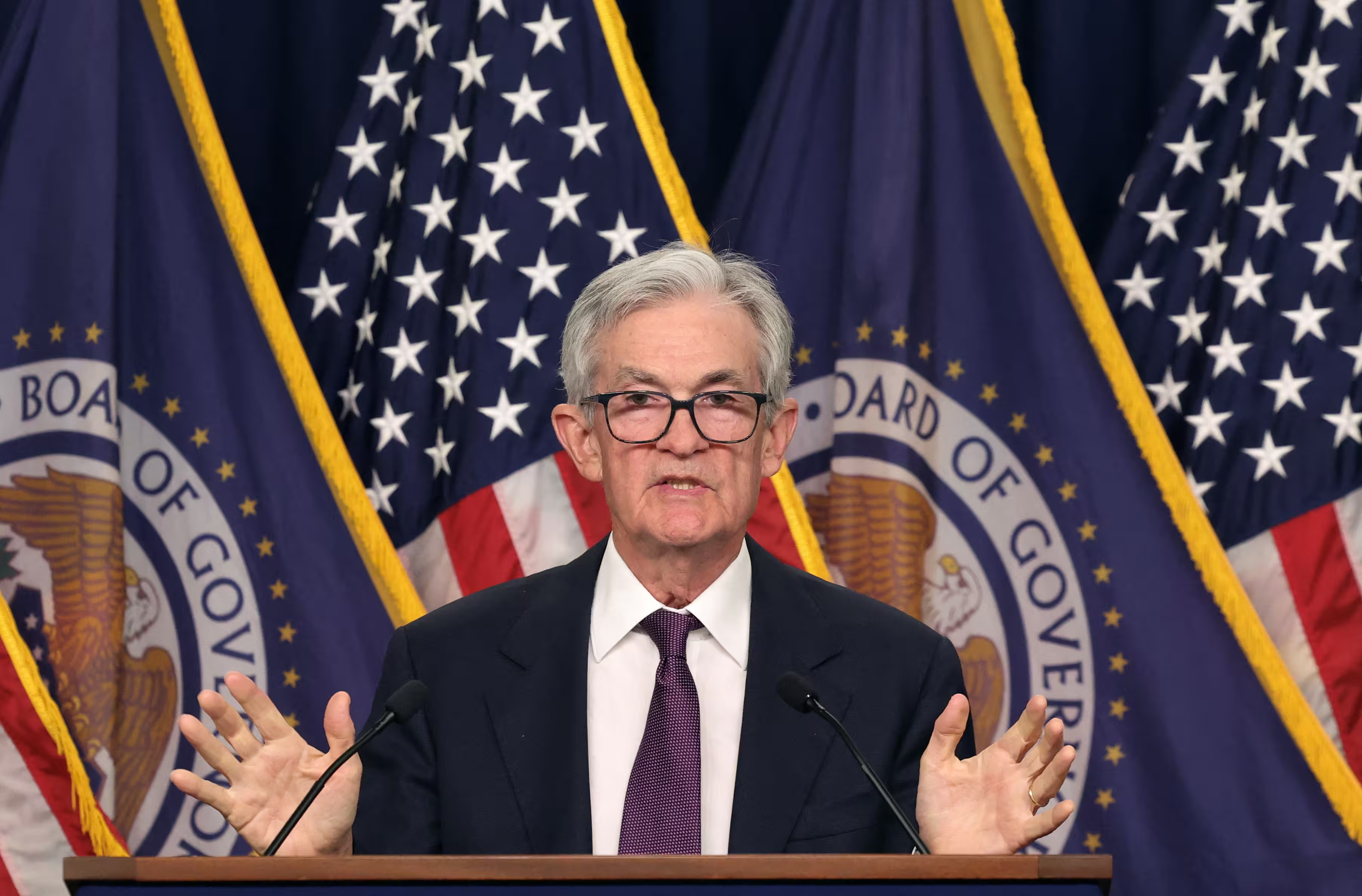
Spot ETF demand vs. macro pressure
Demand through U.S. spot Bitcoin ETFs has been a major bullish undercurrent. Yet, that inflow-driven support has often been offset by rising yields and energy-price volatility. For example, while weekly spot ETF inflows exceeded $2.3 billion during a recent period, Bitcoin still fell roughly 4.3% to about $83,500 when the 10-year yield jumped from near 4.95% to about 5.20%. This tension highlights how ETF demand and macro forces have been wrestling for control of BTC price action.

Jefferson’s inflation concerns keep the door open for more tightening
Although Jefferson’s comments suggested patience, he remains wary of upside inflation risks. He backed the Fed’s September 25-basis-point increase, which set the federal funds target range at 3.75%–4.00%, and pointed out that headline personal consumption expenditures (PCE) inflation was running at 3.4% in August. Jefferson said energy-price volatility—driven by geopolitical strains and supply pressures—has been a key contributor to the recent pickup in inflation and warned that persistent energy-price shocks could broaden inflation more generally.
What that means for policy timing
Jefferson’s base case assumes inflation will moderate toward the Fed’s 2% goal as transitory supply and energy shocks fade, but he acknowledged that risks are tilted to the upside. That cautious posture keeps December firmly on the table as a potential policy move. For Bitcoin traders, that means an October pause would be temporary relief rather than a definitive end to monetary tightening, and the path of inflation, growth and labor-market data over the coming months will determine whether the Fed acts again.
Treasury yields remain Bitcoin’s key macro test
The Fed doesn’t need to raise its policy rate to see financial conditions tighten; higher market-determined long-term yields can accomplish that. Jefferson acknowledged the broad rise in yields since the September FOMC decision, noting that investors are reassessing the macro outlook. Bitcoin has already demonstrated sensitivity to those moves: after the September hike BTC initially pulled back toward $75,000, then rallied above $87,000 amid heavy ETF flows, and later retraced as yields resumed their climb.
What traders should watch in the fixed-income market
- 10-year Treasury yield trajectory: a sustained fall could weaken the case for elevated rates and ease pressure on risk assets.
- Term premium and real yields: changes here can shift relative valuations across asset classes.
- Market-implied Fed probabilities: futures markets will continue to price in expectations for October vs. December moves.
Macro risks and on-chain/ETF signals to monitor
Market participants tracking the intersection of macro policy and crypto should keep a close eye on several variables that can swing Bitcoin’s outlook:
Primary factors
- Treasury yields — higher yields have historically pressured BTC; a retreat would be supportive.
- Inflation data (PCE and CPI) — persistent upside surprise increases Fed tightening risk.
- Employment and GDP prints — stronger growth raises the odds of additional hikes.
- Oil and energy prices — rising energy costs can feed headline inflation and keep rates elevated.
- Spot Bitcoin ETF flows — persistent inflows can offset macro headwinds by adding structural demand.
- Derivatives leverage and funding rates — heightened leverage can amplify downside during risk-off moves.
Technical levels: support, resistance and trader psychology
From a technical perspective, analysts have flagged $82,000 as a critical support area for Bitcoin. Earlier in September, BTC tested a move toward $77,000 when yields and oil pressures intensified, while the subsequent rebound to above $87,000 demonstrated how powerful ETF-driven demand has been in the short term. The 50-week exponential moving average (EMA) also emerged as a meaningful technical floor during the pullback. Traders will watch whether BTC can hold the $82k region and the 50-week EMA while macro variables play out.

Possible scenarios for the rest of the year
Bitcoin’s path over the coming months can be summarized with a few plausible scenarios:
Scenario 1 — Pause and retreat: supportive for BTC
If the market maintains lower odds for an October hike and long-term yields decline, the macro headwind on Bitcoin could ease. Combined with steady spot ETF inflows, that outcome could enable BTC to regain and extend gains, testing higher resistance levels.
Scenario 2 — Strong data, higher yields: headwind persists
Conversely, if economic prints surprise to the upside—keeping yields elevated even without an immediate Fed move—Bitcoin could remain range-bound or resume a corrective move. In this scenario, ETF inflows may provide support, but the net effect could still be bearish for price momentum.
Scenario 3 — Energy shock and more tightening
An unexpected spike in oil or other energy market shocks could lift headline inflation, increasing the chance of another Fed hike before year-end. That pathway would likely exert further pressure on BTC, particularly if yields climb and risk assets come under renewed selling.
Takeaway: an October pause is helpful but not definitive
Philip Jefferson’s comments signal a willingness at the Fed to take extra time before acting again, and markets have adjusted by cutting October rate-hike odds to around 25%. For Bitcoin, that development removes one immediate potential headwind, but it does not eliminate the risk of further tightening later this year. Treasury yields, inflation trends and oil prices remain the dominant macro variables for BTC price action, while spot Bitcoin ETF inflows and on-chain dynamics will continue to shape demand.

Traders and investors should monitor the incoming U.S. economic calendar—PCE and CPI prints, employment data and growth figures—alongside Treasury yield moves and ETF flow data. A sustained retreat in yields combined with steady ETF inflows would be the clearest path for Bitcoin to resume a bullish trajectory; conversely, stronger macro data or energy-driven inflation could push the Fed back toward additional hikes and keep pressure on BTC.
In short: an October pause could provide short-term relief for Bitcoin, but the cryptocurrency’s medium-term outlook still hinges on inflation, yields and the pace of spot ETF demand.

Leave a Comment
Comments
No comments yet. Be the first.