

Robinhood warns stock token activity may hit SEC exemption limits
Robinhood's crypto leadership says the platform's trading in stock tokens is already approaching thresholds set by the U.S. Securities and Exchange Commission's new five-year innovation exemption for tokenized equities. The comments, delivered during Korea Blockchain Week 2026, highlight both the rapid adoption of tokenization and the practical constraints that regulators have introduced to limit onchain equity trading volume.
Summary
- Robinhood reports stock token volume that could approach SEC trading caps under the new innovation exemption.
- The SEC's framework sets tiered limits on eligible tokenized National Market System (NMS) stocks and caps on trading volume tied to underlying share liquidity.
- Robinhood plans feature upgrades for its stock tokens — including voting rights and in-kind redemption — as it works to broaden eligible U.S. stocks and ETFs.
- Separately, Robinhood is preparing U.S. crypto perpetual futures for eight cryptocurrencies, with up to 10x leverage on Bitcoin and Ether.
Understanding the SEC's five-year innovation exemption
On Sept. 17, the SEC released an innovation exemption that permits qualifying trading venues to offer tokenized NMS stocks using permissioned automated market makers (AMMs) and liquidity pools without registering as traditional exchanges — provided they comply with a suite of regulatory conditions. The relief is time-limited to five years and was designed to let market participants experiment with onchain equity trading while maintaining investor protections.
The exemption imposes explicit limits on which stocks can be tokenized and how much of the underlying shares can be traded onchain. It divides eligible equities into two tiers, and each tier has separate caps on the number of token symbols and the allowable trade volume relative to the underlying stock's average daily share volume.
Robinhood's volumes may test SEC caps
Johann Kerbrat, Robinhood's senior vice president and general manager of crypto and international, said the company is still assessing the operational details of the SEC order. He warned that Robinhood's existing stock token volumes already look sizable enough to reach some of the exemption's volume thresholds once the framework is applied.
Under the SEC rules, Tier 1 tokenized stocks are limited to 75 symbols and to 0.25% of the underlying stock's average daily share volume during the prior month. Tier 1 covers larger, more liquid names such as those in the S&P 500 and Russell 1000, as well as certain exchange-traded products. Tier 2 permits up to 250 symbols and allows trading up to 2.5% of the underlying stock's average daily volume for other eligible NMS securities.
If a venue repeatedly breaches the cap for a given tokenized stock, it must pause trading the token for three months. A single breach does not automatically trigger a pause, provided the venue stays within limits going forward; but repeated breaches carry the suspension penalty. Kerbrat noted that, given current activity levels, Robinhood's volume on some tokens could move into ranges where these provisions become practically relevant.
Pre-exemption activity on Robinhood Chain
Robinhood had already generated significant liquidity around tokenized equities before the SEC's order. In August, Uniswap founder Hayden Adams reported that tokenized stock trading on Uniswap via Robinhood Chain reached $1 billion, reflecting robust onchain demand for equity exposure. At that time, Robinhood's stock tokens were not available to U.S. users and were issued through Robinhood Wallet to customers in over 120 countries.
Kerbrat interpreted the SEC's exemption as a constructive regulatory signal. He said the move indicates the regulator wants to engage with industry efforts to tokenize equities and evaluate potential benefits, while setting limits to guard against market fragmentation or investor harm.
How Robinhood's current stock tokens differ from SEC-qualified tokens
Robinhood's existing stock tokens are structured differently than the tokenized NMS stocks described in the SEC exemption. Currently, Robinhood offers these products as debt securities issued by Robinhood Assets Jersey Limited and backed by corresponding equity holdings. These instruments give holders economic exposure to the price movements of the referenced shares, but do not automatically confer direct ownership of the underlying stock or the legal shareholder rights that come with share ownership.
By contrast, the SEC's framework requires qualifying tokenized NMS stocks to deliver the same economic and governance rights as the equivalent traditional shares. That includes voting rights and other shareholder privileges. The SEC also made clear that synthetic products providing only price exposure are ineligible for the exemption.
Issuer notification and consent
Another important rule under the SEC framework is that venues listing stock tokens tokenized by an unaffiliated third party must notify the company whose shares are being tokenized and give the issuer a chance to object. This provision aims to ensure issuers are aware of and can voice concerns about third-party tokenization activity that involves their equity.
Product changes and the AMC dispute
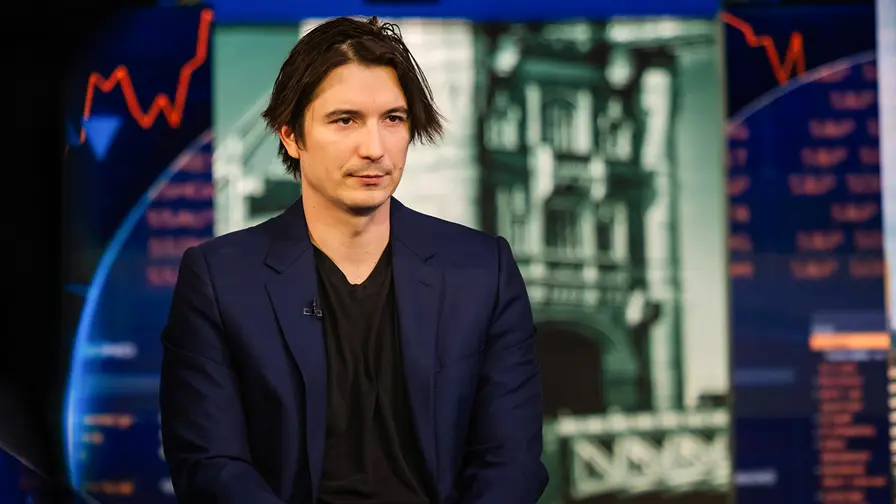
Robinhood has already said it will make changes to its stock tokens. Both Kerbrat and CEO Vlad Tenev indicated the company plans to add voting rights and in-kind redemption to bring tokenized instruments closer to traditional equity ownership. In-kind redemption would allow token holders to redeem tokens for the underlying shares in kind under certain conditions — a step toward aligning legal and economic structures.
The rollout of those features became topical during a public dispute with AMC Entertainment's CEO Adam Aron, who criticized Robinhood's AMC-linked token and said his company had not consented to the product. Robinhood responded that under its current structure issuer consent is not required, because token holders do not directly own the shares. Kerbrat insisted the firm had already been developing voting and in-kind redemption capabilities ahead of the public disagreement and described parts of the exchange with AMC's CEO as largely a marketing-focused critique.
Robinhood Chain and the broader tokenization push
Robinhood's stock token initiative dates back to a July product launch that introduced Robinhood Chain and a suite of products designed to move traditional financial assets onchain. The company sees tokenization as a means to expand market access, increase settlement efficiency, and create composable financial instruments that integrate with decentralized finance (DeFi) primitives such as AMMs and liquidity pools.
But while tokenization can create new avenues for liquidity and trading innovation, the SEC's exemption underscores that regulators will oversee how much of a given security can be transacted onchain to preserve market stability and investor protection.
Robinhood's U.S. crypto perpetual futures plans
Parallel to its stock token work, Robinhood announced on Sept. 29 plans to offer crypto perpetual futures to eligible U.S. customers on eight cryptocurrencies: Bitcoin, Ether, Solana, XRP, Dogecoin, Cardano, Chainlink and Hyperliquid. The initial design calls for up to 10x leverage on Bitcoin and Ether perpetuals, and up to 3x leverage on the other six assets.
Kerbrat said Robinhood selected these leverage levels internally and will reassess them after launch based on customer behavior and available liquidity. The company intends to use a global waterfall clearing system and highlighted differences in funding calculation mechanics compared with some competitors. Specifically, Robinhood plans to recalculate funding rates continuously on its platform, whereas many exchanges recalculate funding every 15 minutes — a distinction the company says could affect cost and risk management for traders.
For initial pricing, Robinhood plans to charge a 0.01% trading fee for U.S. crypto perpetual contracts through the end of 2026. Robinhood Derivatives will offer the contracts using Bitstamp infrastructure, according to the company.
Leverage and liquidity considerations
Kerbrat emphasized that any future decision to increase leverage will depend on how liquidity evolves after launch. Robinhood has seen demand for commodity and ETF perpetual futures in European markets but currently has no plans to offer single-stock perpetuals to U.S. customers. Instead, the company points to existing options products that allow multi-leg strategies for traders seeking complex exposures.
Regulatory and market implications
Robinhood's experience illustrates the delicate balance regulators and market participants are striking between fostering innovation and managing market risk. The SEC's exemption is a pragmatic step that allows real-world experimentation in tokenized equities while placing explicit circuit breakers and issuer protections around the practice.
For market participants, the new rules mean platforms must carefully architect tokenization programs to align with volume caps, issuer notification requirements, and shareholder-rights obligations. For traders and investors, the regulatory guardrails should help preserve liquidity and market integrity as onchain trading scales.
Outlook
As Robinhood moves to upgrade its stock tokens with shareholder rights and prepares to launch U.S. crypto perpetual futures, market watchers will be focused on how the firm navigates the SEC's thresholds and operational requirements. High on the agenda for the industry are issues like liquidity management, continuous funding mechanics, issuer coordination, and the interactions between permissioned AMMs and traditional market infrastructure.
Whether Robinhood's stock token volumes will trigger formal trading pauses under the SEC's exemption remains to be seen. What is clear is that tokenization is no longer a theoretical concept — it is an active market development that requires careful regulatory and operational design to scale responsibly.
For traders, investors, and tokenization advocates, the coming months will provide important signals about how onchain equities and advanced crypto derivatives can coexist with established market rules and investor protections.


Leave a Comment
Comments
No comments yet. Be the first.