

Imagine a phone that moves like a tiny camera rig. It tilts, it tracks, it reacts. Honor's Robot Phone, unveiled in China after months of leaks and a CES prototype reveal, aims to blur the line between smartphone and portable cinema toolkit.
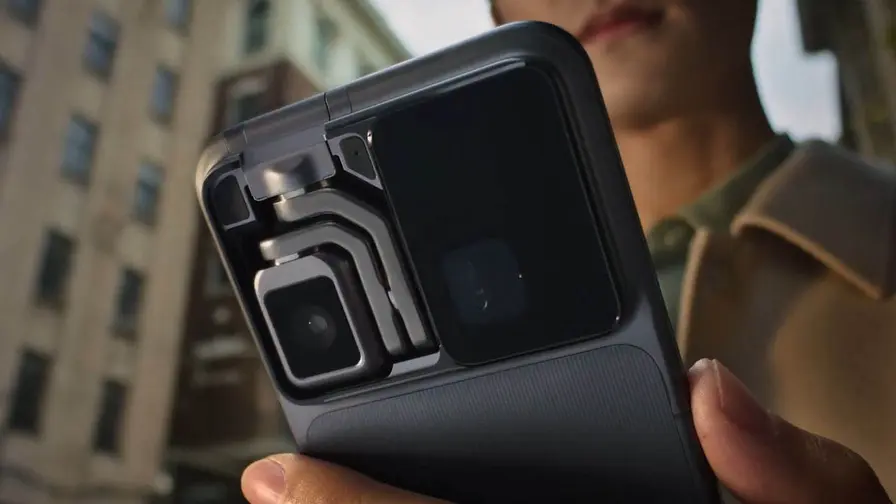
At the heart of the pitch is a radical engineering feat: a titanium 4D gimbal system that Honor says is the industry's smallest. The company leaned on more than 60 manufacturing processes and over 100 precision parts to get it right, and that effort shows in the specs. The gimbal motor weighs just 2.6 grams, is only 6mm thin, and fits inside the phone's 9.6mm body—yet the handset still tips the scales at 248 grams.

Honor's Robot Phone pairs a 200MP, 1/1.28" sensor with a miniaturized titanium gimbal and a host of cinematic tools.
That 200MP gimbal sensor (f/1.6) supports 4K capture and sits alongside Honor's H1 imaging chip. Voice commands can move the gimbal and lock focus. AI-powered subject tracking keeps faces and objects framed in real time—handy for vloggers, streamers, and anyone who likes moving shots without a tripod. But Honor didn't stop at technical wizardry; it gave the gimbal personality. The Yoyo AI assistant animates the module with over 100 facial expressions: nods, peeks, even dance moves to music. It can observe and interact with the environment, performing simple tasks autonomously.

For filmmakers, the Robot Phone carries an unexpected partner: Arri. The collaboration brings native Log-C3 encoding, on-device LUT color grading and a cinema mode that mimics Arri's look. If you shoot with the phone and want a filmic pipeline, Honor baked the workflows into the hardware and software.
Camera hardware doesn't end at the gimbal. A 200MP periscope telephoto (1/1.4") offers 2.7x optical zoom, while a 50MP ultrawide doubles as a macro shooter. The display is a 6.3-inch LTPO OLED with a 2,640 x 1,216 resolution and a variable 1–120Hz refresh rate. Peak local brightness hits a dramatic 6,800 nits, and an AR anti-reflective coating keeps glare down when you're shooting outdoors.

Under the hood sits Qualcomm's Snapdragon 8 Elite Gen 5, paired with up to 16GB of RAM and 1TB of storage. MagicOS 10 runs on Android 16. The battery is a capacious 7,060mAh cell with 120W wired and 50W wireless charging—because all that camera hardware needs endurance.
Pricing begins at CNY 9,999 for the 12GB/512GB model and rises to CNY 12,999 for the 16GB/1TB variant. Colors: Silver and Gray. Open sales in China start August 18, and Honor has not confirmed broader availability yet.
Is this a smartphone reinvented for creators or the first step toward phones with appendages that act like companions? Either way, Honor has rolled out one of the boldest camera experiments in years—one that may force rivals to rethink how a phone can move and behave.

Leave a Comment
Comments
No comments yet. Be the first.