
Dodge brings a patrol-ready Charger back to American roads
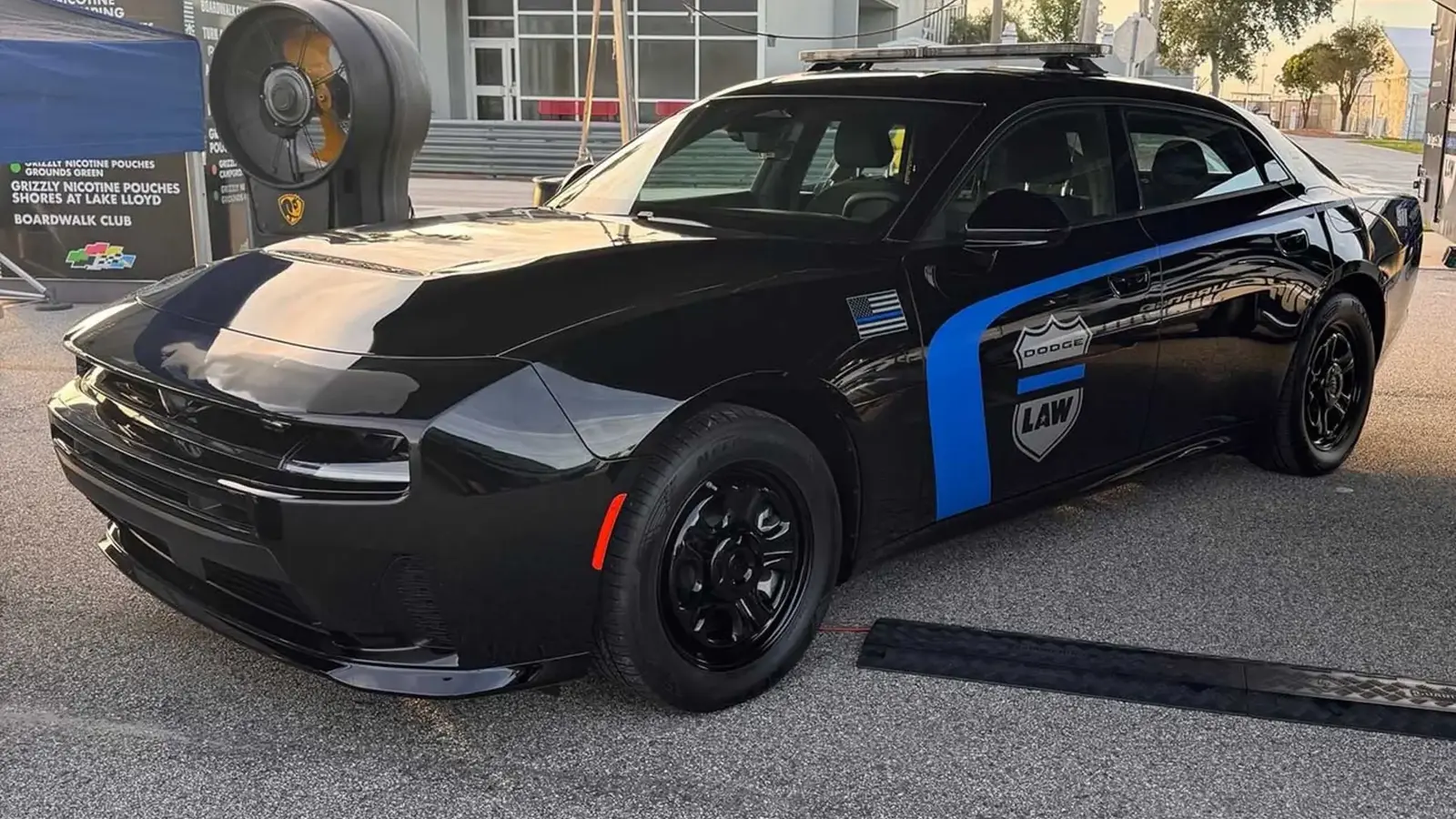
Dodge has quietly reintroduced a police-ready version of the Charger, signaling a potential revival of the traditional police sedan in the United States. A fully equipped prototype of the Charger PPV made its public debut at the Police Fleet Expo in Daytona Beach, presented by Dodge Law and Stellantis, hinting that the muscle-car maker intends to fill a gap left when major manufacturers stopped producing pursuit sedans.

The timing matters. With Ford long ago ending production of the Taurus-based Interceptor and Chevrolet discontinuing the Caprice PPV, the modern police sedan market has been sparse. The previous generation Charger retired in 2023, leaving many agencies to rely on trucks, SUVs, or niche alternatives such as the Ford Mustang. Dodge’s Charger PPV aims to offer a purpose-built pursuit vehicle that combines traditional sedan dynamics with police-focused engineering.
What was revealed at the Fleet Expo
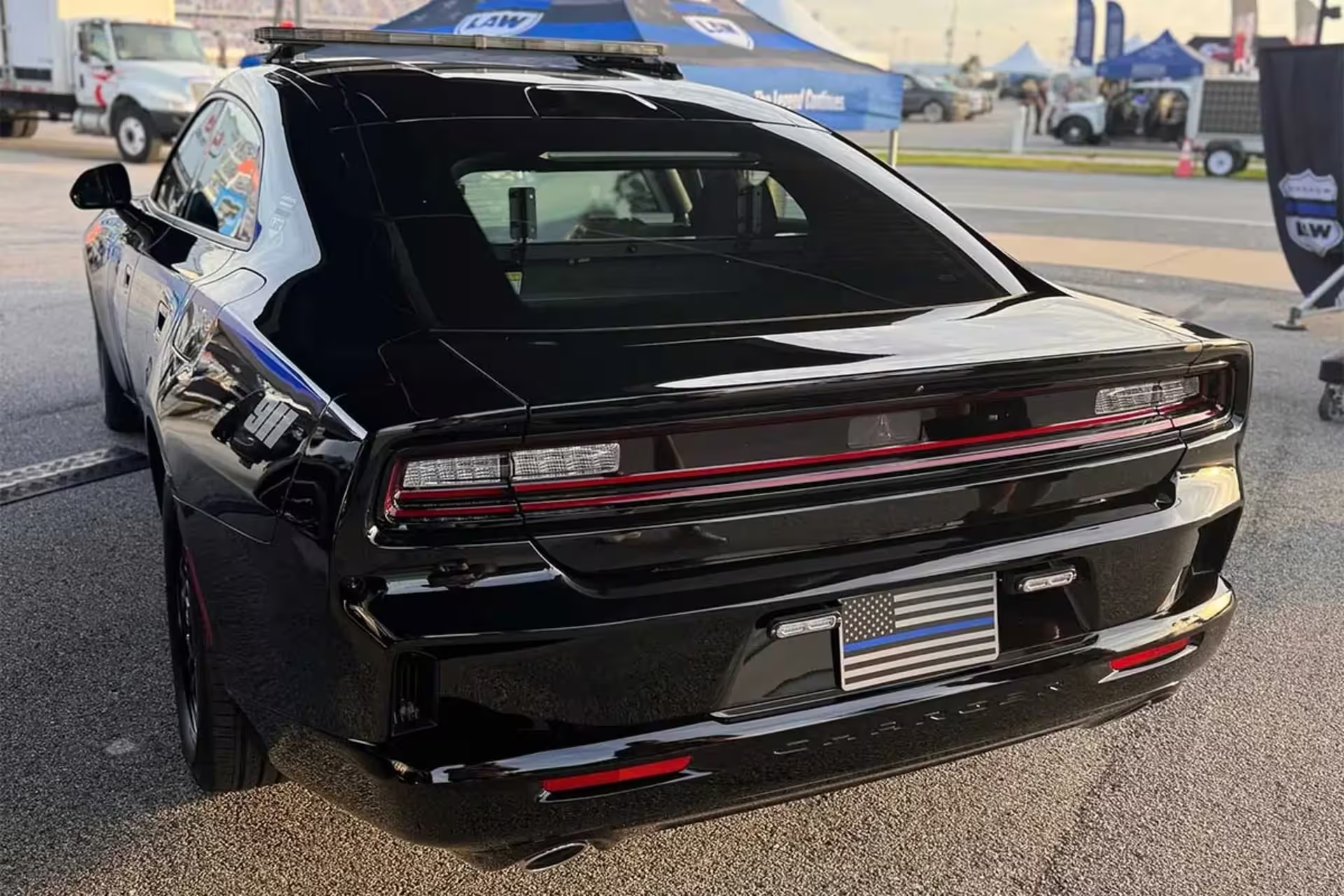
The display model showed clear, functional modifications designed for patrol and pursuit duty. Exterior cues include a roof-mounted lightbar and enforcement graphics that announce the vehicle’s authority to other road users. Notably, the prototype lacked a front push bumper—something some departments expect—though that may change in production-spec vehicles.

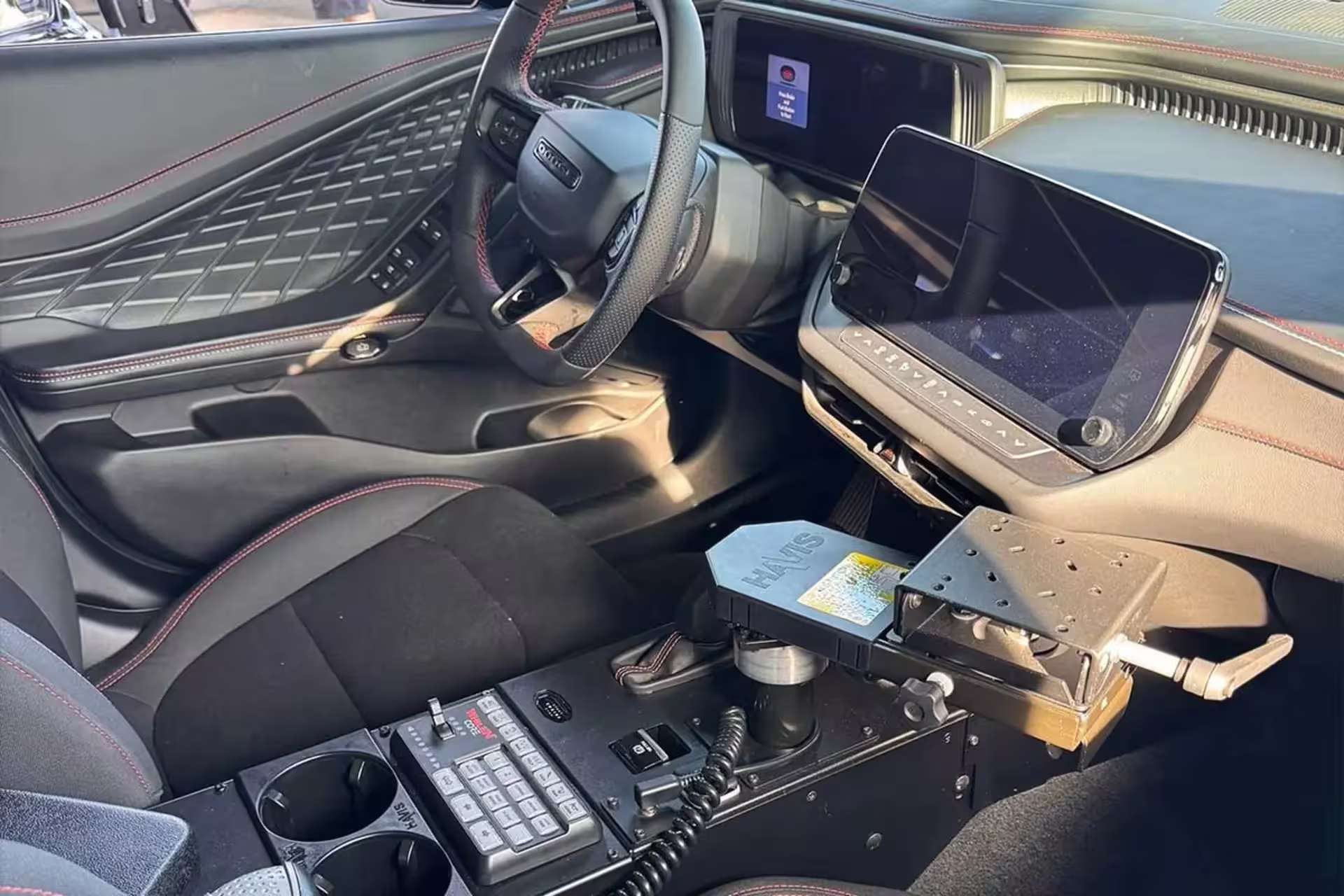
Inside, the Charger PPV features a Havis-made center console for laptop and radio mounts, a full partition separating front and rear seating, and an additional partition behind the cabin to secure cargo in the liftback-style trunk. These changes reflect practical considerations for patrol missions, from evidence containment to officer safety during transports.
However, the exhibit car still retained carpeted flooring and cloth rear seats—elements atypical for a finished police car. Stellantis explained the Expo vehicle was essentially a factory-available production model used to showcase the company’s emergency and special-purpose portfolio, which also includes the Durango PPV and Ram 2500 emergency variants. That said, Stellantis confirmed it is working closely with Michigan State Police and the California Highway Patrol to ensure the Charger meets pursuit-vehicle standards.
Engineering and positioning

While Dodge hasn’t released full technical specs for the Charger PPV, the vehicle’s purpose-built interior and collaboration with state police suggest a serious engineering effort to meet performance, durability, and safety requirements of law enforcement fleets. Expect reinforced cooling systems, upgraded braking hardware, and tuning for repeated high-speed operation—the same areas prioritized on other pursuit-rated vehicles.
Key highlights likely to attract agencies:
- Purpose-built center console and secure mounting for communications gear
- Partitioned rear and cargo areas for prisoner transport and equipment storage
- Factory support and integration with patrol equipment suppliers
A legacy of service
Dodge’s connection to law enforcement stretches back decades. The company introduced its first official police package on the Coronet in 1956 and has since supplied numerous muscle and full-size models to departments nationwide. Names like Monaco, Diplomat, Intrepid, and the Charger itself have all served on U.S. highways over the years. The return of a police Charger taps into that lineage while offering a modern solution for agencies seeking sedan-based pursuit vehicles.
"A new Charger PPV could be the missing piece in many fleets," automotive analysts say. "It brings a purpose-built sedan option back to a market that’s leaned heavily on SUVs and trucks in recent years."

Market context and outlook
The reappearance of a factory-backed police sedan matters for procurement budgets and fleet strategies. Sedans typically offer better fuel economy and handling than large SUVs, and they can be less expensive to maintain. If Stellantis positions the Charger PPV competitively—both in price and in purpose-built options—it could persuade agencies to reconsider sedans for highway patrol and pursuit roles.
Ford’s public stance remains that it has no factory police Mustang variant in the pipeline, and Chevrolet has no modern Caprice equivalent, which gives Dodge an opening. Success will depend on rigorous testing, agency partnerships, and clear options for ruggedized interior materials, heavy-duty floors, and push bumpers for those departments that require them.
Bottom line
The Charger PPV’s show-floor debut is an important first step. It demonstrates Dodge’s intent to re-enter the police sedan market with a vehicle tailored for law enforcement, backed by Stellantis’ emergency-vehicle portfolio. With close collaboration with state agencies and further engineering development expected, the Charger PPV could restore a familiar, capable sedan to American police fleets—and do so with the muscle-car spirit that has long defined Dodge’s police heritage.


Leave a Comment
Comments (2)
Is this even true? The prototype looked too showroomy, carpeted floors and cloth seats... if that's real then agencies will ask for heavy duty interiors, right?
Hell yeah, Charger back in cop form? finally a sedan that can actually handle highway chases, hope they add push bumpers and rubber floors tho