
Most concept cars are created to introduce a design language or a fresh technology. These four were different. They were built expressly to test and advertise new tires, and each one tells a distinct story about engineering, sponsorship and extreme validation.
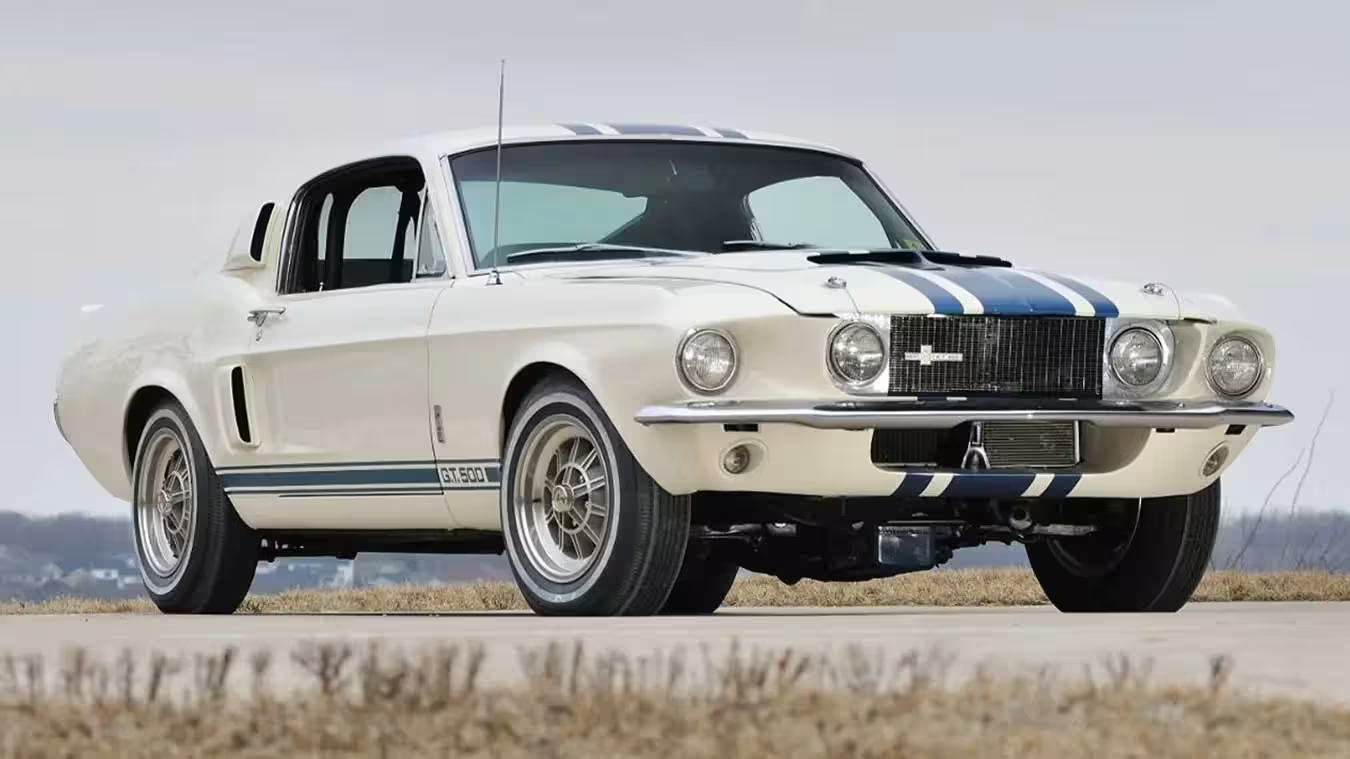
Carroll Shelby famously shrugged at the Mustang early on, calling it a "secretary's car," yet a lucrative deal with Ford persuaded him to build high-performance variants. After the GT350 appeared in 1965 and the GT500 followed in 1967, Shelby used his position as Goodyear's West Coast distributor to promote the tiremaker's new budget line, Thunderbolt. The result was a one-off Super Snake. Painted white with Le Mans-style blue stripes like the production cars, it hid a race-bred 7.0-liter V8 under its hood, the same basic engine used in the Ford GT40 Mk II. With an output reported between 500 and 600 hp, Shelby used the Super Snake to demonstrate the capabilities and durability of the new tires. Shelby planned a limited run, but the Super Snake remained a unique machine.
Purpose-built machines that put rubber first
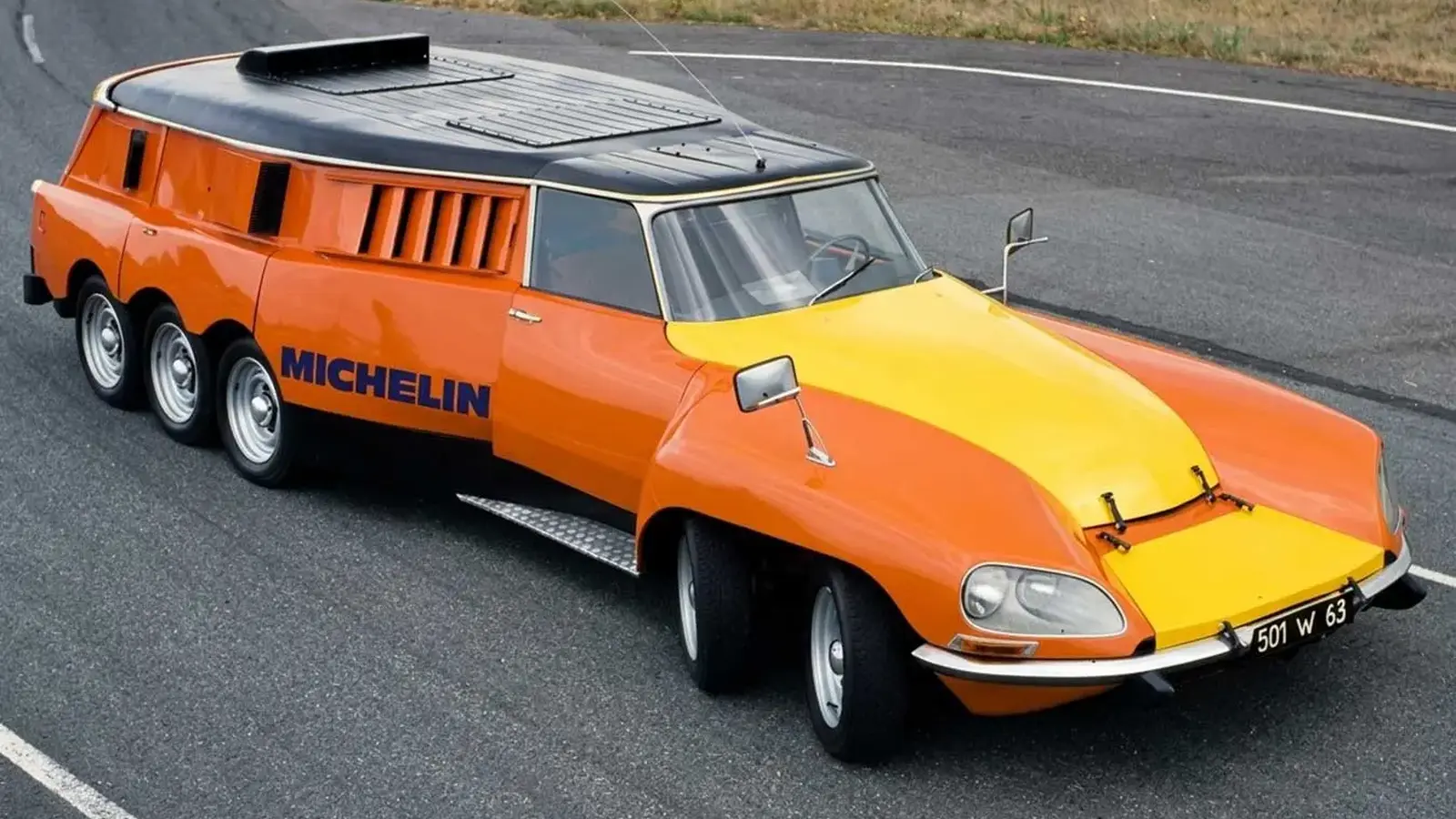
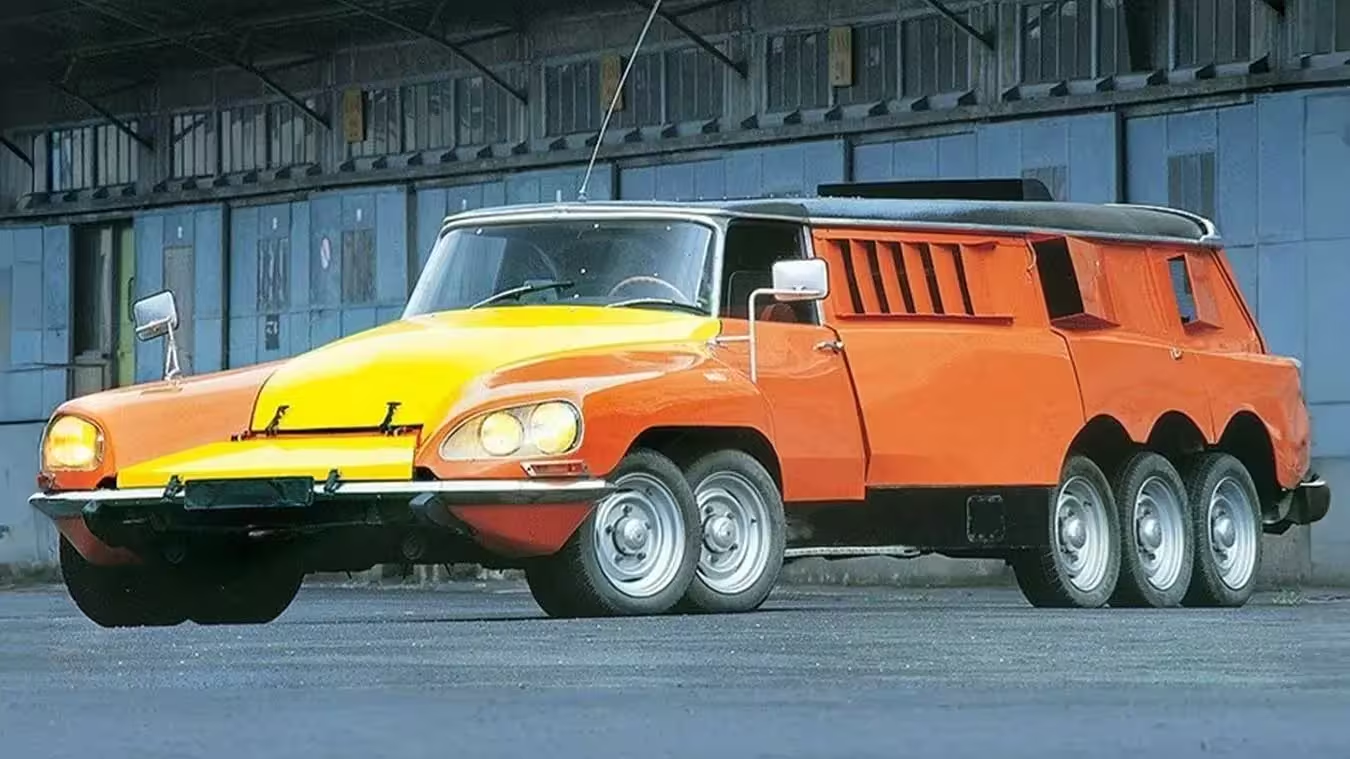
The French tire company Michelin took the idea of a rolling test rig to the extreme in 1972. At the time Michelin owned part of Citroën and commissioned a ten-wheel giant based on a Citroën DS estate to validate bus and truck tires at speed and under heavy loads. Called the PLR, an abbreviation of the French Poids-Lourd Rapide, the machine measured 2.45 m wide and 7.2 m long and carried two Chevrolet 5.7-liter V8 engines. One engine propelled the vehicle; the other spun a dedicated test wheel assembly mounted in the center of the chassis. That central wheel could be lowered onto the road at speed, while adjustable camber and variable loading systems changed the forces acting on the tire. Dozens of sensors recorded detailed data. Nicknamed the millipede, the PLR tested many tire generations through the early 1980s and is today preserved in the Michelin museum in France.
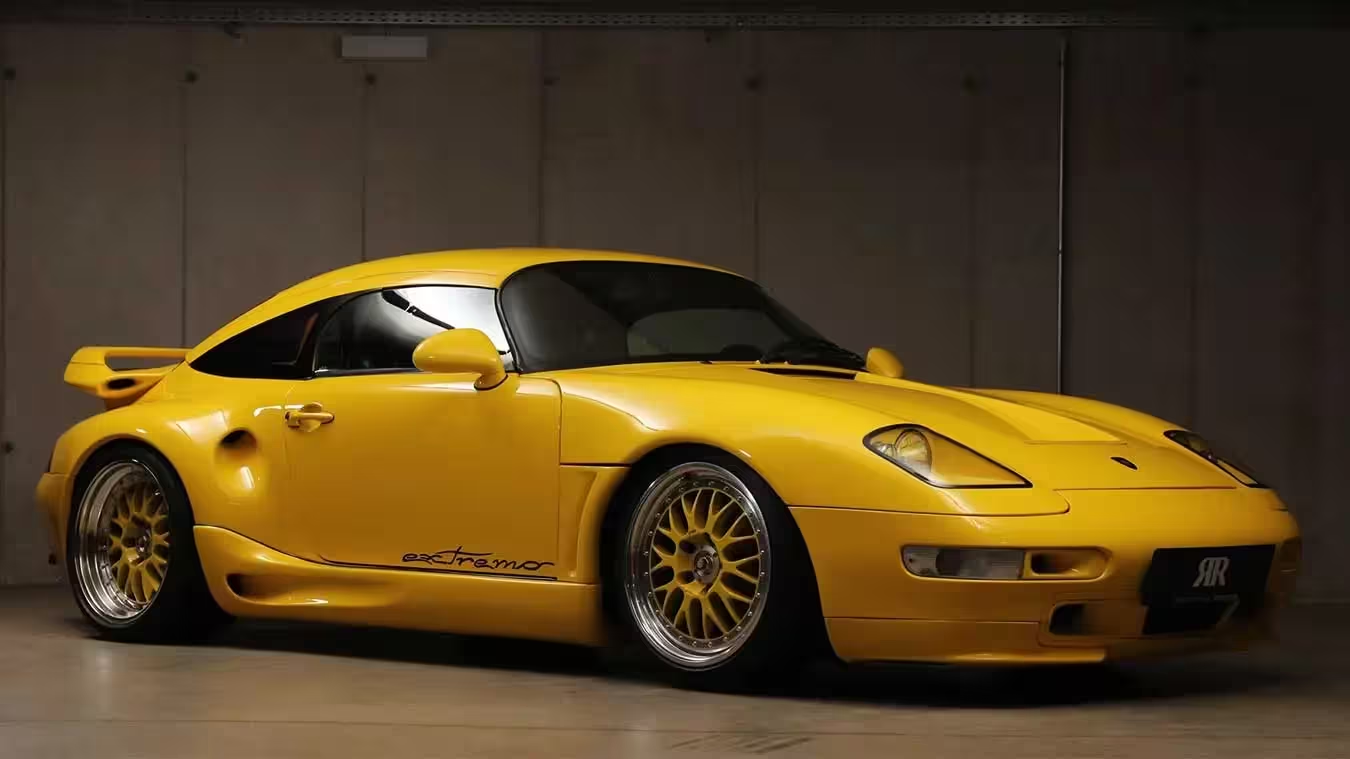
In the 1990s German tuners brought a different flavor to tire development. Gemballa, the outfit outside Stuttgart known for radical Porsche conversions, was commissioned by German tiremaker Fulda in 1996 to showcase a new high-performance line called Extremo. Gemballa selected a Porsche 911 from the 993 generation and transformed it dramatically: a widebody kit, revised front end and a removable roof that turned the car from a roadster into a bespoke coupe. The air-cooled flat-six received twin turbos and was tuned to around 500 hp. The project proved popular enough that a wealthy collector in the Middle East ordered a second example tuned to roughly 600 hp.
Fulda returned in 2004 with another headline-grabbing commission, this time commissioning a one-off from Maybach to introduce the Karat Exelero tire. The Maybach Exelero was designed by Frederic Burckhardt and built by Italian coachbuilder Stola on the mechanical base of a Maybach 57. The body is a long, luxurious grand tourer, while its heart is a 6.0-liter V12 twin-turbo that produces about 700 hp. The Exelero and its Fulda performance tires were driven by German racing driver Klaus Ludwig on the Nardo high-speed oval, where the package reached a verified top speed of 351 km/h.
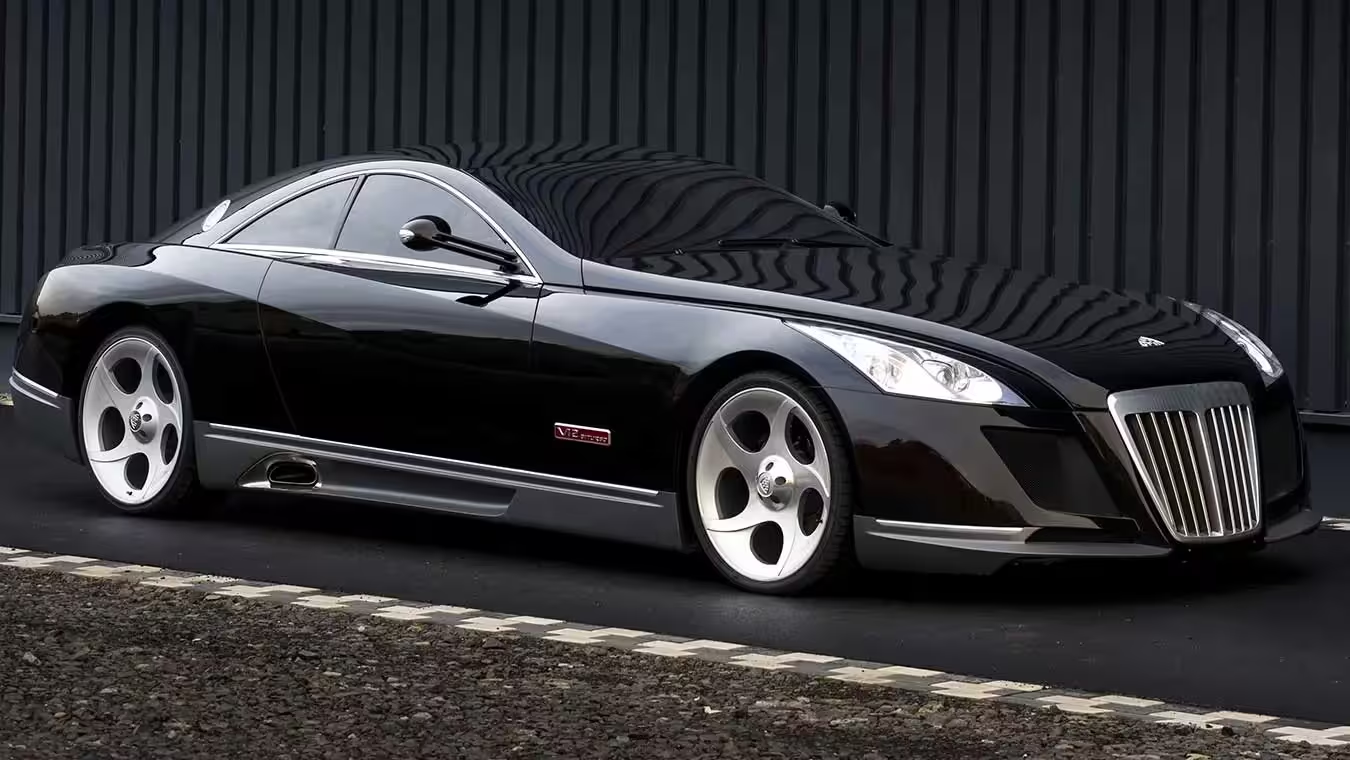
These four one-off cars underline a simple fact: in certain eras, tire makers and tuners built spectacular, purpose-built machines so they could push rubber to its limits and prove performance claims on the road and the track.

Leave a Comment
Comments
No comments yet. Be the first.