

F1 combustion tech arrives in a Jeep four-cylinder
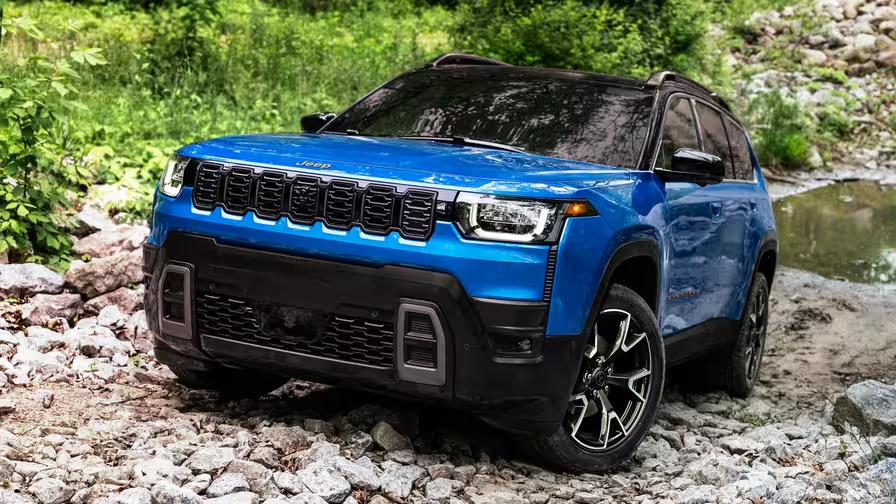
Jeep is taking a bold step: the brand will equip upcoming models — including the next Grand Cherokee — with a new 2.0-liter four-cylinder that borrows advanced combustion methods developed in Formula 1. Rather than relying on heavy hybrid battery packs to meet efficiency targets, this engine uses a pre-chamber jet-ignition system to dramatically improve fuel burn and thermal efficiency.
The Hariken 2.0 turbocharged engine, set to debut in the 2026 Grand Cherokee, is designed as a direct replacement for the aging 3.6-liter Pentastar V6 over time. The move reflects a wider industry trend toward downsized, highly efficient gasoline engines that deliver V6-like performance without the extra mass or complexity of hybrid hardware.

What is Turbulent Jet Ignition (TJI)?
Turbulent Jet Ignition, or TJI, uses a small pre-combustion chamber built into the cylinder head. That chamber houses an additional spark plug and injector. When the system fires, fuel ignites inside the pre-chamber and sprays high-speed flame jets through dozens of tiny 360-degree nozzles into the main combustion bowl. The result is faster, more complete ignition of much leaner air–fuel mixtures — raising thermal efficiency beyond 40.5 percent and cutting real-world fuel consumption.
Mike Bans, head of research at the group, explained the development process and the collaboration with Formula 1 teams, including Ferrari: 'Working with F1 provided the ideal testbed to accelerate and validate this technology under extreme conditions.'
Performance and specs
The new 2.0-liter Hariken combines TJI with a variable-geometry turbocharger producing about 2.4 bar of boost. Jeep quotes 324 horsepower and 450 Nm (about 332 lb-ft) of torque. Relative to the outgoing 2.0-liter, that's roughly a 20 percent power gain and a 10 percent fuel-consumption improvement. Compared with the 3.6-liter Pentastar V6, the Hariken produces approximately 31 more horsepower and 97 Nm more torque while delivering lower operating temperatures and similar annual fuel costs.
Key technical highlights:
- Displacement: 2.0 liters, inline-four
- Turbo: Variable geometry, ~2.4 bar boost
- Output: 324 hp, 450 Nm torque
- Thermal efficiency: above 40.5%
- Ignition: Pre-chamber turbulent jet ignition (TJI)
- Fuel: Optimized for regular pump gasoline

Real advantages for drivers
One of the most practical benefits is that these numbers are achieved on regular octane fuel. The pre-chamber design enables reliable combustion of very lean mixtures that conventional spark plugs simply can't ignite cleanly. Faster, more complete burns mean lower heat losses and reduced exhaust temperatures, easing stress on internal components and the turbocharger — and improving long-term durability.
For owners, that translates into:
- Better fuel economy without sacrificing power
- Lower operating temperatures and reduced wear
- No mandatory high-octane fuel
- A lighter, simpler powertrain compared with full hybrid setups
How this fits the market
For Jeep and parent Stellantis, TJI is another tool alongside electrification and mild-hybrid systems to meet tightening global CO2 and emissions rules. It also offers an attractive value proposition: performance and efficiency gains without the cost, weight, and packaging penalties of large battery systems.
The technology already filtered into the Stellantis portfolio via exotic projects — notably the Maserati MC20 and the Nettuno twin-turbo V6 architecture — and is now moving to mainstream SUVs. That’s a reminder that motorsport-derived innovation can benefit everyday drivers, not just racetrack machines.
Bottom line
Jeep’s Hariken four-cylinder with F1-derived jet ignition promises to rewrite expectations for gasoline engines in large SUVs. By pairing high thermal efficiency with strong outputs and compatibility with regular fuel, it offers a practical path to better economy and performance without heavy electrification. As the 2026 Grand Cherokee rollout approaches, buyers and enthusiasts should watch whether real-world usage matches the promising lab figures.

Leave a Comment
Comments (1)
Hmm F1 tech in a Jeep? sounds wild. But 40%+ thermal efficiency on pump gas, really? Curious about real-world mpg, long term reliability and cost. If that's real then... wow.