
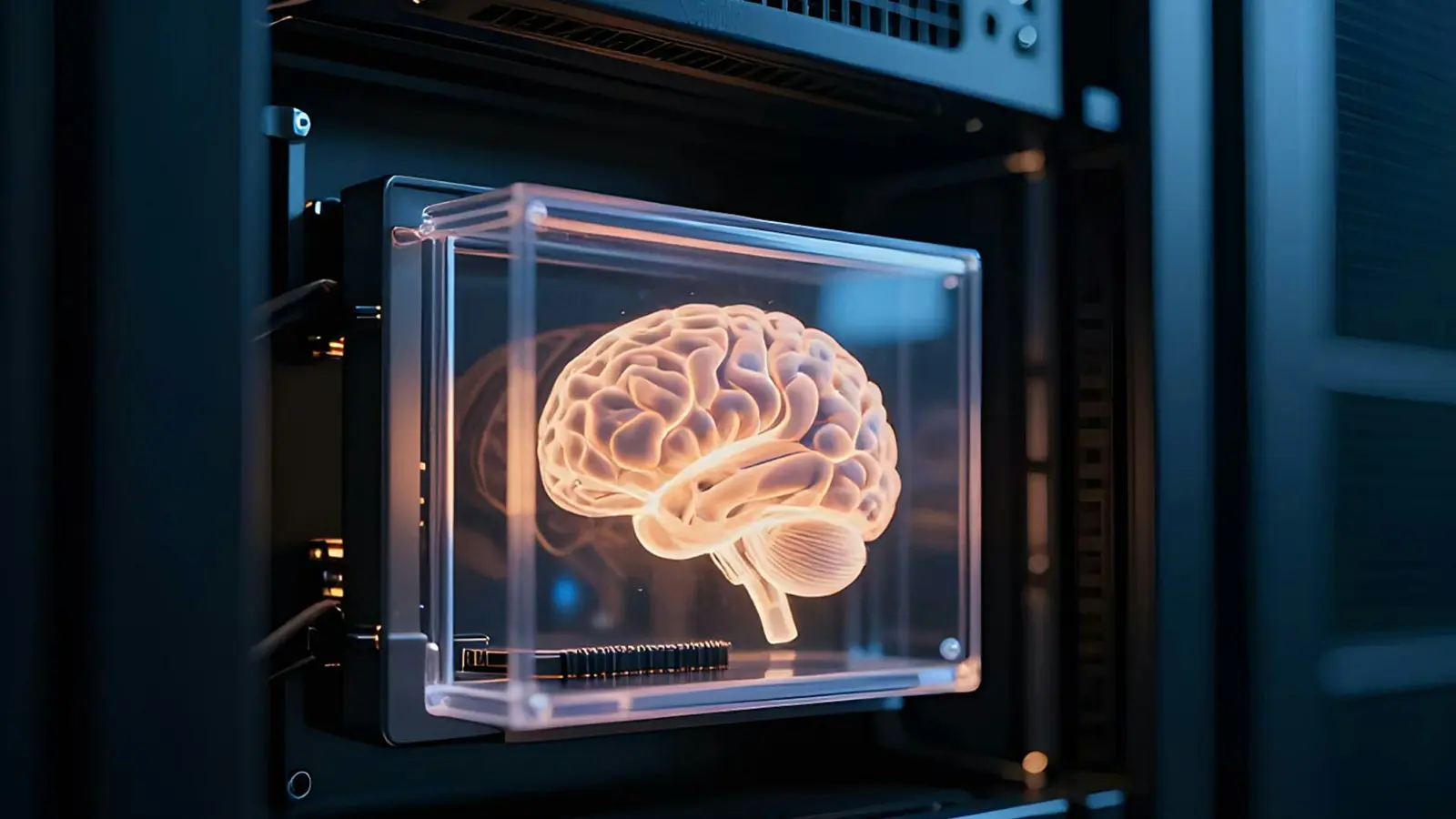
Imagine a server that drinks sugar. Not a metaphor—literally sugar. In a quiet wing of the National University of Singapore, engineers and biotechnologists have flipped the script on conventional data centers, swapping rows of hot silicon for petri dishes and living neural tissue.
The project is a collaboration between Singapore’s DayOne operator and Australian biotech startup Cortical Labs, and it opened its doors on July 17, 2026. What sits inside are 20 biological compute units called CL1: hybrid devices that marry neurons grown from reprogrammed blood cells to electrode-laced silicon chips. The result reads like science fiction and acts like a niche processor.
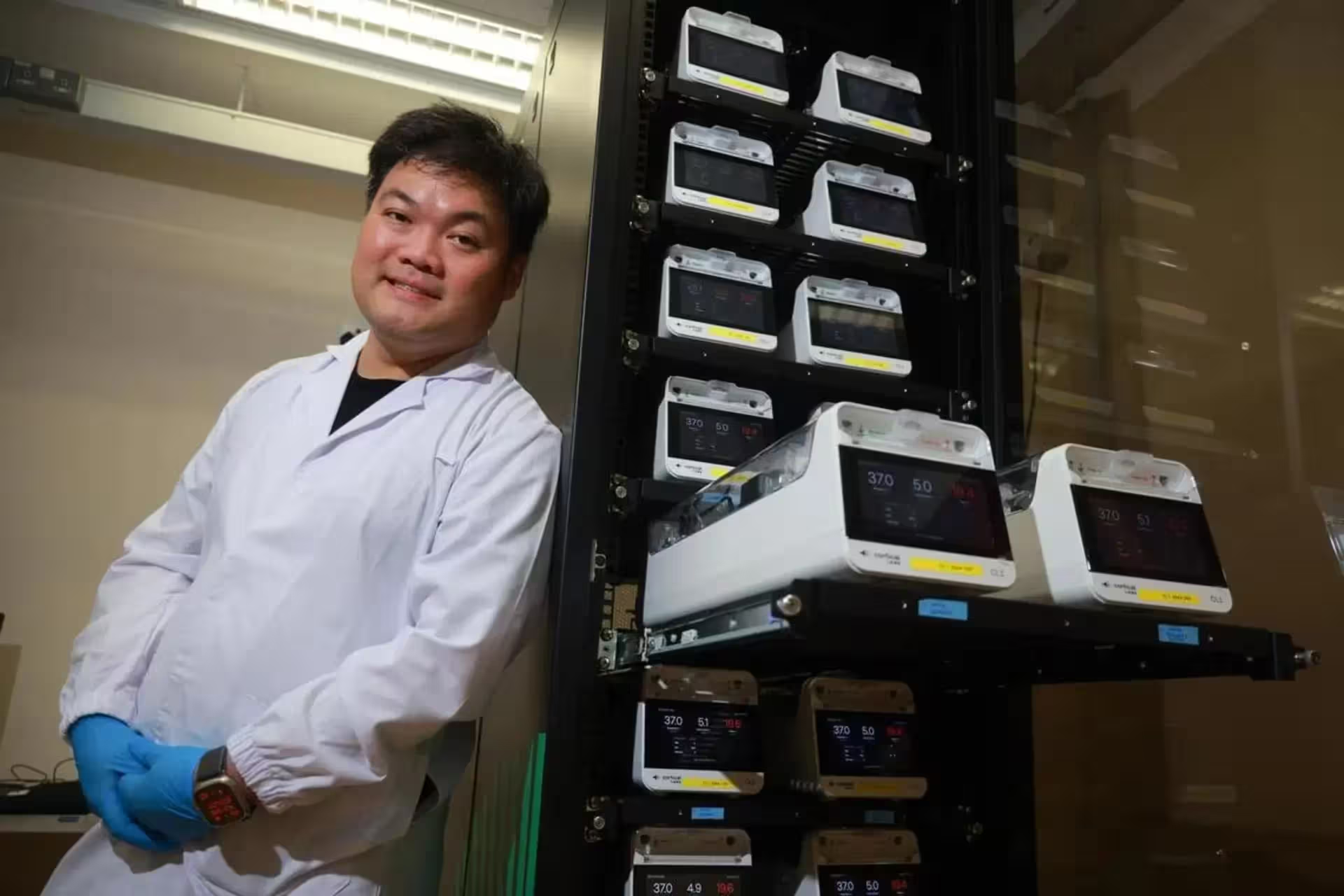
Technicians tend the cultures every three days. They feed the cells a blend of sugar, microbial nutrients and pH buffers, then use a small mixing rig and a controlled supply of oxygen, nitrogen and carbon dioxide to keep the network alive. These are not passive samples on a shelf. Each CL1 contains at least 200,000 lab-grown neurons that communicate electrically with the underlying chip. Those neural patterns are interpreted by software and turned into usable processing signals.
So why build a brain-powered data center? Cortical Labs founder Chang Han Wong is blunt: biological systems shine when data is scarce and environments are unpredictable. He argues these living processors excel at learning from limited, messy inputs—an edge case silicon-based servers struggle with. "Biological data centers are better for applications where datasets are small and conditions highly unpredictable," he said. "You simply cannot train humanoid robots for every real-world variation with conventional servers alone."

There are practical uses too. Wong points to cybersecurity anomaly detection as a promising application—neural cultures can pick up subtle irregularities without needing mountains of labeled examples. But he is equally clear about the limits: conventional silicon remains unrivaled for fast, precise, repeatable arithmetic that powers large language models and other heavyweight AI workloads.
Each CL1 consumes about 30 watts including life-support systems—less power than a basic handheld calculator. Contrast that with modern AI accelerators: a single NVIDIA H100 SXM can draw up to 700 watts, and a typical server packed with eight of those GPUs will pull roughly 10,200 watts. The energy math is stark, and it’s the headline advantage of the biological approach.
Cost reflects that trade-off. Access to one CL1 runs about $2,200 per month for commercial and academic customers—roughly half the price of renting a top-tier AI chip on major cloud platforms. That makes biological compute an attractive, if specialized, option for teams chasing energy-efficient inference or experimental research on embodied intelligence.

There are hard questions beyond economics: bioethics, long-term reliability, regulatory oversight, and how to scale a living system without losing the behaviors that make it useful. The setup in Singapore is small by design—a testbed rather than a replacement for GPU farms. Still, watching a cluster of neurons solve problems while sipping a solution of sugar and nutrients is a reminder that computing doesn’t have to look the way it always has.
So what happens next—more hybrid hubs, or a quiet niche that teaches us new ways to think about intelligence? Either way, the image is powerful: computing that lives, breathes and learns in ways our current machines never could.


Leave a Comment
Comments
No comments yet. Be the first.