
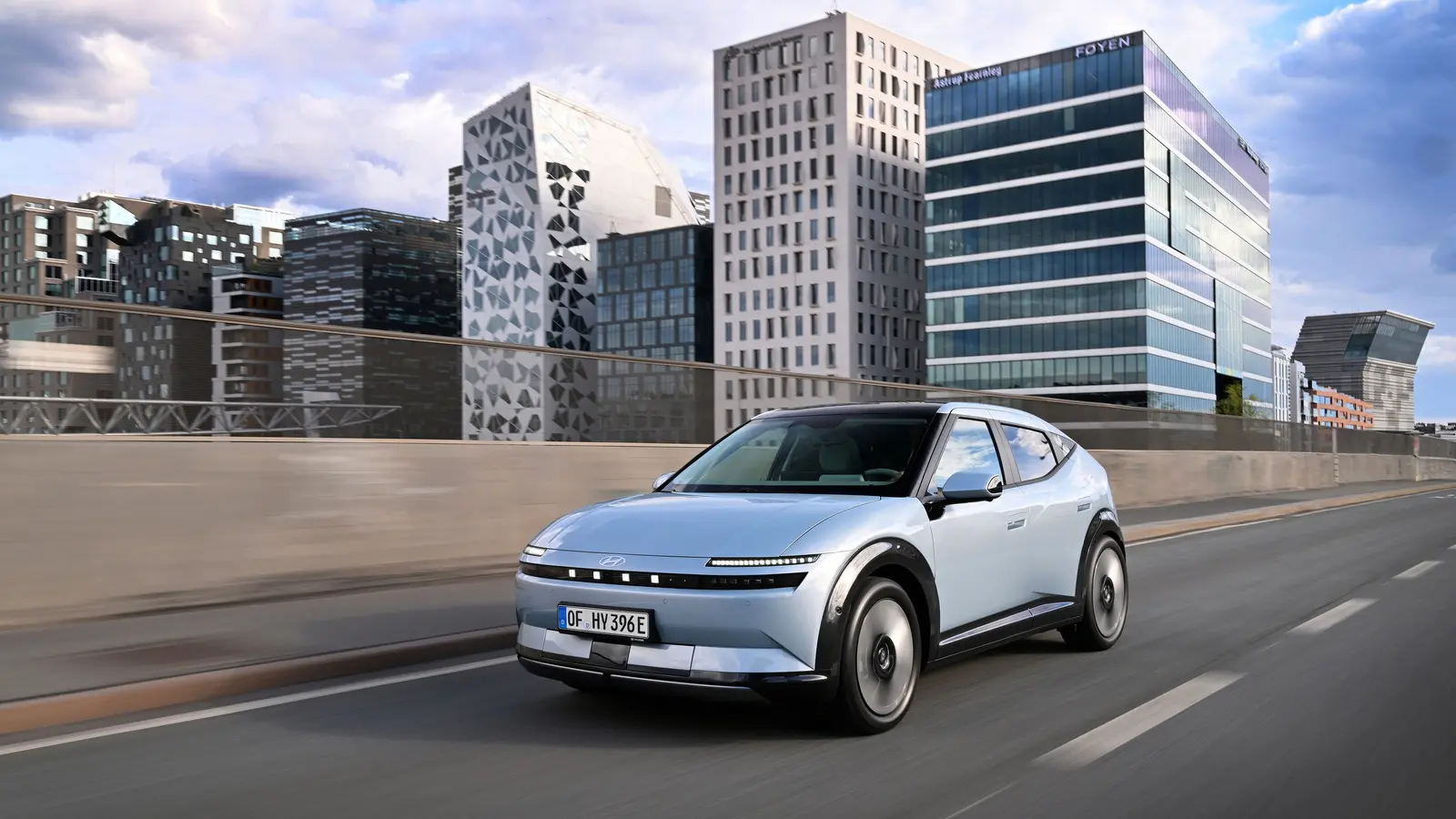
Hyundai pins UK prices for the compact Ioniq 3
Hyundai has finally published UK pricing and detailed specifications for the new Ioniq 3, the brand's subcompact EV aimed squarely at European city buyers. Production starts in August 2026 at Hyundai's Izmit plant in Turkey, and the hatchback arrives in four trim levels with two battery options and a sporty N Line Evo at the top of the range.

Pricing snapshot (UK market)
Hyundai's UK lineup is priced to compete with other small premium EVs. The Ioniq 3 starts at:
- Advance 42 kWh: £22,245 (approx. $30,100)
- Advance 61 kWh: £24,245 (approx. $32,805)
- Premium 61 kWh: £25,945 (approx. $35,105)
- Ultimate 61 kWh: £28,445 (approx. $38,490)
- N Line Evo 61 kWh: £30,445 (approx. $41,196)
These figures include relevant fees for the UK market and position the Ioniq 3 as an accessible entry into Hyundai’s Ioniq family for buyers who want a compact EV without the premium price tag of larger rivals.
Trim levels and key features
Hyundai keeps the trim strategy straightforward: Advance as the value-focused base, Premium and Ultimate adding comfort and tech, and the N Line Evo catering to buyers who want extra equipment and sportier styling.
Advance
The Advance trim is well equipped for its price point and includes a 12.9-inch Pleos infotainment display, a six-speaker audio system, dual-zone climate control, keyless entry with push-button start, an electrochromic rearview mirror, leather-wrapped steering wheel, and 16-inch alloy wheels. Practical touches such as a powered center console socket and adjustable steering column add everyday convenience.

Premium and Ultimate
Moving up to Premium adds a 9.9-inch digital instrument cluster, rain-sensing wipers, battery pre-conditioning and heating, a wireless charging pad, 17-inch alloys and heated side mirrors. The Ultimate trim builds on this with an 18-inch wheel option, LED headlights, ambient interior lighting, a heated steering wheel and expanded safety systems.
N Line Evo
At the top, the N Line Evo brings a 14.6-inch infotainment screen, surround-view camera, 19-inch wheels and advanced driver aids such as blind-spot monitoring, parking-collision avoidance and remote smart parking assist. The N Line Evo is clearly aimed at buyers who want a dynamic image plus all the latest tech.
Optional packs and comfort upgrades

Buyers can personalise their Ioniq 3 with several option packs. Highlights include:
- EV Pack — likely optimising charging and comfort systems for cold climates
- Design Pack — two-tone roof and panoramic vision roof for extra flair
- Comfort Pack — ventilated and heated premium front seats, electric driver adjustment with memory, Bose premium audio and Digital Key 2.0

Powertrain and performance
The Ioniq 3 is offered with two single-motor power outputs depending on trim and battery choice. One output produces 147 PS (145 hp / 108 kW) and 250 Nm (184 lb-ft) of torque, while the other delivers 135 PS (133 hp / 100 kW) with the same torque figure. Acceleration from 0-62 mph is quoted at 8.8 seconds for the stronger variant and around 9.5–9.6 seconds for the lower-output versions, with top speeds of roughly 105 mph and 102 mph respectively.
Charging and battery details
Two battery sizes are available: 42 kWh and 61 kWh. Both variants have an 11 kW onboard AC charger. DC charging capability differs slightly: the 42 kWh model supports up to 119 kW DC fast charging while the 61 kWh model is rated at 110 kW. On a 7 kW home charger the 42 kWh pack charges from 10–100% in about 6 hours 20 minutes, and the 61 kWh pack takes around 8 hours 35 minutes.
Platform, dimensions and market positioning
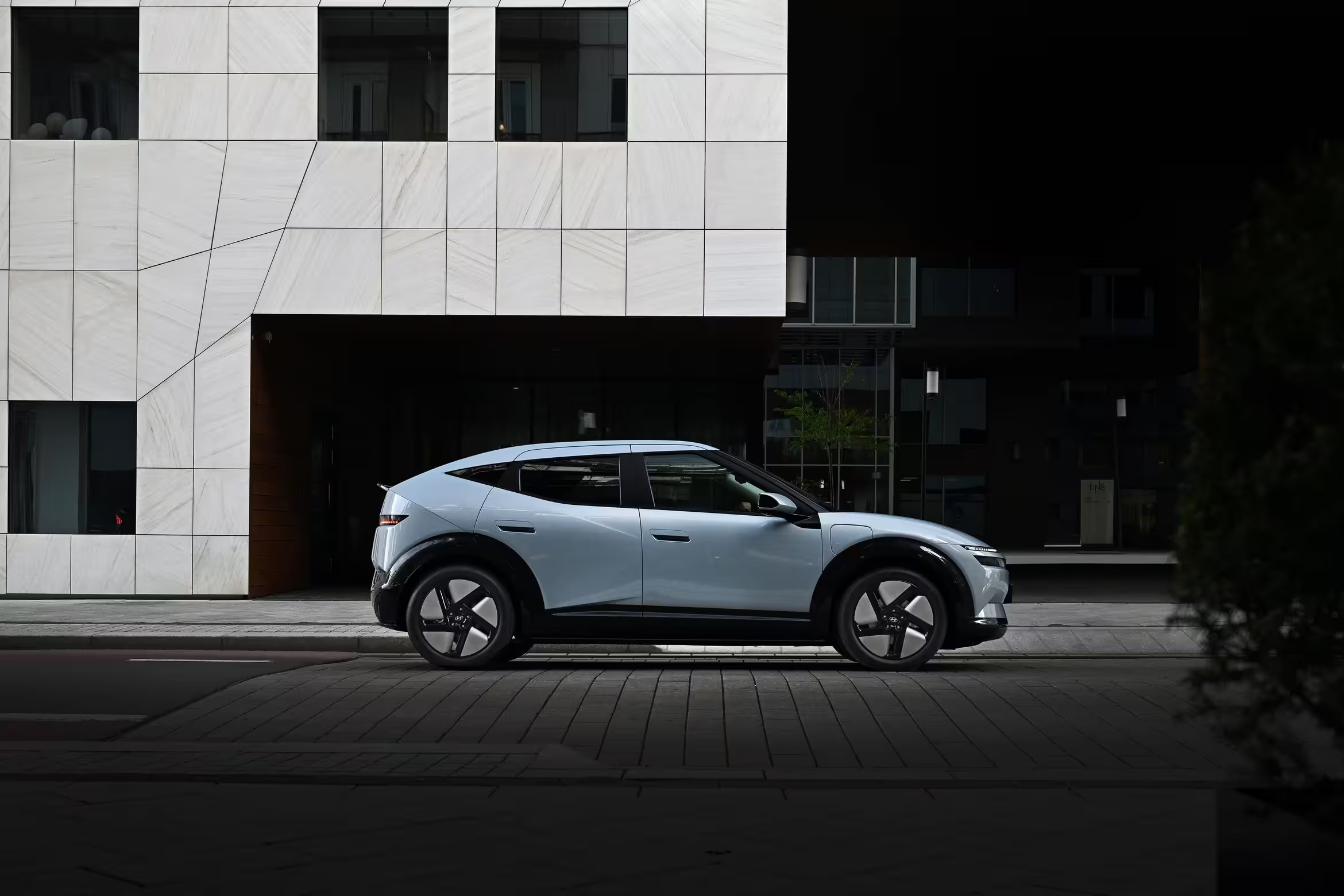
The Ioniq 3 rides on Hyundai's E-GMP architecture — the same underpinnings used by the Kia EV2 — but scaled for the subcompact segment. It measures approximately 4,155 mm (164 in) long, 1,800 mm (71 in) wide and 1,505 mm (59 in) high, with a curb weight slightly above 1,500 kg (around 3,500 lb). These compact proportions make it a natural rival to models such as the Ford Puma Gen-E, MINI Aceman, Volvo EX30, Volkswagen ID. Polo and other small electric crossovers and hatchbacks aimed at urban drivers.
Design: love it or hate it
Styling for the Ioniq 3 is divisive. Designed by SangYup Lee — whose CV includes the Camaro and Genesis GV80 — the hatch blends quirky, angular surfacing with sporty cues that some say echo the Veloster and, oddly, the Pontiac Aztek. The result is a bold, individual look that will polarise shoppers: some will appreciate the character and standout presence, others will prefer more conservative lines.
"A compact, image-driven EV that aims to broaden Hyundai's appeal in Europe."
Where it will and won’t be sold
Hyundai has confirmed European production and a UK market launch, but the Ioniq 3 is not destined for the United States, where tariffs and market strategy exclude it from the lineup. Instead, Hyundai positions the Ioniq 3 as a Europe-first model — a gateway to the Ioniq family for urban EV buyers seeking a smartly priced, well-equipped hatchback.
Bottom line
The Ioniq 3 lands as a competitively priced, well-specified electric hatchback designed for European tastes. With accessible starting prices, practical interior tech and a choice of battery sizes, it offers a tempting package for city drivers and small-family buyers. The styling will spark debate, but for many customers the balance of price, features and everyday usability will be the deciding factor.

Leave a Comment
Comments (2)
Love the idea of a compact Ioniq for cities, though that Aztek echo lol. If price holds, could be a winner for families who want value plus EV perks!
Seems cheap on paper but 110 kW for the bigger pack? That feels odd. Where's the real range info, and what's the battery warranty? sceptical.