
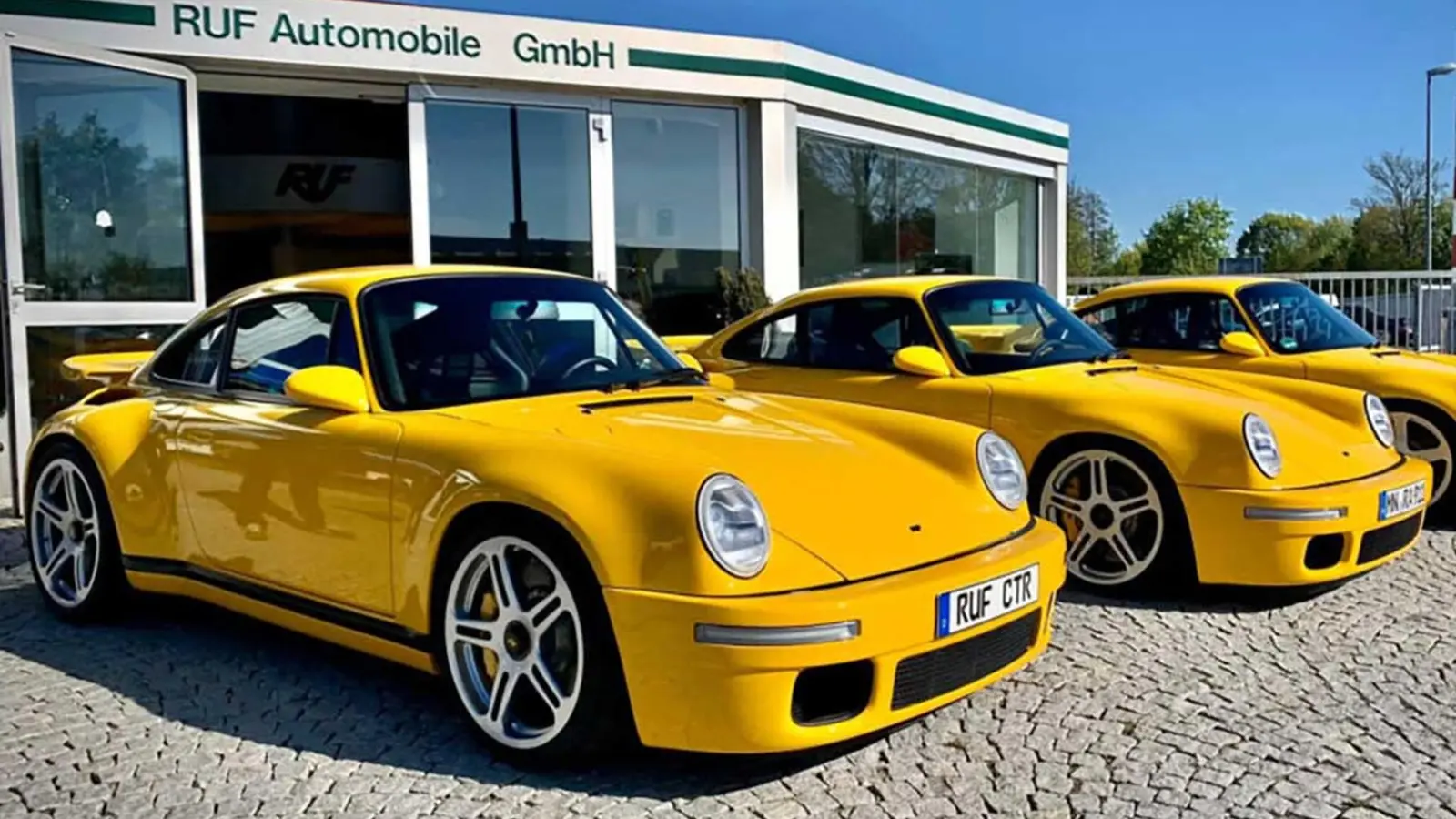
Porsche talks hit a wall as RUF and Singer say no
A recent German media story claimed Porsche had been pursuing acquisitions of two of the industry's most revered boutique tuners — California-based Singer and Germany's RUF. The report suggested Porsche CEO Michael Leiters first approached Singer for a possible purchase of the restomod specialist, and after being rebuffed moved on to hold advanced talks with RUF. But those rumors have been firmly shut down by the companies involved.
RUF: "We are not for sale"
RUF — the 80-employee, family-run company known for creating wildly altered, high-performance versions of Porsche models — responded quickly and unequivocally. In a direct statement the company said: "To be absolutely clear, RUF is not for sale. Reports otherwise are completely false. RUF proudly remains family-run; our independence is the core of our identity and allows generations to pursue our own engineering, performance and coachbuilding vision." The message left no room for doubt: RUF intends to stay independent.

Singer, the California restomod atelier that transforms classic Porsche 911s into finely detailed, high-value restorations, did not issue a public denial. The company declined to comment when approached by media. Porsche itself downplayed the story, calling it speculative and refusing further comment.
Why the rumor mattered
At first glance, the idea of Porsche acquiring Singer or RUF fit a pattern familiar to the auto industry: convert a trusted tuner into an in-house luxury/performance arm — as Mercedes-Benz did with AMG or BMW with Alpina. Bringing a restomod or boutique brand into the corporate group could accelerate Porsche's footprint in the lucrative, high-margin market for limited-run, highly bespoke models and restomods.
But there are practical and cultural barriers. RUF's cars carry an independent identity and are built by a small, close-knit team. Singer's appeal lies in its artisanal, California-focused craftsmanship. Absorption into a major OEM risks diluting that cachet.
What Porsche already has
Porsche doesn't exactly lack options to deliver exclusive and high-performance models. The brand has long shown prowess in limited-run vehicles and special editions. Equally important, Porsche maintains a close technical partnership with Manthey Racing — the Nürburgring-focused tuner and motorsport specialist founded in the 1990s. Manthey develops official upgrade kits and race-spec components, helps Porsche in endurance racing, and has been linked to Nürburgring lap record achievements. Those channels let Porsche access serious track performance without buying boutique brands.

Highlights and implications:
- RUF’s clear denial preserves the brand’s family-run, coachbuilder identity.
- Singer’s silence keeps options open, but acquisition looks unlikely now.
- Porsche's existing partnerships (e.g., Manthey) and in-house special projects reduce the strategic need to buy restomod boutiques.
For car enthusiasts, the episode is a reminder of how valuable independence and small-batch craftsmanship are in today’s collector market. While corporate consolidation can boost resources and reach, some marques retain their value precisely because they resist being absorbed. In the end, RUF's firm stance and Singer's discretion underscore a market truth: authenticity and autonomy remain powerful assets in the boutique high-performance and restomod scene.


Leave a Comment
Comments
No comments yet. Be the first.