
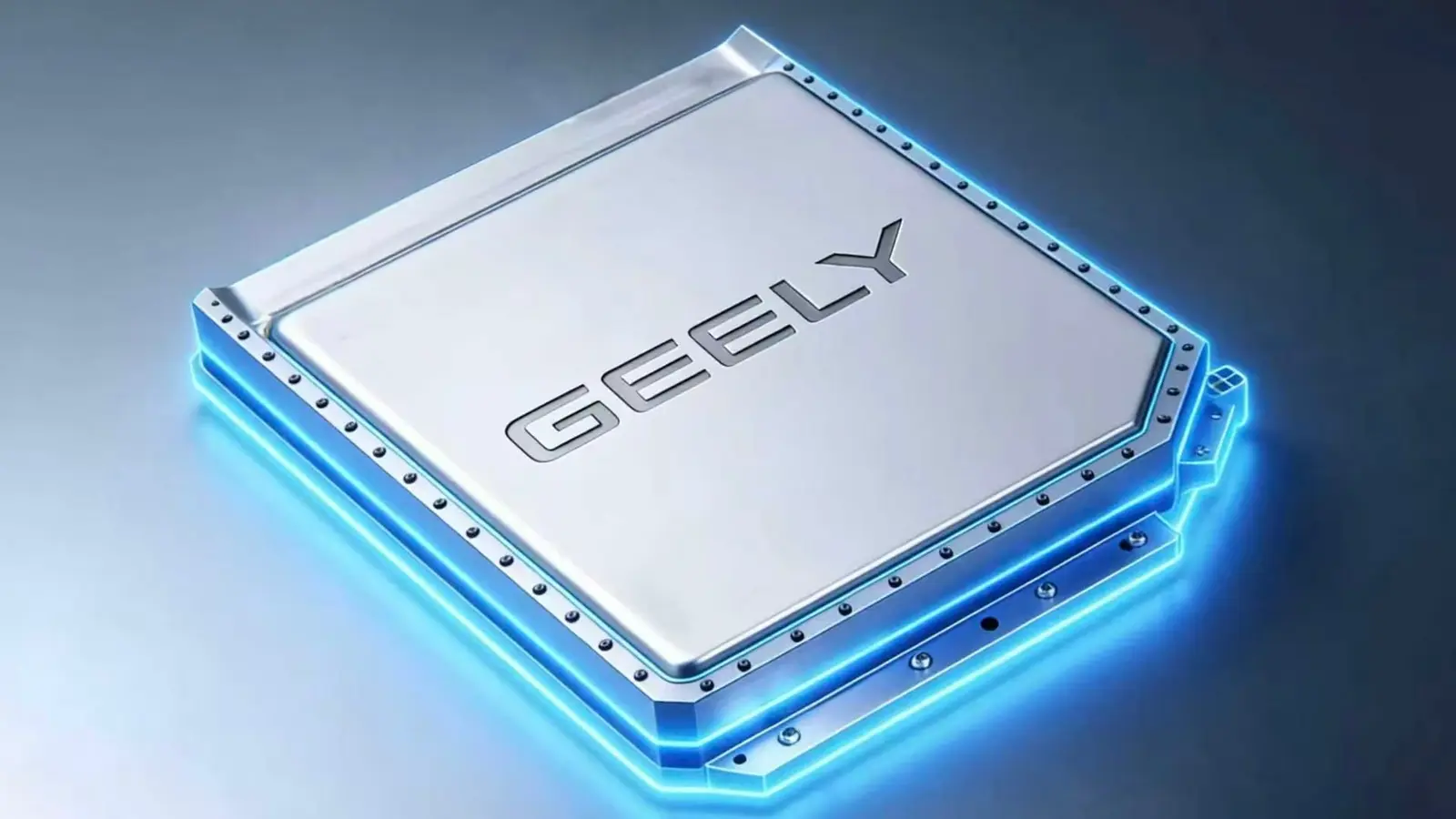
Geely promises 500 Wh/kg solid-state packs in cars next year
Geely Holding says its next-generation solid-state battery, targeting an eye-catching 500 Wh/kg energy density, will appear in vehicles as part of a 2027 pilot program. The automaker is simultaneously building its first in-house solid-state battery pack plant as it moves to commercialize what could be a major step forward for EV battery technology.
Why 500 Wh/kg matters for EVs
At 500 Wh/kg, the new solid-state cells would be roughly twice as space-efficient as today’s best lithium-ion packs. Typical NMC cells reach about 250 to 300 Wh/kg at cell level, and pack-level figures are significantly lower. By contrast, Geely's Golden Brick LFP pack manages around 128 Wh/kg at pack level.

Doubling energy density changes the equation for vehicle design:
- Smaller, lighter battery packs for the same range, improving weight distribution and handling
- Or much larger range figures without increasing pack volume or weight
- Potential to create EVs that rival diesel cars with ranges beyond 1,000 km on a single charge if manufacturers keep pack weight constant
Geely also claims impressive cycle life, with a lifespan target up to 1 million kilometers, which would reduce total cost of ownership and support high-mileage use cases such as ride-hailing or long-range SUVs.
Thermal stability and manufacturing timeline
One of the traditional challenges for solid-state batteries is narrow operational temperature windows. Geely’s materials partner, Dow Chemical, says the adhesive used in the pack can stabilize cells from -40 °C to 120 °C, a range that would simplify thermal management and broaden geographic suitability.
Geely plans a 2027 pilot program, meaning a handful of cars fitted with the new solid-state packs could be on public roads next year. Mass production, however, remains contingent on testing outcomes and scaling the supply chain; broad commercialization will take longer.
Key takeaways:
- 500 Wh/kg could reframe EV packaging, performance, and range expectations
- Lifespan claims aim at 1 million km, lowering TCO for fleets
- Thermal and manufacturing hurdles remain; pilot in 2027, volume production later
If Geely hits these targets, expect major implications for EV range, vehicle architecture, and market positioning. For car buyers and industry watchers, the next 12 to 24 months will be crucial to see whether solid-state can move from lab promise to real-world advantage.


Leave a Comment
Comments
No comments yet. Be the first.