
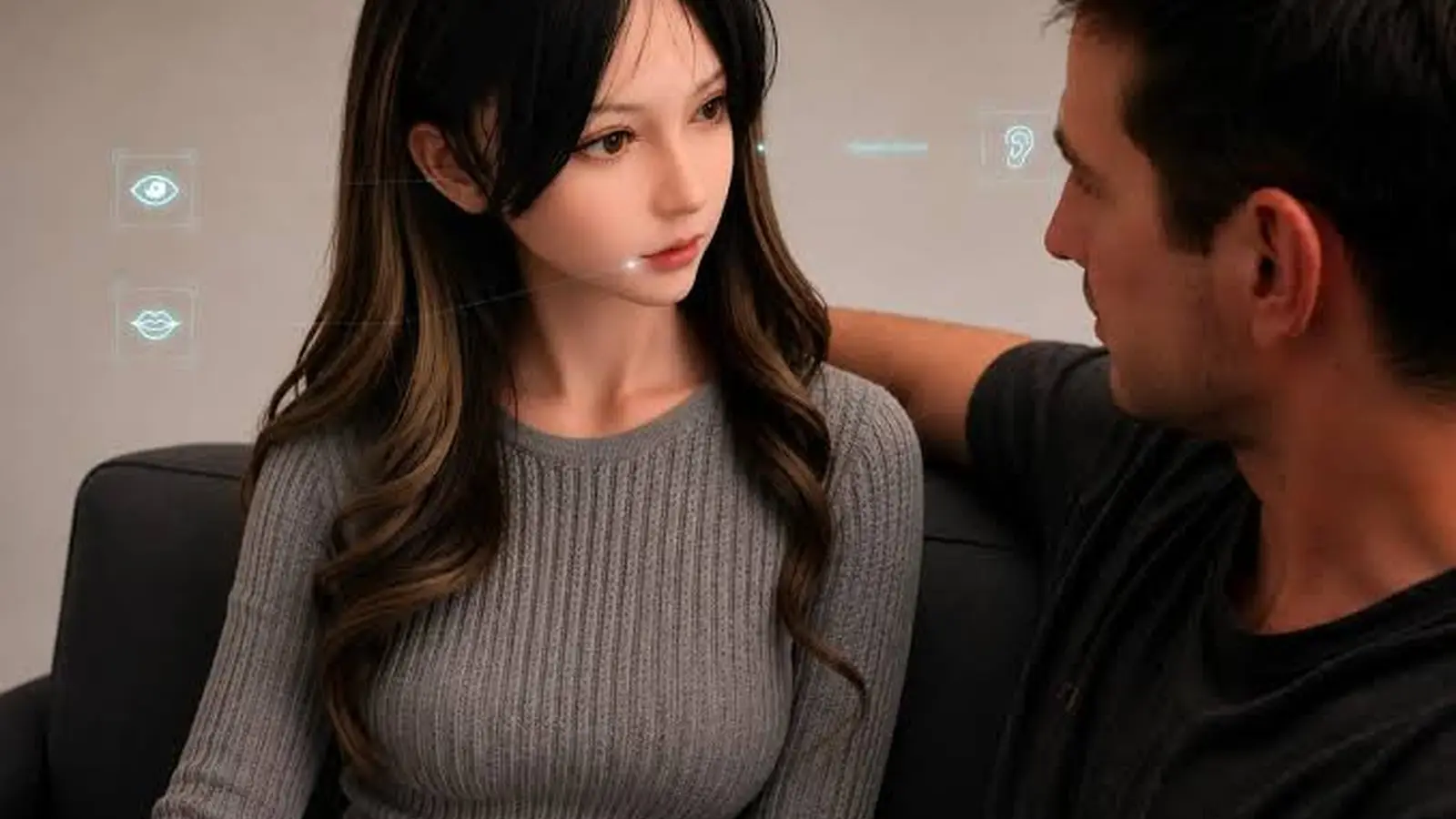
Think of a robot that changes its head the way you change a camera lens. Strange? Captivating? Both. Xiaoling, a new modular humanoid from Warmcore Tech, is designed so components can be swapped and repurposed, shifting not only looks but capabilities.
Warmcore built Xiaoling around one clear idea: separate the mind from the face. The company offers multiple platforms and interchangeable modules so a single torso can host different heads, each tuned for specific tasks. One head might prioritize expressive facial animation and realistic lip-sync; another could focus on advanced vision and object recognition. The result is a machine that adapts to roles rather than being boxed into one personality.

- Height range: roughly 150 to 170 cm
- Weight range: about 29.5 to 41 kg
- Skin: platinum-grade silicone for a lifelike finish
- Internal frame: lightweight alloy skeleton
Up close, the head is where the detail lives. Eye movement, nuanced neck turns and a system that synchronizes mouth motion with speech give Xiaoling an uncanny human cadence. Some head variants include cameras capable of eye-tracking and object detection, while others omit cameras entirely to preserve anonymity and privacy.
The software side leans into conversation. Xiaoling uses dialogue-driven AI with a memory layer and multilingual support, aiming to make interactions feel continuous instead of fragmented. Warmcore also enables over-the-air updates, so behavioral tweaks and new language packs arrive without swapping hardware.

Buyers can choose vision options and privacy settings before ordering, a design choice that treats surveillance as a configurable feature rather than a given.
Swap a head and you shift the relationship between human and machine. One moment Xiaoling could be a patient-facing assistant with a warm expression and careful lip-sync; the next, a surveillance-enabled unit with advanced perception. That flexibility raises real questions about use cases, consent and responsibility as these machines move from research labs into more public roles.
How we govern modular robots may matter as much as how we build them, and Xiaoling has suddenly made that debate harder to ignore.

Leave a Comment
Comments
No comments yet. Be the first.