
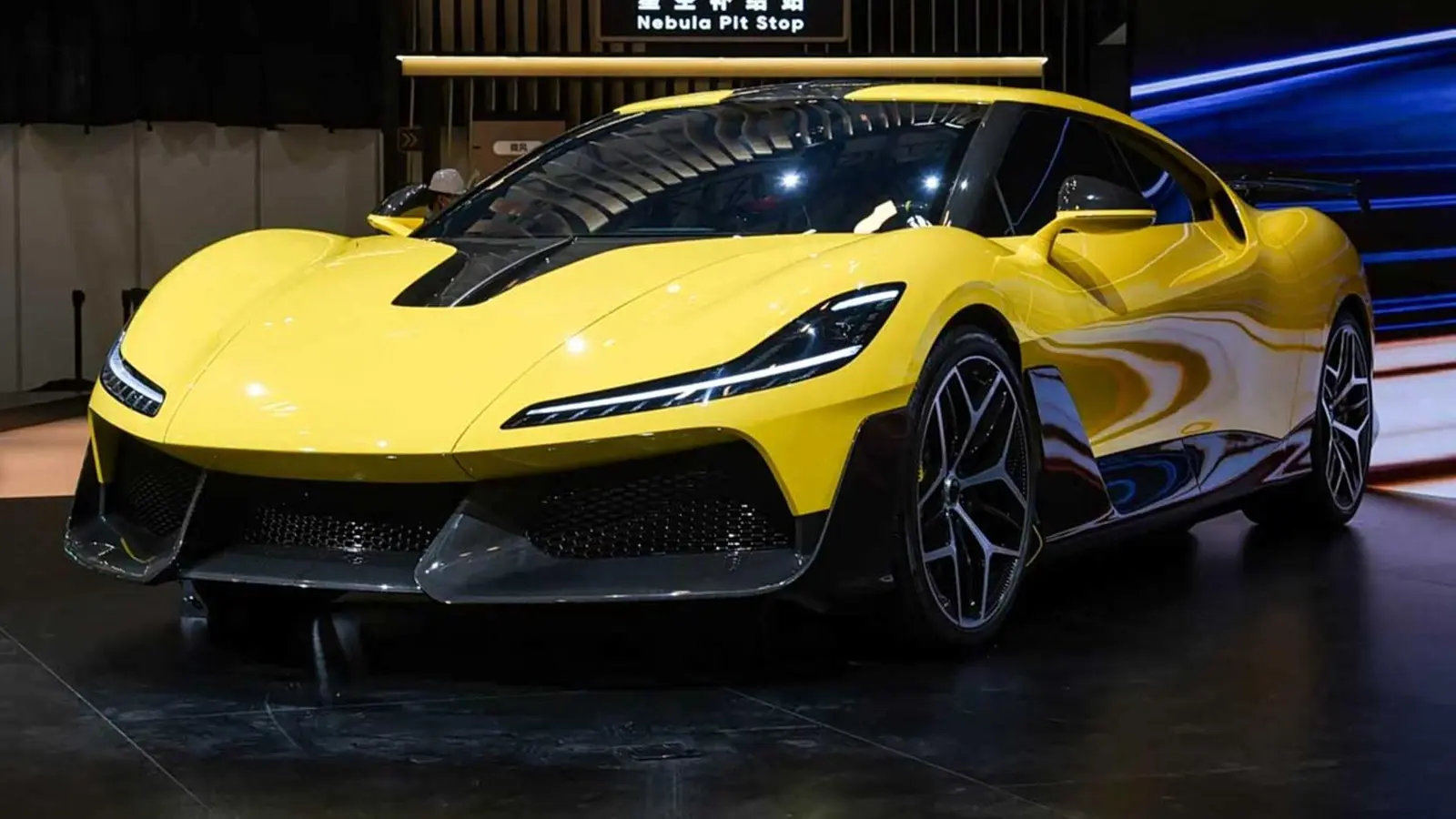
Dream shutters its automotive ambitions after brief, noisy entrance
Chinese startup Dream — until recently known for robotic vacuum cleaners — has quietly closed its ambitious automotive program, ending a high-profile but short-lived push into the hypercar segment. The company's retreat comes only a year after it officially entered the car market and generated global headlines with a series of dramatic product reveals.
From CES spectacle to rapid wind-down
Dream announced its move into electric vehicles in August 2025 and made a splash at CES in January 2026 with an eye-catching hypercar concept. The firm doubled down in April when it unveiled the Nebula Next 01 Jet Edition — nicknamed the "rocket car" — at an event in San Francisco on April 27. Promises were bold: a claimed 0–100 km/h sprint in 0.9 seconds, a sulfide-based solid-state battery exceeding 450 Wh/kg, a range beyond 550 km, and a propulsion system boasting up to 100 kN of thrust.

But within months the excitement soured. What began as a rapid build-out of a nearly 1,000-strong automotive division collapsed after broad workforce reductions that started in May. The unit has been reduced to a few dozen employees — mainly finance, legal and HR staff tasked with winding down operations, settling supplier accounts and handling legal dissolutions.
Marketing spectacle or genuine engineering breakthrough?
Insiders and former employees have since painted a far different picture from the glossy press releases. Several sources told Chinese media the CES hypercar lacked a real chassis and was moved around on set via remote control. The so-called rocket car reportedly originated from a Shanghai model-making studio and was later fitted with a visible chassis and powertrain primarily for camera-ready demonstrations.
One recurring critique centered on Dream's operating logic. Rather than prioritizing research and development to build a viable production vehicle, staff say the company focused first on fundraising and publicity to attract investment — effectively asking employees to secure capital before allocating resources to genuine R&D.


Highlights:
- Bold performance claims: 0–100 km/h in 0.9 sec, >550 km range, >450 Wh/kg battery density.
- Allegations of show-car practices and limited engineering validation.
- Rapid layoffs and consolidation to administrative teams.
"It looked like a marketing exercise dressed up as an R&D program," a former engineer told reporters. Whether that assessment is fully accurate remains subject to ongoing scrutiny.
Regulatory scrutiny and shifting strategy
The abrupt project shutdown did not go unnoticed by local authorities. Reports indicate regulators opened inquiries into the use of investment funds and moved to limit the free use of public subsidies that Dream had received. In response, CEO Yu Hao has steered the company back to its core businesses.
Going forward Dream will focus exclusively on four main product lines: robotic vacuum cleaners, robotic lawn mowers, electric two-wheel vehicles and intelligent robots. Several incubator centers and non-core divisions have been closed as part of the restructuring.

Market context: another cautionary tale for EV startups
Dream's retreat is the latest episode in a broader pattern among ambitious Chinese electric vehicle startups that chase headlines and capital with futuristic concepts but struggle to deliver scalable manufacturing and validated technology. Compared to established EV players that emphasize stepwise engineering milestones, Dream's experience highlights the risks of prioritizing buzz over build.
Nevertheless, the company has not abandoned plans for a public listing. Despite the automotive exit, Dream still aims to pursue an IPO, betting that refocusing on profitable, mature product lines can restore investor confidence.
For car enthusiasts and industry watchers, Dream's story is a reminder that radical performance claims — solid-state batteries, ultra-high energy density, and rocket-like propulsion — require years of engineering validation, massive capital, and regulatory clearance before they can translate into road-ready vehicles. The hypercar concept may have been sensational; the company’s sudden U-turn is the sobering aftermath.

Leave a Comment
Comments
No comments yet. Be the first.