
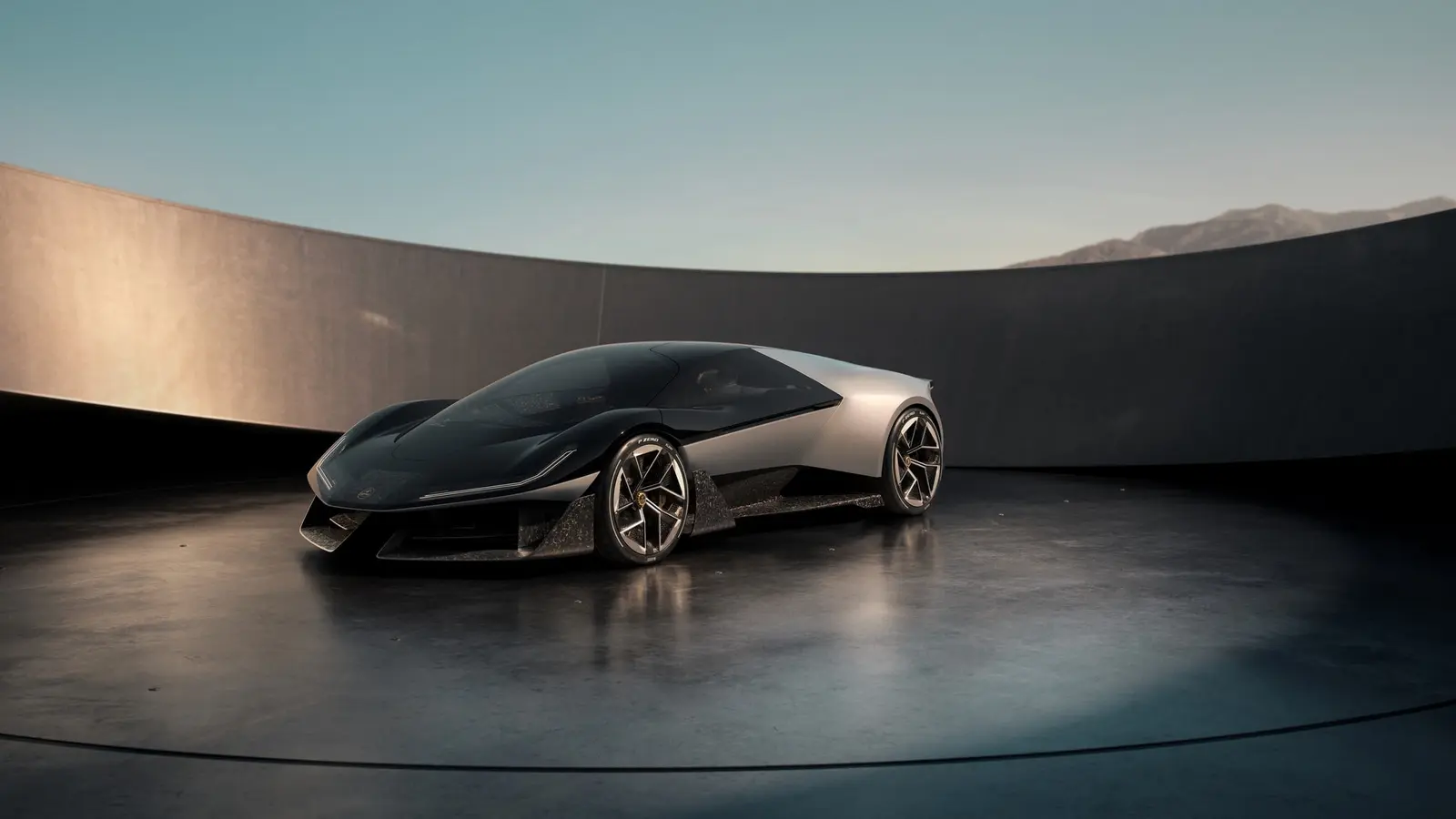
Lotus confirms a V6 Esprit to sit below the V8 flagship
Lotus has officially confirmed that its next-generation Esprit will be offered with a V6 powertrain in addition to the halo twin-turbo V8. Announced by CEO Feng Qingfeng during a recent earnings call, the V6 variant is being positioned as a lighter, more accessible entry in the Esprit line-up — arriving before the end of the decade and priced beneath the V8 flagship.
Production, partners and pedigree
Both the V6 and V8 Esprit models will be built at Lotus's Hethel facility by Horse Powertrain, the joint venture between parent company Geely and Renault. The project traces its roots to the electric Theory 1 concept (codenamed Type 135) launched in 2024, but the production Esprit represents a deliberate return to internal combustion engines augmented by electrification.

What we know about the powertrains
Lotus has confirmed the V8 Esprit is targeting extreme figures — more than 1,000 horsepower and a curb weight aimed below 1.5 tonnes — but the company has not published official output for the new V6. Expect the V6 Esprit to offer lower power and a more accessible price point while still delivering strong performance and the brand's trademark handling.
Key technical points reported so far:
- Hybrid V6 configuration rather than a heavier plug-in hybrid setup
- Use of an 800-volt electrical architecture for the electrified components
- Rear-wheel drive delivered via an eight-speed dual-clutch transmission
- Ultra-lightweight electric motor technology borrowed from Formula 1 know-how

Lotus engineers say the big challenge is meeting ambitious weight targets while integrating an 800-volt system, a hybrid architecture, a V8 and an electric motor in the halo car. Their solution is to focus on lightweight electrification: the electric motor used in the hybrid system is being developed to be dramatically lighter than conventional units, shrinking from roughly 75 kg (165 lb) to about 20 kg (44 lb). That weight saving is central to keeping the cars nimble and preserving Lotus's celebrated driving dynamics.


Why Lotus chose hybrid (not PHEV)
Instead of a plug-in hybrid system that requires a larger battery pack and a charging interface, Lotus is prioritizing a lighter hybrid layout. That choice reduces mass and complexity and helps the Esprit remain focused on track performance rather than electric-only range. As CEO Feng Qingfeng put it, the aim is to meet global emissions rules without sacrificing 'lightweight engineering and extreme track-focused driving dynamics.'
Design, layout and user markets
Although media and enthusiasts are already calling the car the Esprit, Lotus's head of design Ben Payne has said the final nameplate is not locked in — although the Esprit name is a strong contender given its historic cachet. One of the Theory 1's more exotic ideas — a three-seat layout with the driver centered — remains on the table. That configuration could simplify homologation for different markets by largely removing left-hand vs right-hand drive development, a practical consideration for a low-volume supercar.

Market positioning and rivals
Lotus clearly wants the Esprit to sit between the Emira and the Evija in its range, filling a niche for a highly focused, hybridized sports car. CEO Qingfeng has pointed to the Ferrari 849 Testarossa as a peer in terms of intent and price positioning. For reference, the 849 Testarossa starts around £407,617 for the coupe and £442,467 for the Spider in the UK, and roughly $540,000 in the US — a benchmark Lotus will be mindful of when finalizing Esprit pricing.
Highlights at a glance:
- V6 Esprit is a lighter, lower-cost option to the V8 halo
- Both variants built at Hethel by Horse Powertrain (Geely & Renault JV)
- Hybrid powertrains instead of heavier PHEV to control weight
- Ultra-light electric motor (down to ~20 kg) inspired by F1 tech
- Rear-wheel drive via eight-speed DCT; driver-focused dynamics preserved

What to expect next
Lotus will reveal more technical details and likely pricing as the program advances toward production. Expect additional clarity on V6 horsepower figures, official weights, and performance targets as prototypes hit test tracks. For buyers and enthusiasts, the V6 Esprit should offer a more attainable entry into Lotus's newest range while keeping the brand's lightweight, driver-first philosophy intact.
Whether the car ultimately carries the Esprit name, adopts the three-seat layout, or leans further into electrification, Lotus's move signals a pragmatic pivot: blending combustion and cutting-edge electrified components to meet emissions rules without abandoning the handling and lightness that define the marque.

Leave a Comment
Comments
No comments yet. Be the first.