
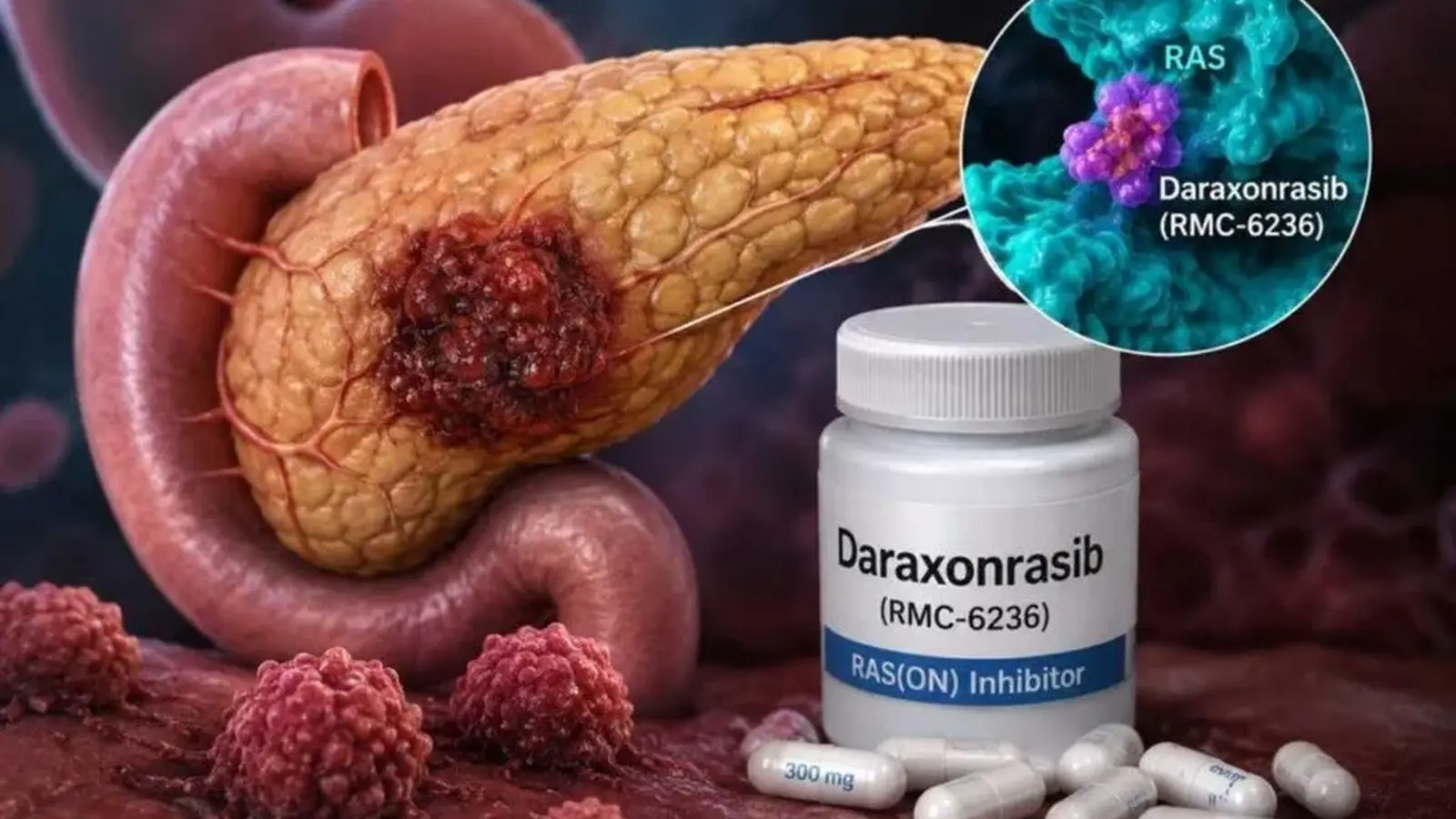

There are moments in medicine when a stubborn disease gives a hint that it can be outmaneuvered. This feels like one of them. The U.S. Food and Drug Administration has granted clinical approval for Daraxonrasib, an oral RAS-targeted drug, for patients with metastatic pancreatic adenocarcinoma (PDAC).
Pancreatic cancer has long been a bleak outlier in oncology. Fast-growing and often silent until advanced stages, PDAC kills more quickly than most tumors. Why has progress been so slow? One big reason is genetics: up to 90 percent of PDAC tumors carry mutations in genes that drive the RAS family of proteins, molecular switches that turbocharge cancer growth. Targeting RAS has been a central goal for years, and Daraxonrasib was engineered to hit a broad spectrum of those mutant RAS proteins.

The approval follows a phase 3 trial of roughly 500 patients with metastatic PDAC. The headline numbers are stark. Patients receiving a daily oral dose of Daraxonrasib lived a median of 13.2 months, compared with 6.7 months for those treated with standard chemotherapy alone. In practical terms: the new treatment more than doubled overall survival for participants in the study. Early-stage patients also experienced a longer interval before disease progression—about 7.2 months versus 3.6 months for the control group.
How dramatic is that? A reduction in mortality on the order of 60 percent versus chemotherapy-only arms was reported. That kind of shift in outcomes is rare in pancreatic cancer trials, and it helps explain why the drug had already earned a Breakthrough Therapy designation from the FDA last year.
Daraxonrasib’s appeal is not just its potency but its convenience: it is administered orally. For patients and clinicians, pills are easier to schedule than lengthy infusions, and oral regimens can improve quality of life when efficacy is comparable or better.
No drug is without trade-offs. The trial documented side effects that clinicians will need to manage. The most common problems were dermatologic—cracks and sores at the fingertips—and gastrointestinal symptoms such as nausea and diarrhea. For many patients, these toxicities were manageable; for some they will require dose adjustments or supportive care.
So where does this leave the field? Even with Daraxonrasib’s gains, pancreatic cancer remains lethal: five-year survival for PDAC is still low. But this approval opens a door. It validates a strategy—directly targeting RAS-driven biology—with clear, reproducible benefits in a malignancy that resisted so many previous attempts. Expect a wave of studies now: combinations with chemotherapy, pairings with immunotherapy, and trials earlier in the disease course.
For patients, physicians and drug developers, the next months will be important. Real-world experience will test how the trial results translate outside the controlled environment of a study. But for the first time in years, there is a new, targeted option that meaningfully extends life for many who face one of oncology’s toughest diagnoses.
Researchers will be watching closely as the first wave of patients begins treatment and as follow-up studies map where Daraxonrasib fits into the broader battle against pancreatic cancer.
Discussion
Leave a Comment
Comments
No comments yet. Be the first.