
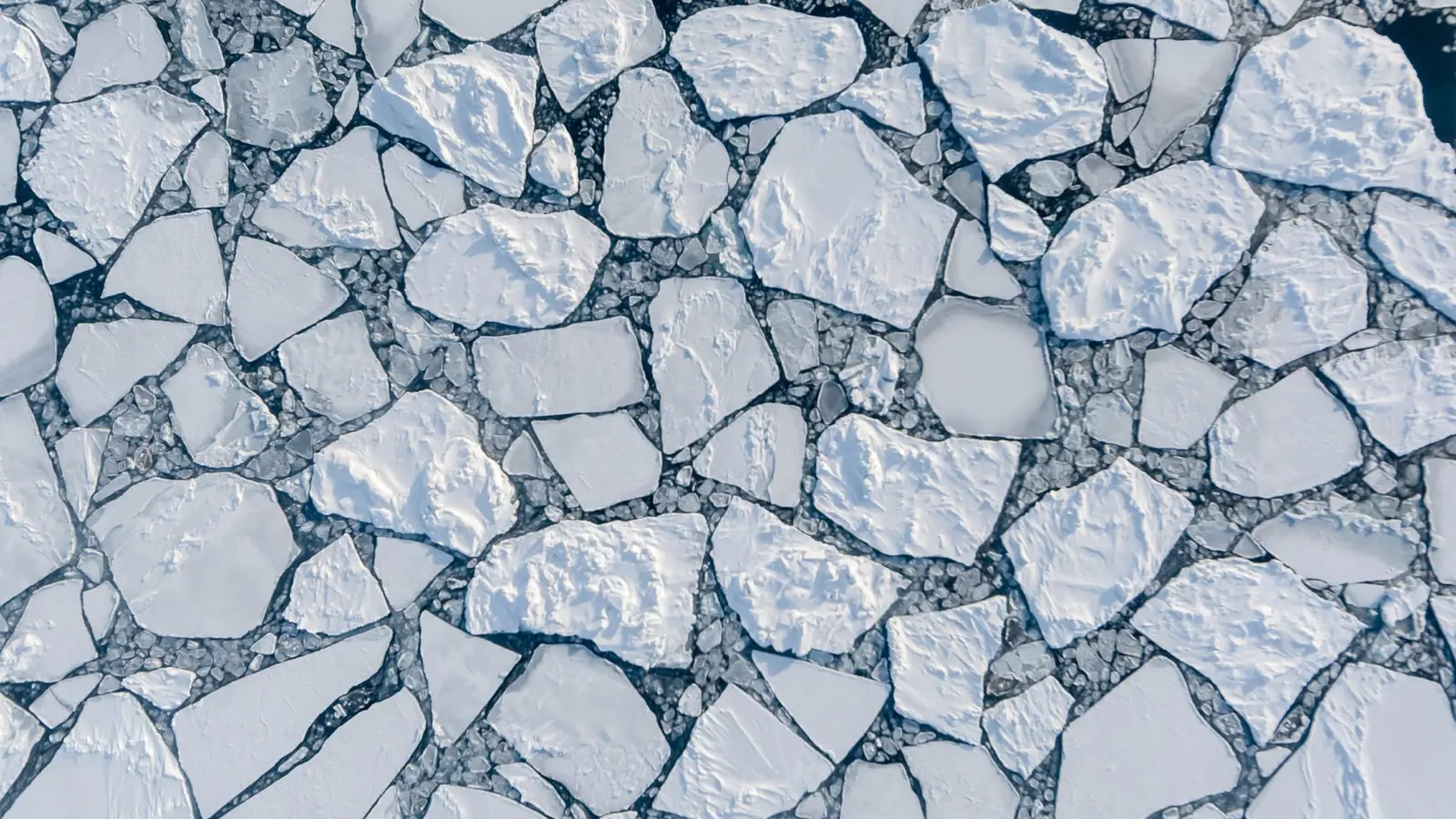
Imagine a string of storms that rips the Arctic's frozen skin and then returns for an encore. The result is not a single setback but a prolonged unravelling of sea ice that would otherwise have time to mend.
An international team led by the Alfred Wegener Institute dug into decades of weather maps and satellite imagery to understand this pattern. Their analysis, published in Nature Communications, spans 1979 to 2024 and isolates a striking culprit: cyclone clustering, where several low-pressure systems sweep through the same stretch of ocean in quick succession.
Cyclone clustering is simple in concept but complex in effect. One storm breaks and displaces floes. The next one arrives before the damage can freeze back together. Repeat this a few times and the Arctic behaves less like a resilient sheet and more like a patchwork of drifting fragments.

To track these sequences the researchers tweaked an existing weather-tracking algorithm so it could flag storms that arrive in rapid-fire. Then they matched those flagged events against before-and-after satellite snapshots of the ice. Seeing the same regions from multiple angles and times turned anecdote into pattern.
When storms cluster, gaps in the ice stay open longer. Short openings that normally refreeze in days can remain fluid for weeks. In winter, that means newly opened leads fail to seal up. In summer, moving floes can be shoved north, or compacted against older ice, reducing the overall cover.
The storms do more than rearrange ice. They can pull warmer air over the surface and stir warmer water up from depth, accelerating melt from above and below. Seasonal differences matter: clustered storms are generally weaker in the warmer months, yet they still alter ice distribution and composition where it counts.

Across the Arctic, cyclone clusters on average reduce sea ice cover roughly twice as much as isolated low-pressure systems, and their effects linger about two and a half times longer. The footprint varies by place and season, though, with local impacts ranging from about 1.5 times to as much as seven times the damage a single storm would cause.
There is a worrying trend. Over recent decades the losses linked to cyclone clusters have grown. Thinner, more mobile ice simply gives up ground faster when it is battered repeatedly. Warmer upper ocean waters in summer add fuel to the fire, making each successive blow more damaging than the last.
Could this be a feedback loop? The team suspects so. Weaker ice makes cyclone clustering more effective at reducing extent, and reduced extent begets weaker ice. The group is already running climate projections to see whether this amplification will persist or accelerate.

The repercussions are not confined to floating ice. Shorelines that once rested behind a protective belt of frozen sea now face open water and bigger waves. Permafrost is thawing inland. Coastal communities are losing their buffer and gaining exposure to erosion and storm damage.
Short-term weather, it turns out, can steer long-term fate. Understanding how storms come in packs gives scientists a sharper lens on future sea ice and on the fragile link between Arctic weather and global climate. The next step is better forecasting and tighter integration of these findings into climate models—because when the storms stop coming in clusters, the Arctic may finally find a chance to knit itself back together.

Leave a Comment
Comments
No comments yet. Be the first.