
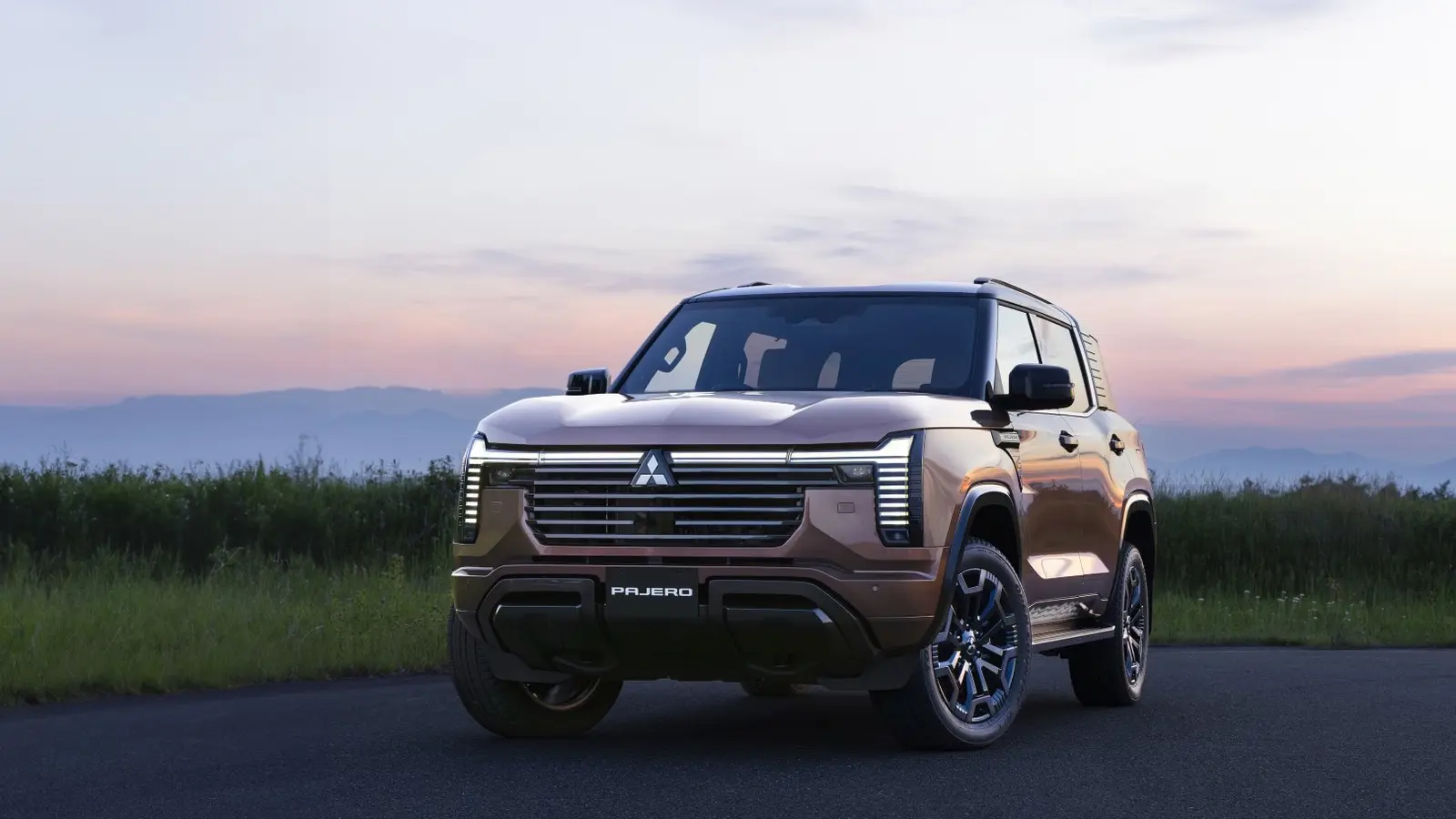
Big-name revival with genuine off-road hardware
After a brief hiatus the Pajero is back, but this is no mere badge engineering exercise. For 2027 Mitsubishi has returned the Pajero as a true body-on-frame, three-row SUV that pairs diesel torque with heavy-duty off-road components. The fifth-generation model positions itself as the brand flagship, aiming at buyers who want family practicality without sacrificing rugged capability.
Underpinning: ladder frame and live axle make a statement
Rather than continuing the increasingly car-like direction of the previous Pajero, Mitsubishi has gone the other way. The new model rides on a ladder frame derived from the Triton/L200 mid-size pickup truck, complete with a live rear axle. That change restores the mechanical DNA needed for serious off-roading and gives the new Pajero the bones to tackle rough trails, tow heavy loads and outmatch many unibody rivals.
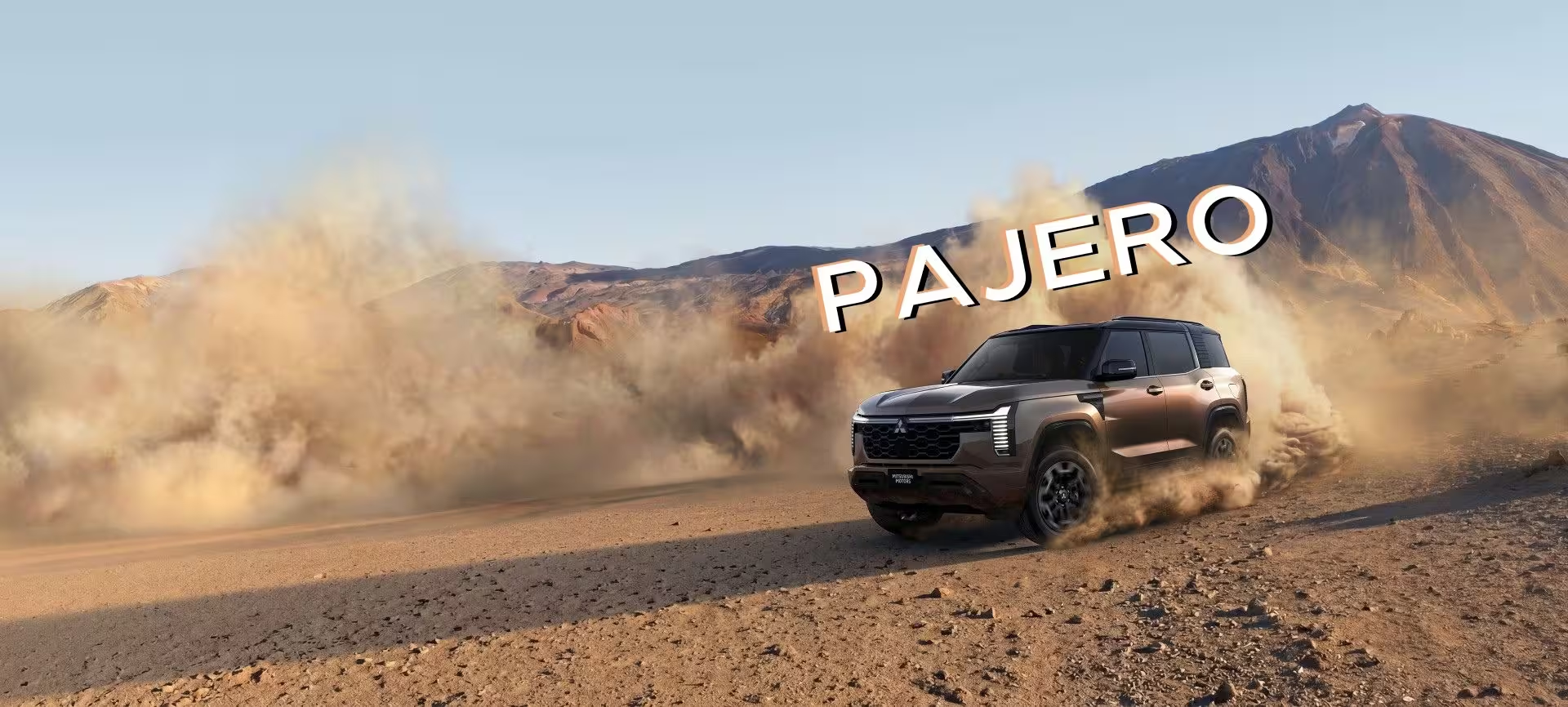
The drivetrain is familiar to fans of the Thai-built ute: an inline-four 2.4-liter turbo diesel mates to an eight-speed automatic and the Super Select 4WD-II system. Output is rated at 150 kW, while torque is quoted at either 480 or 470 Nm depending on market tuning. In everyday terms that translates to roughly 201 horsepower and around 347 to 354 lb-ft of torque, a muscular result for a four-cylinder.
Off-road credentials
The Pajero sports low-range gearing, a lockable center differential and selectable modes including 2H, 4H, 4HLc and 4LLc. Mitsubishi also layers in S-AWC electronics such as active yaw control, enhanced traction and stability systems, and smart ABS management to help when terrain gets tricky.

Key off-road specs:
- Length: 4,920 mm (193.7 in)
- Ground clearance: 230 mm (9.0 in)
- Approach angle: 30.4 degrees
- Breakover angle: 22.6 degrees
- Departure angle: 25.8 degrees
Production will take place in Thailand, the same factory line responsible for the Triton/L200, and the first units are due in showrooms later this year. Australian deliveries begin in October 2026, with pricing to be announced closer to launch but expected to sit above the outgoing Pajero Sport.

Design: modern cues, heritage nods
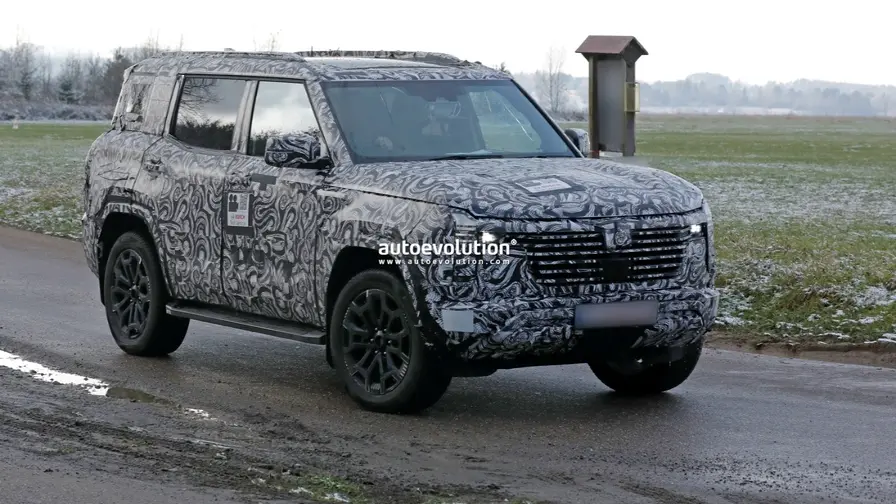
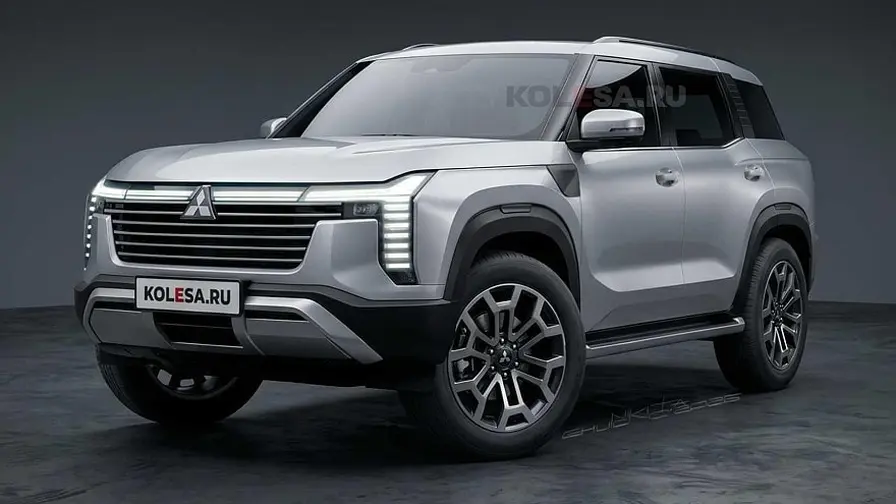
Visually the new Pajero cuts a more upright, purposeful figure than the rounded fourth-generation model. Designers reduced soft curves in favor of stronger horizontal surfaces and pronounced fender arches. The C-pillar styling pays tribute to the cab-mounted roll bar of the original Pajero, while a hexagonal rear motif recalls the spare-wheel-mounted tailgates of old. Mitsubishi hid the spare under the floor instead of mounting it on the tailgate, giving a cleaner rear look while keeping practicality intact.
Up front the SUV wears T-shaped headlights and a full-width light bar above a wide, horizontally slatted grille. Overall the stance is wider and longer than before, visually aligning the Pajero with premium full-size rivals.

Interior: three rows, premium finishes and modern tech
Inside, Mitsubishi balanced rugged utility with a noticeable step up in materials and fit. The dashboard keeps a broad, horizontal theme but uses soft-touch surfaces, high-set vents and large, integrated grab handles. A chunky center console and decorative stitching inspired by Kimekomi art provide a more upscale cabin feel.
The Pajero seats seven and uses a sliding second-row bench that moves 150 mm and can tumble forward for much easier access to the third row. Comfort features include three-zone automatic climate control and ventilated seats, signaling that this ladder-frame SUV was engineered with family comfort in mind as well as trail competence.
Infotainment comes in two screen sizes depending on trim, either 12.3 or 14.3 inches, and Mitsubishi has revived a digital take on the classic triple-gauge cluster in the form of the Multi Meter. This display presents off-road data such as vehicle pitch and roll, compass heading, ambient temperature and altitude. Another useful addition is the 3D Multi Around Monitor, which stitches four camera feeds into a real-time composite view, including an underfloor perspective for negotiating uneven terrain.

Safety and chassis
The Pajero is built with a higher content of high-tensile steel than the Triton/L200 pickup, and it includes eight airbags and a broad suite of advanced driver-assist systems. The suspension layout features double wishbones at the front, coil springs and disc brakes at each corner, emphasizing handling and braking performance for both on- and off-road driving.
Market positioning and competition
Mitsubishi clearly intends the new Pajero to compete with traditional off-road specialists such as the Toyota Land Cruiser while appealing to buyers who need three-row seating. In Australia and nearby markets the model will effectively replace the Pajero Sport, which shared pickup underpinnings, but this version leans even harder into true off-road capability. Expect higher pricing than the outgoing Sport, reflecting the more premium cabin, added tech and rugged mechanicals.
Highlights and takeaways:
- A genuine return to body-on-frame architecture and live axle hardware
- Diesel torque focused for towing and low-speed off-road work
- Modern, comfortable interior with family-friendly three-row layout
- Production in Thailand; first deliveries set for late 2026 in key markets
Whether buyers will embrace a diesel-powered, ladder-frame Pajero in an era shifting toward electrification is an open question, but Mitsubishi has delivered a convincing package for those who still prioritize robust off-road ability, towing and real-world utility. The new Pajero revives a storied name with engineering that matches the legend rather than just borrowing it.

Leave a Comment
Comments (2)
Interesting move but is this even true? Diesel ladder frame in 2027 while EV push is everywhere. Curious how regs, fuel economy and resale will play out... hmm
Wow didn't expect them to bring back the real Pajero! Ladder frame + live axle, diesel torque, yum. If price isnt crazy this will sell..