
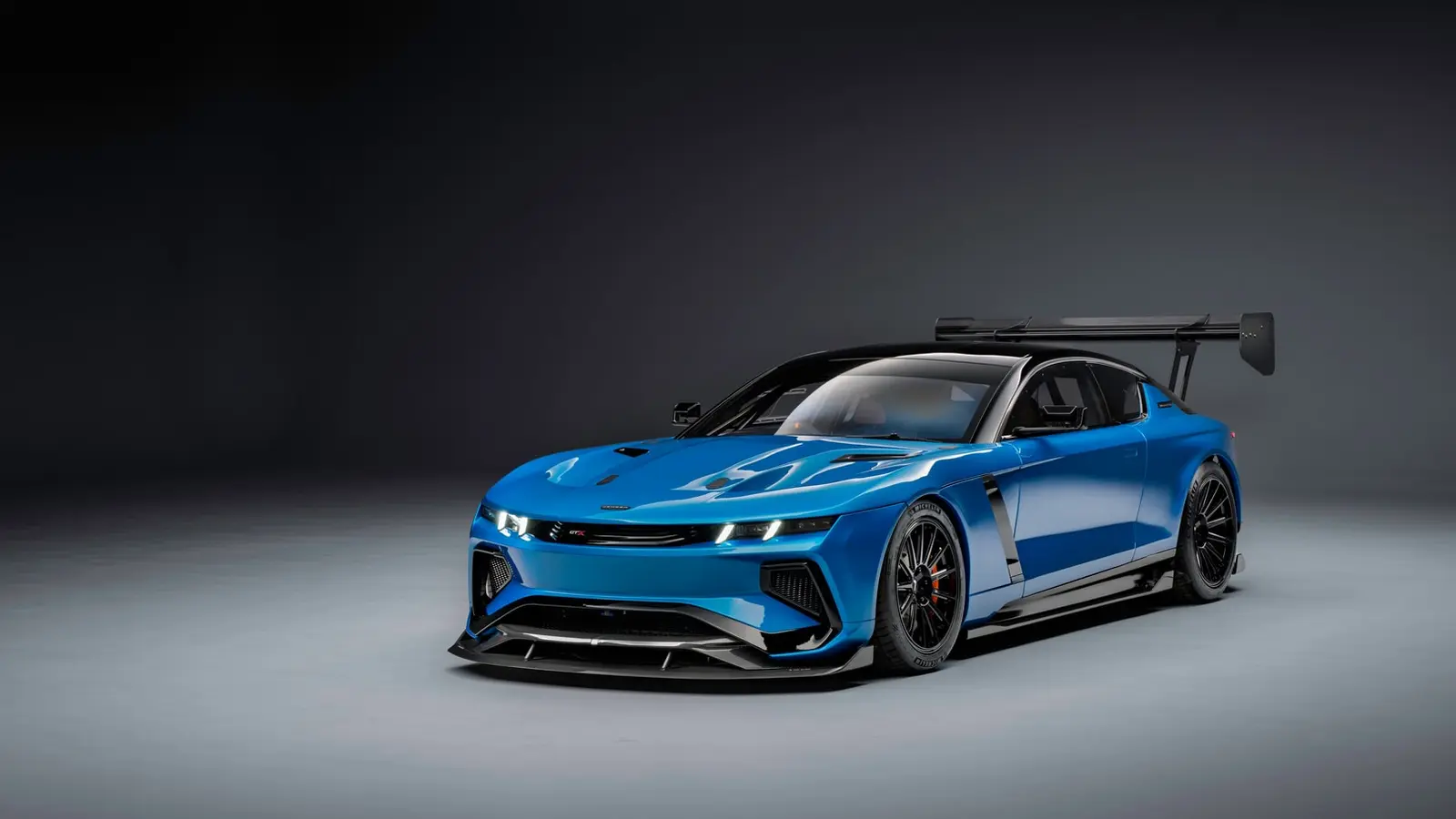
Jensen returns with a 1,200‑hp, track‑only Interceptor
The reborn Jensen Interceptor GTX is a dramatic statement: a front‑engined, right‑hand‑drive, all‑aluminum two‑seater conceived as a pure track car and a rolling showcase for future road‑legal models. Unveiled by Jensen International to mark 60 years since the original 1966 Interceptor, the GTX packs a bespoke, supercharged 6.8‑litre V8 that can be dialed up to 1,200 hp and more than 1,100 lb‑ft of torque via multiple power maps.
Design that balances heritage and aerodynamics
Working with Avant Design, Jensen avoided an overt retro copy and instead reinterpreted classic Interceptor cues in a modern, aerodynamic package. The GTX keeps cab‑rearward proportions — a long bonnet and a compact passenger cell — and references the signature wraparound rear glass and floating rear roof section. Thin horizontal LED lighting and oversized functional intakes give the front end a brutally aggressive look.

Aerodynamics were a driving factor from day one. The GTX features a pronounced front splitter, a full flat floor, and a large rear diffuser. A structural carbon‑fiber rear wing is adjustable and is reported to create more than 350 kg (770 lb) of downforce, immediately signaling the car's track intent.
Handcrafted aluminum body
Coventry Metalcraft shaped the body from aluminum using a blend of digital design and traditional coachbuilding techniques. More than 30 artisans worked with English wheels and specialist presses to form the complex panels, and the finished body required roughly 600 hours of prep before painting.

Chassis, suspension and the analog driving experience
Underneath the sculpted skin sits a bonded‑extrusion aluminum chassis engineered for low weight and torsional stiffness. The suspension employs double aluminum wishbones front and rear, coupled with manually adjustable Nitron three‑way dampers to allow very fine tuning of ride and handling for different circuits.
Steering is a hydraulic power‑assisted rack tuned to deliver immediacy and driver feedback, reflecting Jensen's stated engineering‑first philosophy. The car's electronics are intentionally pared back — the GTX avoids unnecessary driver aids so the experience remains tactile and mechanical.

Powertrain: Detroit muscle, British focus
Texas specialist Late Model Engines built a bespoke 6.8‑litre V8 for the GTX with fewer than 20% shared parts from its donor General Motors architecture. The engine features a forged bottom end, titanium valves, optimized variable valve timing and a 2.65‑litre Roots‑type supercharger managed by a MoTeC control system.
- Standard tune: ~960 hp
- Maximum tune: up to 1,200 hp and over 1,100 lb‑ft of torque
- Rev limit: 7,000 rpm (engine maps allow safe operation across outputs)

A carbon‑fiber prop shaft sends torque rearward to a transaxle layout, improving front/rear weight distribution for track stability. The Samsonas Motorsport 6‑speed sequential gearbox uses straight‑cut dog gears for sharp engagement; drivers can shift via a tunnel lever or steering‑column paddles.

Power reaches the tarmac through forged 20‑inch Vossen wheels shod with Michelin Pilot Sport rubber. A Wavetrac limited‑slip differential, configurable launch control and adjustable traction control help manage the enormous torque on circuit.

Motorsport braking and control
Stopping power is provided by an AP Racing motorsport package, developed with UK specialist BG Developments. Instead of carbon‑ceramic discs, engineers chose floating steel rotors with competition compound pads to maintain consistent performance across varying temperatures and conditions. The system includes a fully configurable motorsport ABS map and cockpit‑adjustable brake bias.
Jensen deliberately limited electronic intervention: the GTX offers adjustable traction control, launch control and race‑grade ABS — and little else — to preserve an analog, driver‑focused feel.
Interior: stripped, safe, and focused
The cabin is strictly motorsport‑oriented. Polycarbonate glazing cuts weight, a bespoke FIA‑approved safety cage secures the cell, and Tillett carbon‑fiber competition seats clamp the driver and passenger. A configurable MoTeC display provides essential vehicle data while avoiding distracting infotainment screens. Alcantara, orange contrast stitching and leather pull straps offer restrained character in an otherwise spartan environment.

What this means for Jensen’s future
Jensen says around 80% of the GTX's exterior form, including major body panels and tooling, will carry over to forthcoming road cars. The GTX itself is a track prototype, but it previews two anticipated production derivatives: a high‑performance, street‑legal GTR and a luxury grand‑touring GT. Managing Director David Duerden emphasized the program's engineering focus: the goal was to build a credible performance machine first, not simply trade on nostalgia.
Key highlights
- Bespoke 6.8‑litre supercharged V8, up to 1,200 hp - Samsonas 6‑speed sequential transaxle - Bonded‑extrusion aluminum chassis with double wishbones - Structural carbon‑fiber adjustable wing producing 350+ kg downforce - Motorsport AP Racing brakes with configurable ABS - Handcrafted aluminum bodywork by Coventry Metalcraft
Positioning and rivals
Although exact weights, dimensions and performance figures such as 0–60 mph and top speed are still withheld, the GTX is clearly aimed at competitive track‑day and customer racing buyers. Its likely competitors are factory‑backed track specials and extreme road cars from established rivals — think highly focused Mustang and Porsche track derivatives — but Jensen's blend of British craftsmanship, a Detroit‑sourced supercharged V8 and a transaxle layout gives the GTX a unique niche.

Final thoughts
The Jensen Interceptor GTX is an unapologetically analog, engineering‑led track car that also functions as a practical prototype for future Jensen road models. With much of its styling and tooling slated to transfer to production cars, the GTX represents a bold way for a revived heritage brand to bridge motorsport credibility with the promise of street‑legal performance models. For now, enthusiasts will be watching for the next disclosures: curb weight, lap times and whether the GTR will bring a similarly extreme powertrain to public roads.
"The GTX isn't a vanity project," Jensen says — it's the technical foundation for a new generation of Interceptors built with performance and driver engagement front of mind.

Leave a Comment
Comments (2)
1,200 hp sounds insane, but is that even realistic for a customer car? curious about curb weight, cooling and brakes... prototype flex or a real GTR?
No way! 1,200 hp in a right-hand drive track two-seater? That wing making 350kg downforce... pure mad genius, gotta hear it roar IRL