
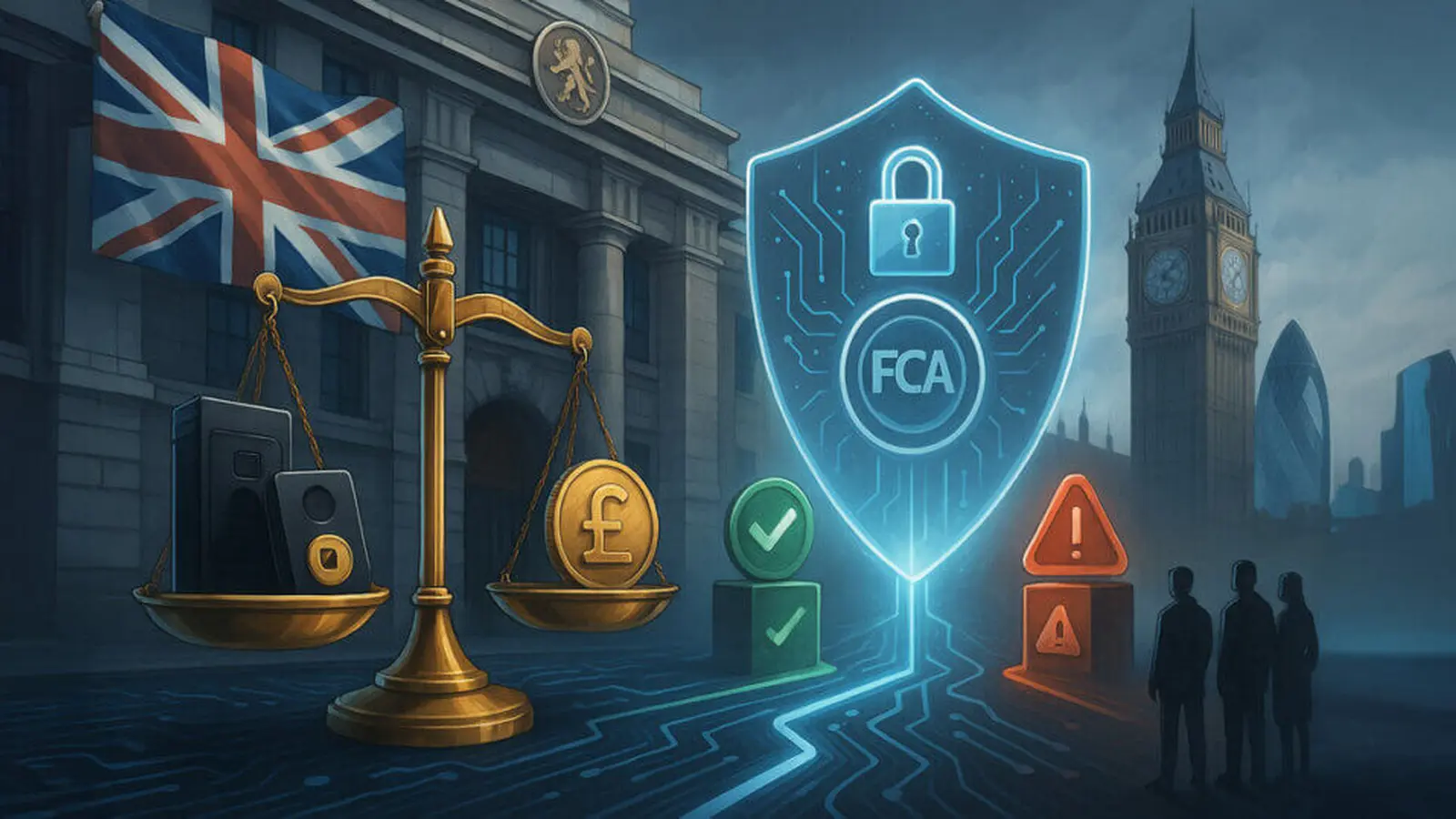
UK banks maintain broad payment restrictions as FCA opens authorization gateway
The UK’s major retail banks continue to enforce payment caps and outright blocks on transfers to cryptocurrency exchanges even as the Financial Conduct Authority (FCA) prepares to open its new authorization gateway for crypto firms starting Sept. 30, 2026. The regulatory gateway is a key step toward the full UK crypto regime scheduled for Oct. 25, 2027 — but it will not automatically remove banks’ commercial controls over crypto-related payments.
Dates, scope and what the FCA regime covers
The FCA’s designated application window runs from 9 a.m. on Sept. 30, 2026 through 11:59 p.m. on Feb. 28, 2027. Firms that conduct regulated crypto activities will need permission under the Financial Services and Markets Act to keep operating once the regime comes into force on Oct. 25, 2027. The framework brings a broad set of activities into the regulatory perimeter, including:
- issuance of qualifying stablecoins;
- operation of cryptoasset trading platforms;
- custody services for digital assets and private-key management;
- principal and agency dealing in cryptoassets;
- arranging and executing crypto transactions; and
- staking services and intermediaries.
Existing registration under the Money Laundering Regulations will not automatically translate into FCA authorization for regulated activities. Firms seeking to remain in scope will need to apply and meet prudential, conduct, consumer protection and financial-crime standards set out in the FCA’s rules.
How banks currently restrict crypto payments
Restrictions differ widely across institutions and account types, ranging from modest monthly caps to full prohibitions on outbound transfers that appear to target exchanges and other crypto businesses. The policies are applied across bank transfers, debit-card and credit-card payments, and sometimes vary by product or customer segment:
Barclays and HSBC: mid-level limits
Barclays caps personal and business transfers to cryptocurrency exchanges at £2,500 per transaction and £10,000 per calendar month. Debit-card purchases of crypto are capped at £10,000 monthly; the bank’s payment-card arm, Barclaycard, ceased permitting cryptocurrency payments in June 2025. HSBC UK applies similar controls: £2,500 single-payment caps and a £10,000 rolling 30-day ceiling for bank and debit-card payments to exchanges, with credit-card purchases restricted.

NatWest, Santander, Nationwide and Monzo: tighter allowances

NatWest enforces stricter limits — payments identified as going to crypto exchanges are restricted to £1,000 per day and £5,000 across 30 days. The bank says the controls were introduced to counter scams and are periodically reviewed as the legal landscape evolves. Santander limits identifiable crypto-exchange payments to £1,000 per transaction and £3,000 over a rolling 30-day window; payments to Binance are subject to a distinct block where the bank can identify the payee.
Nationwide permits crypto purchases but applies a £1,000 daily limit on current-account transfers and debit-card payments for most adult accounts. Monzo uses a £5,000 rolling 30-day allowance for crypto payments that cannot be increased by customers; excess payments are rejected.
Chase UK and Metro Bank: outright outbound bans
Some banks take a zero-tolerance approach. Chase UK reports it blocks any payment it classifies as a cryptoasset transaction, including both bank transfers and card payments to exchanges, while still allowing incoming payments from crypto platforms. Metro Bank has said it has not processed outbound payments to known crypto exchanges across its banking products and payment rails since November 2024.
Industry reporting has also identified other providers such as Starling and TSB as applying restrictions in certain products or account types. TSB’s publicly available business-account terms allow the bank to refuse payments to categories of payees, including cryptocurrency exchanges, if it assesses elevated fraud risk.
Why FCA authorization won’t automatically clear banking friction
The new FCA regime is focused on the regulated crypto firms and the activities they carry out, not on mandating how commercial banks must weigh the operational, fraud and financial-crime risks linked to those firms’ customers. HM Treasury has reiterated that decisions by banks to offer accounts and payment services are “largely commercial in nature,” even while the government expects licensed crypto businesses to receive fair treatment.
That expectation, however, does not equal a legal requirement compelling banks to accept all crypto-related payments. A bank can continue to apply its own anti-money-laundering controls, fraud detection, operational risk assessments and customer protections when deciding whether to process outbound payments to exchanges. In practice, that means FCA authorisation will not automatically remove customer-facing payment limits or unblock transactions that banks choose to flag.
Practical separation between authorization and banking access is already visible: NatWest advises customers to check whether an exchange is FCA-registered while keeping its £1,000 daily crypto-payment cap. Santander also points customers to the FCA Firm Checker but maintains its own payment limits.
Industry pushback and data on blocked transfers
Crypto industry groups and businesses have been lobbying for clearer banking access as the regime approaches. Research cited by industry outlets suggests a material level of friction: the UK Cryptoasset Business Council’s analysis, quoted in media coverage, estimates that roughly 40% of attempted transfers from UK banks to crypto exchanges are blocked or delayed. In a related industry survey, 80% of exchanges reported increased friction for customers over the prior year.

Campaign groups such as Stand With Crypto UK launched initiatives in mid-2026 encouraging members to challenge banking restrictions on transfers to exchanges, particularly where platforms are FCA-registered or seeking authorization through the gateway.
What the FCA’s application window and transitional rules mean for firms
Firms that file within the Sept. 30–Feb. 28 application window may benefit from transitional arrangements if the FCA has not reached a decision by the Oct. 25, 2027 start date. Those transitional measures provide a defined path for existing firms to continue some activities while their applications are pending. Firms that miss the window face a risk: they could be required to stop regulated activities while awaiting permission, with no guarantee of similar saving provisions.
The FCA is supporting applicants with pre-application meetings, webinars and published guidance. Its June policy package and the Sept. 16 guidance cover prudential standards, market conduct, consumer protections, custody and qualifying-stablecoin rules. Authorised firms will need to meet Consumer Duty obligations, operational resilience requirements, prudential rules, and robust financial-crime controls. Custodians will be subject to client-asset rules that mandate ownership records, reconciliations and secure private-key management.
Treasury adjustments and follow-up FCA consultation
HM Treasury made targeted legislative adjustments on Sept. 15 after reviewing industry feedback, clarifying areas that might otherwise have fallen inadvertently within the regulatory perimeter. These amendments include exclusions for certain technology providers and nuances around stablecoin payments.
The FCA plans an October consultation to update its perimeter guidance in light of the Treasury changes, seeking to refine the regulator’s approach to qualifying stablecoins, proprietary trading and market making, technical service providers, decentralized protocols and safeguarding arrangements.
Regulatory expectations and international positioning
David Geale, the FCA’s executive director for consumers, payments and competition, said the regulator aims to create a regime “that firms, consumers and international partners can trust.” The government has simultaneously presented the framework as part of a broader strategy to position the UK as an attractive global hub for digital assets by providing clearer rules and stronger consumer protections.
Parliamentary scrutiny and potential policy outcomes
Pressure on banks to review their crypto payment policies has continued in parallel with regulatory developments. A cross-party parliamentary group launched an inquiry into the obstacles crypto firms face when opening bank accounts, and the effect of payment limits on retail customers. In August, MPs wrote to major banks requesting explanations for their policies and warned that restricted banking access could hamper businesses as the 2027 regime approaches.

The parliamentary inquiry is gathering evidence from banks, fintechs, and digital-asset firms to inform recommendations. So far, the government has not announced any legislation that would compel banks to immediately lift payment caps when the FCA regime commences. The official stance keeps banking decisions within commercial discretion, while urging that licensed crypto firms should not be discriminated against solely for operating in the sector.
Implications for consumers, exchanges and crypto firms
For retail crypto users, ongoing bank limits mean continued friction for buying and funding activity, longer onboarding times and the possibility of failed transactions or payment rejections. Exchanges — whether seeking FCA authorization or already registered under anti-money-laundering rules — will need to plan for customer service challenges, increased payment rails complexity, and potential impacts on liquidity and user growth.
For licensed crypto firms, the path to regulatory compliance and market credibility is clearer than before, but banking access remains a parallel challenge. Firms should prepare robust anti-money-laundering, custody and operational-resilience frameworks to strengthen their case with both the FCA and potential banking partners. Engagement with banks, clear evidence of consumer protections and documented risk controls may reduce frictions over time.
How banks, regulators and industry can reduce friction
There are several avenues that could lower banking frictions between licensed crypto companies and UK banks:
- Enhanced information-sharing between regulated exchanges and banks to improve transaction identification and reduce false positives;
- Industry standardization of merchant descriptors and payment routing details for crypto platforms to help banks accurately identify legitimate flows;
- Targeted dialogues between HM Treasury, the FCA and major banks to clarify expectations and align risk-assessment frameworks for authorized firms;
- Transitional agreements that give banks confidence around the oversight and controls that FCA-authorized firms must maintain; and
- Consumer education to reduce scam-related losses that drive banks to adopt restrictive policies.
Progress in these areas would not instantly overturn bank risk appetites, but could help to reduce the current rate of blocked or delayed transfers and improve customer experience for crypto users in the UK.
Bottom line
The FCA’s authorization gateway and the October 2027 regime represent a major milestone for crypto regulation in the UK. They promise enhanced consumer protections, clearer rules for stablecoins, custody and trading venues, and stronger international credibility for authorized firms. But authorization alone is not a cure for banking access issues: since banks retain commercial discretion over outbound payment processing, many retail customers and exchanges should expect existing caps and blocks to persist unless banks revise their policies voluntarily or policymakers adopt binding measures in future.
Companies preparing to apply to the FCA should prioritize compliance with market conduct, prudential and consumer-protection standards, while engaging with banks to demonstrate robust controls. Consumers should check their bank’s published terms and the FCA Firm Checker before attempting transfers, and consider alternative funding routes where permitted. Policymakers, industry groups and banks will likely continue negotiating the balance between legitimate risk management and enabling fair access to banking and payments for licensed crypto firms.


Leave a Comment
Comments (3)
I've had transfers to Binance rejected twice, lost time and patience. FCA gateway is a step, sure, but banks' limits still bite. Banks pls sort it out or at least explain 🤦
feels overhyped tbh, rules are clearer now but banks wont change overnight. consumer pain stays, more transparency needed, imo
wait, so banks can still block or cap transfers even if exchanges get FCA ok? feels like authorization means nothing for users... what a mess