
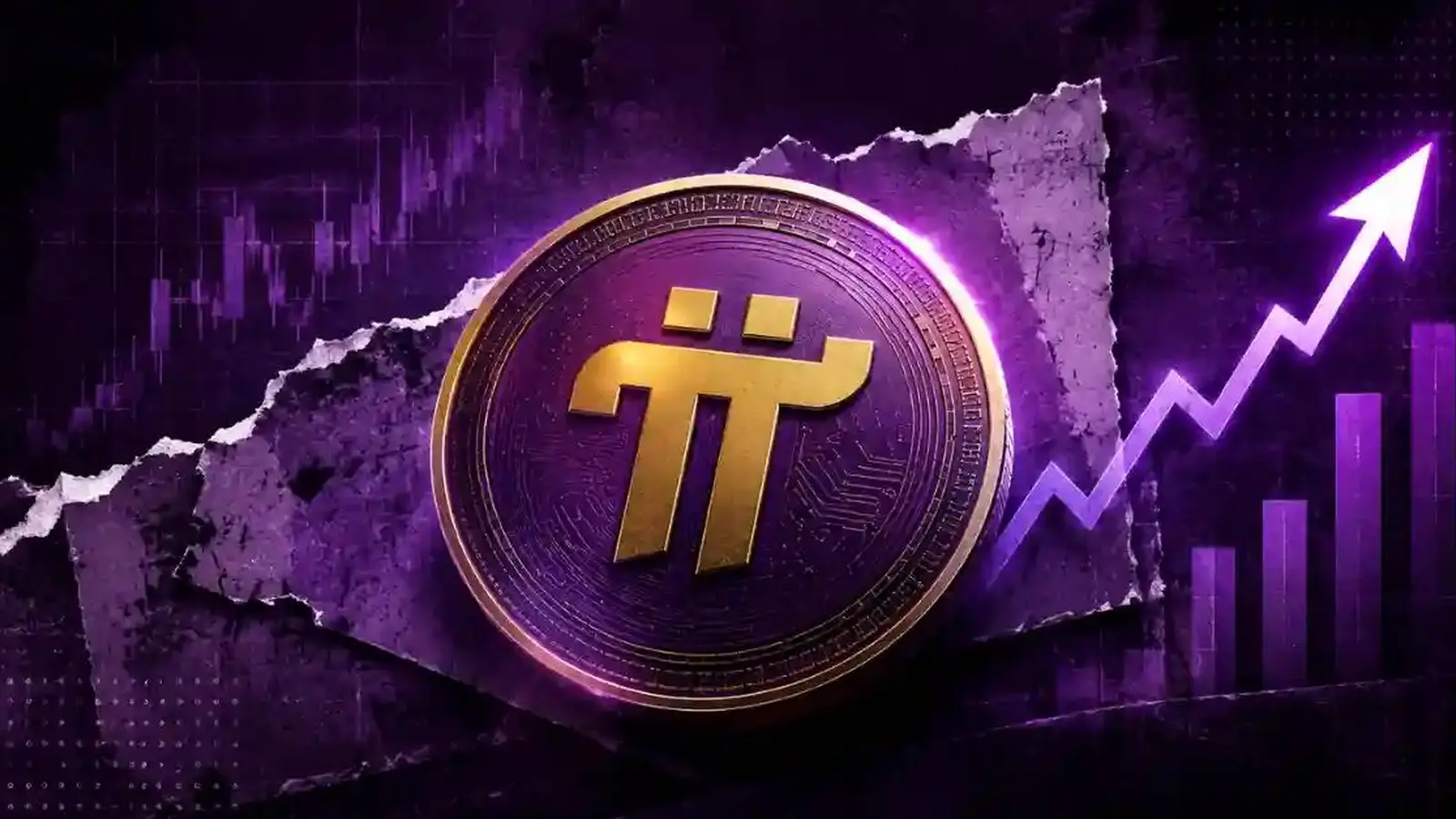
PI hovering near its weakest level
Pi Network’s native token, PI, has been trading only a few percentage points above its lowest recorded price, prompting fresh debate about liquidity, token supply, and the practical drivers that must appear to bring buyers back into the market. As of checks on November 4, PI was changing hands around $0.0749 — roughly 6% above the record low near $0.07059 — with reported circulating supply and tokenomics that make the headline price misleading unless paired with a supply context.
Quick takeaways
- PI was trading about $0.0749 on November 4, roughly 6% above its historical low.
- CoinGecko’s figures showed ~11.344 billion PI in circulation, 17.452 billion total supply, and a 100 billion maximum supply cap.
- A price target of $0.10 against current circulating tokens implies a market-capive valuation north of $1.13 billion.
- Developer updates continue on Testnet price charts; Test-Pi prices do not equate to Mainnet liquidity.
- The network’s first Ecosystem Summit is scheduled for November 17–19 and could clarify product economics.
How close is PI to its recorded low, really?
At a reference quote of $0.07489, PI sits approximately 6.1% above the $0.07059 low. In percentage terms, a fall of about 5.7% from the current quote would revisit that trough — a reminder that percentage moves are asymmetric depending on the numerator and denominator. Observers who focus on the token’s low unit price often miss the supply denominator: a sub-ten-cent token can still represent a sizeable market capitalization when billions of coins are circulating.
Why unit price misleads without supply context
Small per-token values do not equate to cheap projects in dollar terms. Even if PI trades under $0.08, billions of tokens in circulation translate into hundreds of millions of dollars of market value. Recovery narratives that quote a target like $0.10 must always state the supply basis: $0.10 against the current circulating supply differs materially from $0.10 against total or maximum supply.
Simple math, clearer perspective
Reaching $0.08 from $0.07489 requires about a 6.8% gain; moving to $0.10 requires roughly a 33.5% jump. Those calculations are not predictions — they simply set the scale of the price action investors must buy into for narrative claims about recovery to make sense.
 chatgpt-image-apr-28-2026-044010-pm.avif" width="1672" height="941">
Which supply figure matters: circulating, total, or maximum?
Supply is not one number for token projects like Pi Network. CoinGecko’s snapshot from November 4 listed three distinct totals: ~11.344 billion circulating PI, 17.452 billion total supply, and 100 billion maximum supply. Each metric answers a different question:
- Circulating supply shows tokens currently available in markets (the most directly relevant for market capitalization calculation used to compare live liquid value).
- Total supply can include tokens allocated but not yet transferable or otherwise restricted.
- Maximum supply is a long-term ceiling defined by tokenomics and distribution rules.
Applying the reference price of $0.07489 to these supplies yields markedly different nominal valuations: roughly $850 million for circulating supply, $1.307 billion using reported total supply, and $7.489 billion if the full 100 billion cap were valued at that price. Readers must ensure they understand which denominator is being used when market-cap or valuation comparisons are made.
Team allocation and community share
Pi’s white paper allocates 80% of the maximum supply to the community and 20% to the core team, with team allocations unlocking proportionally to community allocation development. The maximum supply therefore acts as a ceiling rather than an immediate release schedule — a distinction that should temper headline numbers based on diluted supply assumptions.
Reported turnover vs. executable liquidity
Trading volume data paints a picture of activity, but not necessarily of sell-side liquidity that a large holder could instantly access. On November 4 CoinGecko recorded daily turnover near $5 million versus a circulating market value near $850 million. That turnover equals about 0.6% of market value for the day, which highlights a thin spot-market context: modest daily transactions relative to total market capitalization.
Why order-book depth matters more to sellers
For anyone intending to liquidate PI, the key is how much is bid at each price level on exchanges — the order-book depth. A hypothetical market sell of 100,000 PI would have a notional value of around $7,489 at the reference price, but actual proceeds depend on whether bids cover the trade near the top of the book. If bids are sparse, market sales consume multiple price levels, widening execution slippage and increasing the effective cost to the seller.
Volume can be misleading
Reported turnover may include the same tokens traded multiple times and does not separate new entrants from intraday rotations. Exchange-specific liquidity also matters: a deep book on one venue is irrelevant to a holder whose coins are locked on another platform or in a wallet that cannot deposit quickly due to withdrawal or transfer constraints.
Migration mechanics, unlocks and the illusion of supply
Pi Network’s path from an app-based ledger to a tradable Mainnet coin has involved migration, identity verification, and wallet conditions. Those operational steps complicate attempts to treat the entire maximum supply as already liquid. The team’s September 17 migration update flagged more than 417,000 users who could proceed after duplicate-account issues were resolved, and another ~497,000 fast-track wallets that needed fixes to claim migration balances. These counts describe user accounts and wallets, not the token totals or the market-ready amounts they represent.
Access vs. intent
Migration completion gives users the technical access to transfer tokens, a prerequisite for exchange deposits and peer-to-peer sales, but it does not dictate whether these users will sell, hold, or use PI in the ecosystem. An unlocked balance creates an option to transact rather than a mandate to sell; forecasts that assume every newly transferable token will hit exchanges are likely to overstate downside risk.

Timing and distribution matter
Whether newly available tokens arrive on exchanges across several weeks or flood the market in a single thin session changes execution dynamics substantially. Exchange deposits are a useful indicator but require careful interpretation: deposits signal intent to trade, not executed sales. Wallet labels and on-chain flows help analysts refine their estimates but do not replace actual trade data.
PiVerify and the search for predictable demand
One source of potential real-world demand is PiVerify, the network’s identity and verification service. The October 29 developer update expanded PiVerify’s capabilities with face-uniqueness checks and repeated liveness tests and noted that third-party clients would pay in PI to use the service. Pricing services in the native token creates an explicit use-case: customers who require identity verification must acquire PI to pay for it.
Payments vs. permanence
Even when a service accepts PI, each transaction is part of a flow. A merchant or service provider might receive PI and keep it, sell it for another asset, or use it to pay third parties. Regular payments priced in PI that are retained within the ecosystem create a different dynamic — and more persistent demand — than payments that are immediately converted back to fiat or stablecoins.
Quantifying commercial demand
To estimate how PiVerify and similar services could affect token demand, analysts need the price-per-service, the number of paying customers, payment frequency, and typical retention or conversion behavior after receipt. A business receiving 1 million PI per month in payments creates a recurring flow, but whether that flow removes tokens from circulation (by holding) or increases sell pressure (by converting to other assets) is undefined without more data.
Stablecoin strategy and payment architecture
Pi’s October 8 statement on stablecoins outlined a role for stable assets in the network’s operations: stablecoins could support activities that require price stability, while PI should remain the primary cryptocurrency for network processes. The team’s exploratory work with Open Standard’s OUSD on rewards and ecosystem utility hints at mixed settlement models where stablecoins help settle prices while PI can be used for fees, incentives, and specific product charges.
Three payment models and their implications
Consider three simplified merchant pricing strategies to see how stablecoins and PI interact:
- Dollar-priced services with conversion at payment time: A $10 subscription might always equate to a variable PI amount depending on the market price. Token receipts fall as PI appreciates, which could reduce the merchant’s PI holdings over time if they keep prices in USD terms.
- Token-priced services with dollar-equivalent volatility: A service priced at a fixed PI amount shifts price exposure to customers; the USD cost rises and falls with PI’s market price.
- Hybrid settlement with stablecoin or conversion: A merchant quotes in USD, accepts PI but converts receipts immediately to a stablecoin or fiat, reducing exposure to PI price swings while maintaining the convenience of native-coin payments.
Which model wins out in practice will determine how much PI is demanded for operational use and how much is simply passed through to another asset. Clear, public commercial terms would allow investors to translate product activity into concrete token demand estimates — something the market could use ahead of or following the November summit.
Testnet activity and why it doesn’t equal Mainnet buying
The October 29 update added price history for Launchpad Testnet tokens in Pi BlockExplorer but explicitly stated those test tokens will never move to Mainnet. Testnet prices, therefore, do not translate into tradable PI market prices. Testing environments permit developers to validate functionality, debug token flows, and model behavior under simulated conditions, but they cannot reveal how users will pay with real funds in production.
Liquidity pools and test transactions
Liquidity and swap success on Testnet demonstrate technical feasibility; they do not indicate capital commitment from external participants. To convert technical swap performance into Mainnet liquidity requires real tokens and real money in pools, which depends on token-holders’ choices, exchange listings, and custodial or on-chain infrastructure.
What the November Ecosystem Summit could deliver — and what it cannot
Pi’s first Ecosystem Summit, scheduled for November 17–19, is an important milestone. The event is expected to showcase developer demos, platform releases, app showcases, and a hackathon. For price-sensitive market participants, the summit can clarify whether announced capabilities have matured into commercially viable products and what payment terms those products will use.
Announcements vs. commercial proof
A polished demo establishes functional capacity but not recurring commercial demand. Investors will want to see payment mechanics, customer acquisition evidence, repeat-use metrics, and whether services require PI for actual operations rather than merely being enabled by the token in theory. A rigorous summit disclosure would include agreed pricing models, sample customer contracts, and early payment throughput figures.
Market psychology and event-driven moves
Events can move price well in advance of measurable revenue if investors price in expected future adoption. That optimism is fragile: if delivery lags expectations, the premium can evaporate. Conversely, weak immediate price response after a promising event does not imply technical failure; distribution to customers, legal and compliance steps, and operationalizing payments can take months after an announcement.
Lockups, miner incentives and how they shape available supply
Pi’s August 2025 lockup reminder drew attention to choices holders make about future migration locks versus immediate Mainnet locks. A holder can decide to lock a share of transferable PI for incentives such as higher mining rates. These lockups change short-term availability without altering fundamental tokenomics; a time-locked balance becomes tradable again only at maturity, when the holder then chooses how to deploy the tokens.
Liquidity math with locks
If a user holds 1,000 transferable PI and locks 90%, only 100 PI remain accessible for potential sale immediately. At $0.07489, that accessible amount is worth about $7.49. When locks mature, tokens are merely options that can join the available supply — they do not become sales automatically. Analysts monitoring calendarized unlocks obtain a better picture of potential future availability, but they still need subsequent evidence of exchange deposits and executed trades.
Payments data: why completed receipts matter more than app counts
Pi’s payment documentation defines stages: payment creation and server approval, the user’s on-chain transaction, and server-side completion. For adoption metrics, completed and settled payments are more reliable than app registrations, open payment screens, or pending transactions. Businesses and investors focused on token demand should prioritize verifiable receipts, repeat purchases, and how merchants manage PI after receipt.
Transaction volume vs. economic significance
Counting payment instances can be misleading. A thousand transactions of 1 PI each differ materially from a thousand transactions of 100 PI; both count as 1,000 events but imply vastly different dollar flows and working-balance needs. Understanding whether payments are funded from long-held balances or freshly purchased on exchanges is crucial to estimating their net effect on market demand.
Scenarios that could bring buyers back
Several plausible scenarios could produce renewed buying pressure for PI. They differ by their source (organic commercial demand vs. speculative flows), scale, and persistence:
1) Real commercial demand from PiVerify and paid apps
If the network secures enterprise or developer clients that pay regularly in PI and retain a portion of receipts for operations or rewards, a recurring base demand will form. This scenario requires demonstrable paying customers, published pricing terms, and evidence that recipients hold rather than immediately convert PI to stablecoins or fiat.

2) Exchange onboarding and improved order-book depth
New listings on reputable exchanges with deep markets and tighter spreads make larger buys feasible without severe slippage. High-quality venues also improve visibility for institutional and retail buyers, amplifying demand if the token’s utility appears credible.
3) Coordinated ecosystem incentives and rewards
Structured programs that compensate contributors, validators, or developers in PI and encourage retention can recycle tokens inside the ecosystem, reducing net sell pressure. However, incentives must be economically sustainable and not merely short-term promotional expenditures that expire and release tokens back to markets.
4) Broader crypto market cycles and macro factors
Risk-on cycles, inflows into crypto funds, or macroeconomic shifts that favor crypto allocations can raise speculative demand across many altcoins, including PI. These moves are often correlated with capital flows rather than project-specific progress and can be quickly reversed if risk appetite wanes.
5) Short-covering and speculative squeezes
Temporary price spikes may occur from short covering, coordinated speculative buying, or traders anticipating an event. These rallies can be sharp but ephemeral if not supported by sustainable demand metrics such as higher executable liquidity and ongoing transactions at raised price levels.
Bear cases that could push PI to new lows
Equally, scenarios exist that could push PI beneath its current low:
- Large sell orders from newly unlocked wallets or team allocations hitting thin order books.
- Disappointing summit disclosures that reveal low commercial adoption or ambiguous payment terms.
- Migration or wallet issues that delay deposits and trigger panic selling when they resume.
- Wider market selloffs where liquidity evaporates and altcoins are hit hardest.
In such cases, a fresh low is an observation, not an arithmetic signal about how far prices must still fall. Markets reset price discovery with each new low.
What investors should watch ahead of the summit
Key measurable events and indicators investors should monitor include:
- Public agenda and concrete commercial terms released before or during the summit (pricing for PiVerify and app payments).
- Data on completed payments, not just app registrations or payment screen opens.
- Exchange deposit flows and labeled on-chain transfers that clarify whether balances are moving toward tradable venues.
- Order-book depth and spread changes on major venues rather than headline volume alone.
- Announcements related to lockups, maturation schedules, and any new release windows for previously restricted tokens.
If the summit provides credible numbers on who pays, how much they pay in PI, and how receipts are managed, it would give the market a way to translate product activity into a demand estimate. Absent that, investors will still face significant uncertainty.
How to interpret price moves after an event
Price reactions after any positive summit news should be dissected across several dimensions: whether higher prices coincide with greater exchange depth and narrower spreads, whether trades persist at the new ranges, and whether receiving wallets show retention instead of immediate conversion. A fleeting pop based on sentiment without improved execution metrics is unlikely to signal a durable recovery.
Practical guidance for holders and traders
For PI holders and active traders, practical steps include:
- Monitor order-book depth across exchanges before committing large orders to avoid slippage.
- Track verifiable payment throughput and retention metrics from summit disclosures rather than relying on user counts alone.
- Use limit orders to control execution price, particularly in thin markets where market orders can cascade through offers.
- Watch unlock calendars and exchange deposit flows to anticipate potential increases in sell-side availability.
- Consider the broader crypto market cycle; altcoin recoveries often depend on macro tailwinds as much as project-level progress.
Why numbers and narrative must align
Investors often face a disconnect between technical progress and market pricing. Pi Network’s developer milestones, Testnet activity, and growing app directory are important indicators of progress, but they do not automatically translate into demand for Mainnet PI. For narratives of recovery to be persuasive, they need measurable economic inputs: how many PI are required to buy a service, how often payments occur, and what portion of token receipts are retained in the ecosystem.
Conclusion: liquidity and clear commercial terms will decide November
Pi Network’s price sitting within a few points of its record low intensifies the importance of measurable market signals. The November Ecosystem Summit creates an occasion for the team to clarify product-level economics, payment flows, and pricing models — information that can turn qualitative claims about a 60-million-strong community or 300 Mainnet apps into quantifiable demand estimates. Until commercial terms and retention behavior are visible, however, price action will remain a function of liquidity: who shows up to buy at the margins and whether the order books can absorb larger transactions without cascading slippage.

A realistic recovery requires more than an event: it needs demonstrable, repeatable demand priced in PI and backed by exchange depth that allows sizable trades to execute without severe slippage. Investors should treat the summit as a key data point rather than a guaranteed catalyst, and watch for completed payment data, deposit flows to exchanges, and improvements in order-book depth to validate any bullish claims.
Pi’s announcement on its site remains dated October 15, with the November 17–19 summit dates unchanged. The market will watch whether the detailed agenda and viewing information released before the event provide the concrete commercial inputs necessary to translate community scale into real token demand.
— End of analysis —

Leave a Comment
Comments (1)
Whoa didnt expect PI to be this close to its low... supply math kills the 'cheap coin' vibe. Need real buyers, not paper promises.