
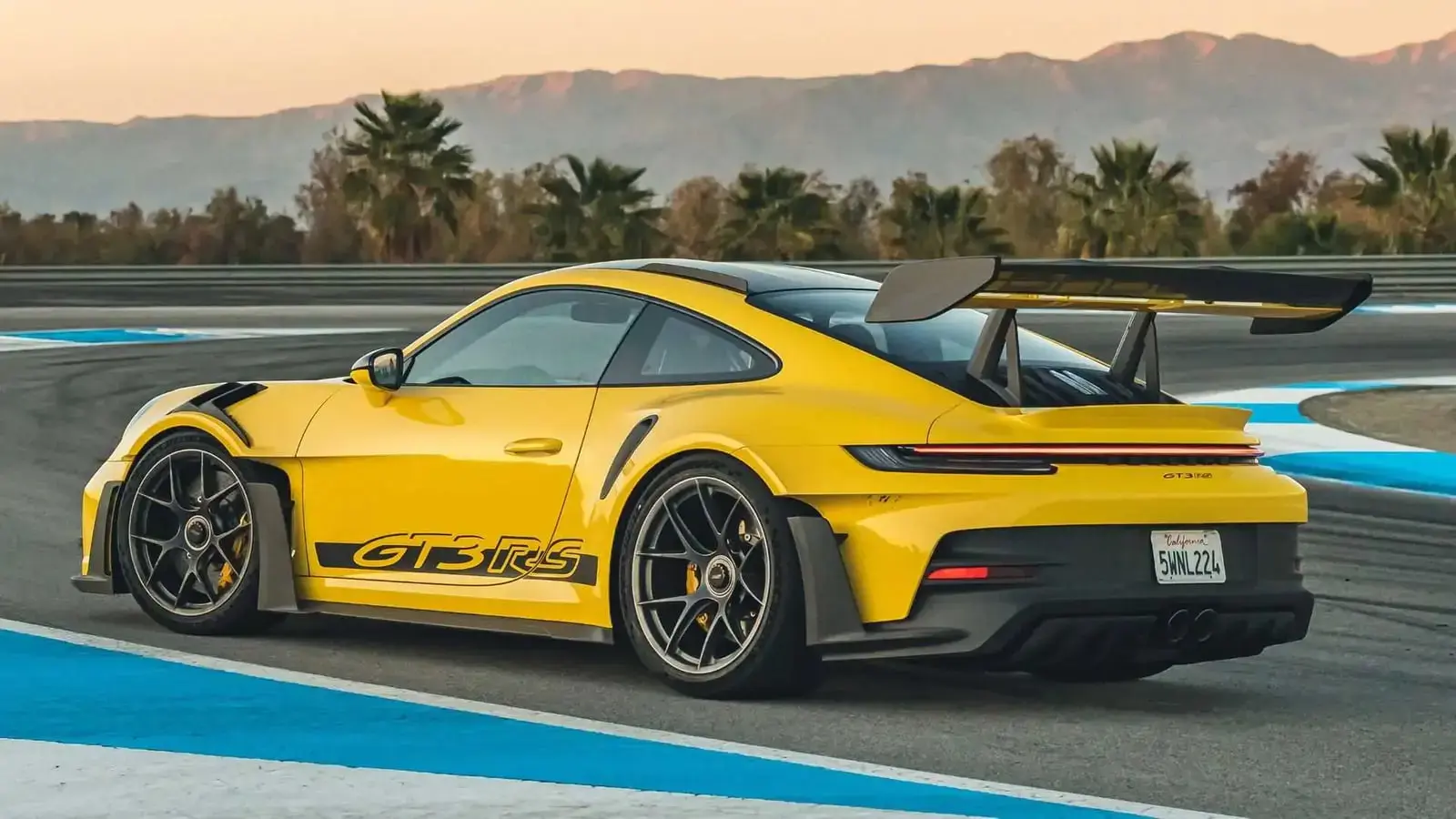
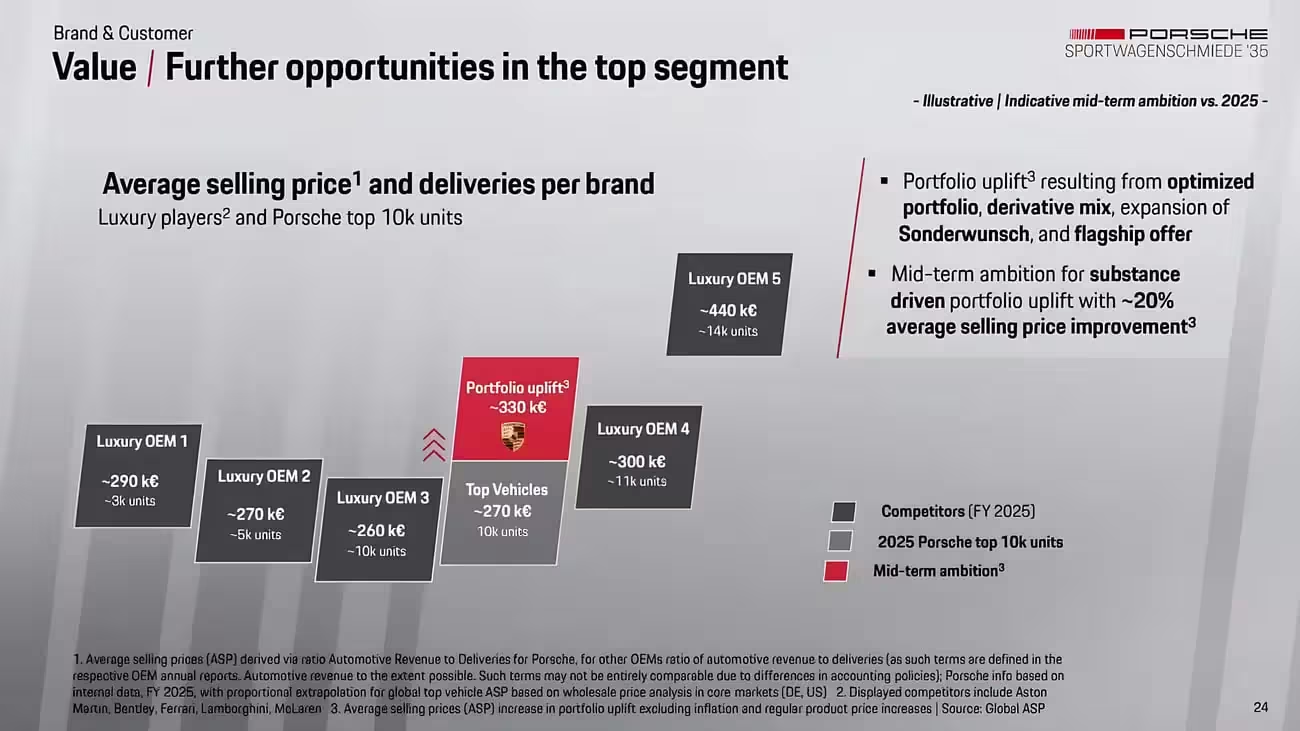
Porsche plans to raise the average sale price of its priciest models by about 20 percent. The Stuttgart marque intends to push its most expensive cars further into the luxury zone by lifting the average price of those products from roughly €270,000 or $300,000 today to more than €330,000 or $370,000 in the medium term, Motor1 reports.
The strategy is twofold: take greater margin on fewer vehicles, and tilt the model mix toward more expensive, limited and exclusive variants. Porsche expects high-price models to account for about 45 percent of its lineup, a marked shift away from pursuing high volumes across the entire range. If the plan plays out, the company believes it can reach break-even with annual sales below 200,000 units, compared with the 279,449 cars the Zuffenhausen factory delivered in 2025.
Products and electrification
New product decisions underline the repositioning. Porsche plans more special versions of the 911 and a new mid-engine hypercar, while leaving room for higher-volume models: a gasoline crossover to replace the first-generation Macan is still in the pipeline. Porsche has confirmed the 718 Boxster and 718 Cayman will return, but as fully electric models only; internal-combustion versions have been dropped. A large three-row SUV remains under consideration but has not yet won final production approval.
The company is retaining a flexible powertrain approach. Porsche will continue to offer combustion engines, plug-in hybrids and battery-electric vehicles across segments, and it will keep a manual gearbox option for the 911. But the choices will come at a price: Porsche says customers who want rarer options will pay more. The brand's premium product list references a 2027 Porsche 911 GT3 S C as part of its high-end roadmap.
Costs, cuts and a smaller workforce

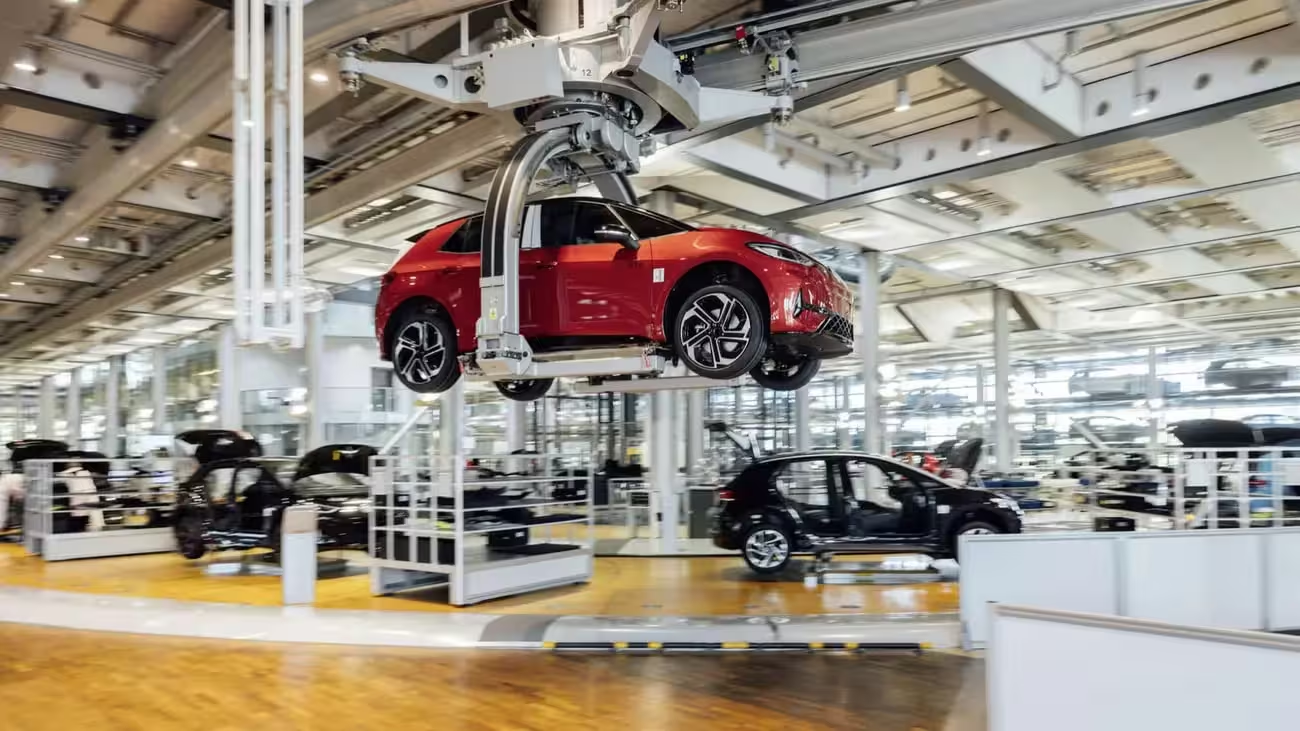
Price increases are matched by an aggressive cost-reduction program. Porsche plans to cut its product development budget by 20 percent and reduce the number of model variants by roughly the same margin. It targets a 10 percent reduction in raw material costs for next-generation models and aims to lower warranty costs by about 45 percent in the medium term. The overall premise is clearer lines, fewer complexities and higher margins per car.
On personnel, Porsche has reached an agreement with unions to eliminate 9,000 roles by 2035, a figure it says represents about one-fifth of the brand's workforce. Personnel costs are expected to fall by up to 30 percent in the medium term, selling and distribution costs by 20 percent, and managerial positions by around 40 percent in the same period. Executives describe the outcome as a smaller, more profitable organization built around lower overhead and a leaner product portfolio.
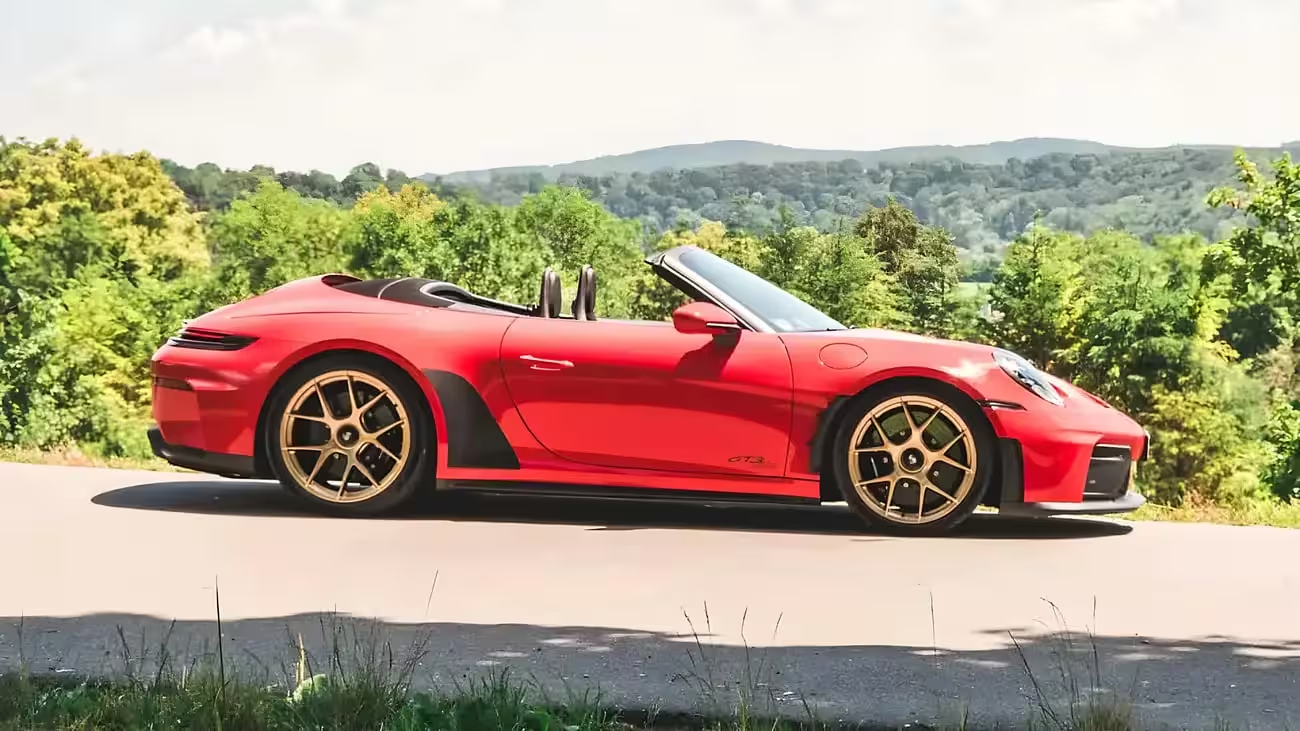
Chief executive Michael Leiters has framed the move as turning Porsche into a smaller, more profitable business. The idea is simple: trade volume for greater value per car. But the challenge is clear. Porsche must keep its cars desirable enough that wealthy buyers are willing to pay several hundred thousand dollars for exclusivity. In China, where Porsche once counted on rapid growth, stronger domestic competition and shifting consumer patterns make that task especially urgent. A tighter, more exclusive range might protect margins, but it will not automatically reclaim buyers who have moved to other brands.
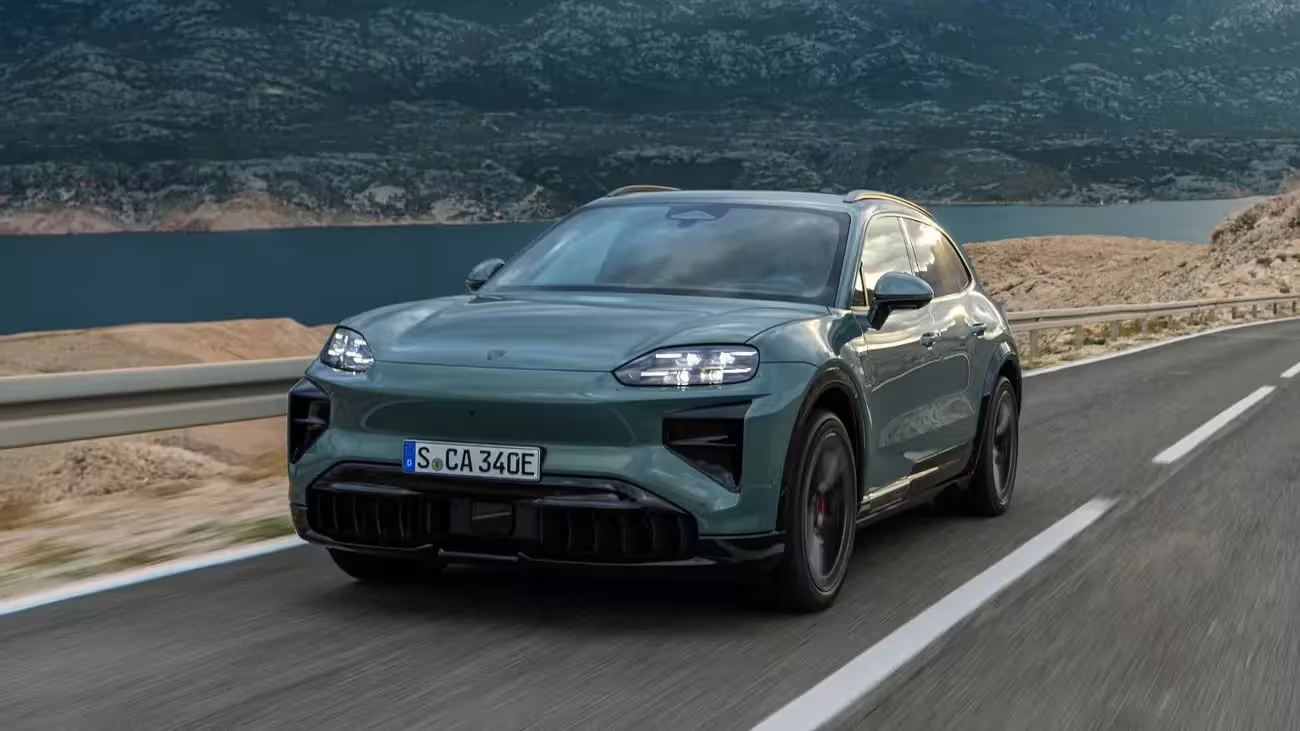
Electrification adds another constraint. Maintaining combustion, plug-in hybrid and battery-electric variants gives buyers choice but raises development and manufacturing complexity. Porsche faces the task of preserving engineering flexibility without eroding the cost savings it needs to make the repositioning profitable.

Porsche's plan is clear in ambition and heavy on trade-offs: charge more, sell fewer, and cut costs sharply to protect margins. Whether the brand's cachet alone will keep buyers paying top dollar remains to be seen. Porsche delivered 279,449 vehicles in 2025.

Leave a Comment
Comments (1)
Wait they wanna sell fewer cars, jack up prices and cut 9k jobs? Sounds risky. Will the rich still pay that premium in China though...