
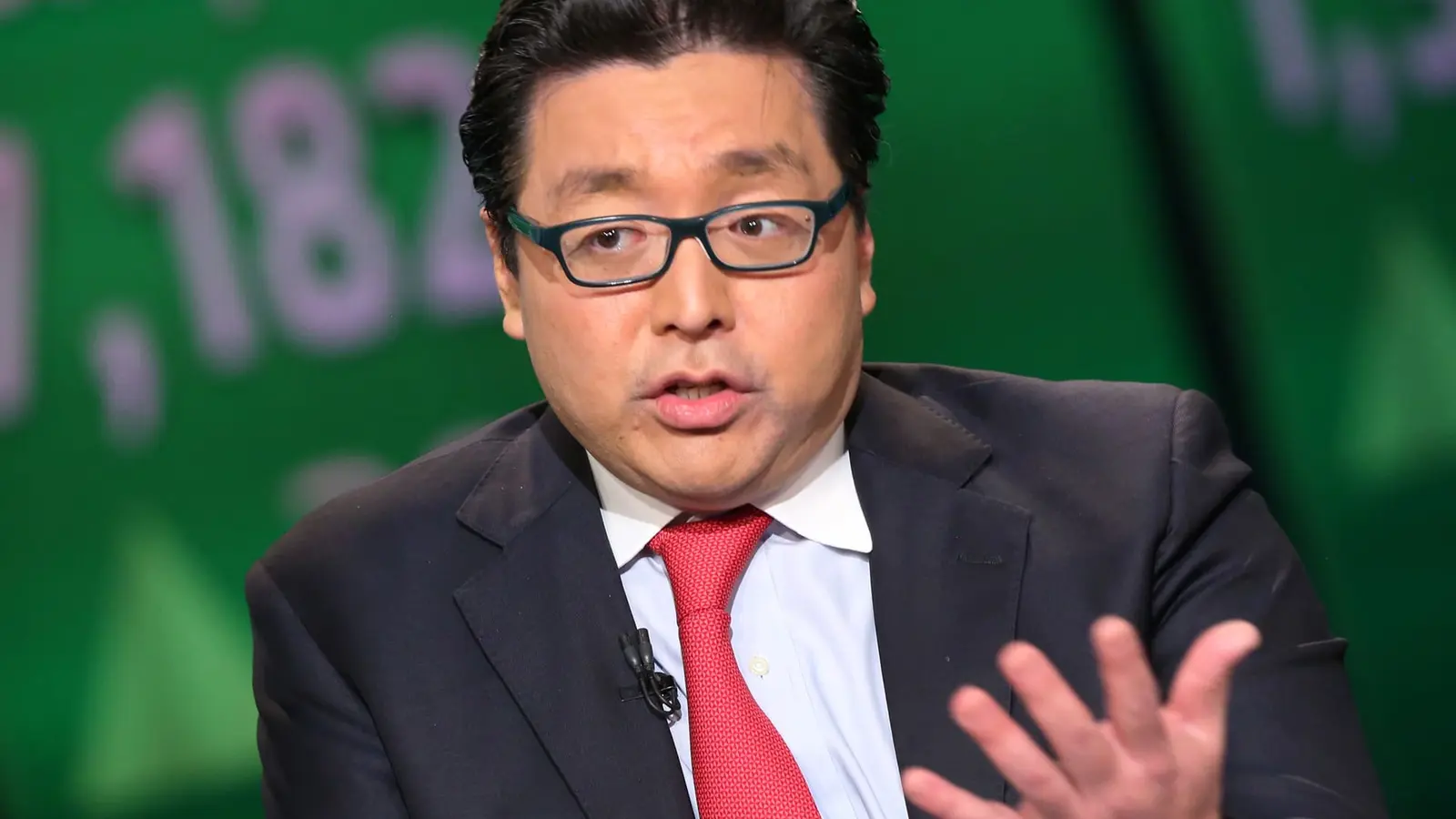
Tom Lee outlines five drivers behind the recent crypto selloff
Tom Lee, BitMine's chairman and a long-time cryptocurrency market commentator, has identified five factors that likely contributed to the recent crypto market downturn — but he also reiterated that a broader crypto "supercycle" remains possible. Lee's analysis blends macro technology exposures, exchange-related events, and investor behavior that together helped intensify selling across major digital assets, including Bitcoin and Ethereum.
Market snapshot: prices and flows
As of November 15, Ethereum was trading near $1,800, down roughly 6% over 24 hours, while Bitcoin hovered around $64,000 as losses spread across large-cap digital assets. US spot Ethereum ETFs reported about $398.9 million in net outflows during the November 9–13 trading week, according to Farside Investors — a figure that underscores investor rotation and short-term liquidity demand amid volatile markets.
1. AI and semiconductor stock weakness (Nvidia link)
Lee pointed first to a pullback in artificial intelligence and semiconductor equities, notably shares of Nvidia. Because many retail traders in Asia and elsewhere held leveraged positions that included both equities and crypto, a sharp decline in AI-related stocks may have triggered margin calls. Forced liquidations can cascade into selling of other assets, including cryptocurrencies, amplifying market pressure.
2. Anthropic IPO preparations
Another catalyst Lee highlighted was heightened investor activity around Anthropic's potential November listing. Large equity offerings often prompt investors to raise cash ahead of allocations. Lee suggested that some retail investors — particularly those with access to Robinhood-like brokerages — may have sold crypto holdings to free up funds for Anthropic shares, contributing to outflows from digital assets.
3. Post-hack withdrawals after the Binance breach
The October 29 Binance security incident, which involved roughly $6.3 billion in stolen crypto, also factored into Lee's reasoning. After Binance restored customer access in phases and stated by November 3 that about 98% of affected assets were replenished, previously inaccessible balances could be moved out of the exchange. Lee proposed that some users converted returned balances into cash or stablecoins, creating short-term selling pressure even after funds were made whole.
Blockchain analytics firm Chainalysis traced the attack to activity linked to North Korea's TraderTraitor group and documented significant cross-chain movement of stolen funds and regulatory asset freezes. Publicly reported recovery figures do not indicate how much of those reimbursed balances were later sold, but restoring withdrawals introduces the possibility of fresh outflows.
4. AI security concerns and cybersecurity fears
Lee also pointed to commentary from Anthropic and broader debate about artificial intelligence's impact on cybersecurity. Worries that AI tools might weaken existing security frameworks can increase risk aversion among investors in digital businesses, including crypto firms. Such sentiment-driven reactions can add to volatility and spur reallocation away from risk assets.

5. U.S. scrutiny of chip exports and regulatory risk
Finally, Lee cited U.S. investigations and export-control scrutiny of advanced semiconductors bound for Asia, including probes involving companies associated with Nvidia. Regulatory risk around chip exports and related corporate inquiries can weigh on investor confidence in technology sectors, and that spillover may influence crypto markets — especially where institutional investors hold cross-sector positions.
How these forces interacted
Taken together, these forces created a confluence of liquidity needs and risk-off sentiment. Margin pressure from AI stocks, cash-raising for an IPO, resumed withdrawals after a major exchange hack, cybersecurity anxieties, and export-control scrutiny combined to accelerate selling at a moment when investor interest in blockchain infrastructure was otherwise rising.
On-chain signals and institutional accumulation
Onchain Lens reported an Ethereum Foundation–linked wallet sold 7,500 ETH over a four-day stretch, swapping 2,500 ETH for approximately 4.597 million USDS via CoW Swap in the most recent tranche. Meanwhile, BitMine continued accumulating ETH despite broader outflows: the firm acquired another 9,587 ETH during the week before November 9 and disclosed holdings of 6,070,092 ETH on November 9, with 5,227,037 ETH staked. That balance represented about 4.97% of Ethereum's circulating supply at the time of disclosure.
BitMine's annual SEC filing showed roughly $6.23 billion of unrealized digital asset losses for the fiscal year ended August 31. Using earlier acquisition-cost averages against November prices near $1,800 suggested a substantial paper shortfall, although subsequent purchases and staking activities affect the precise valuation.
ETF flows and retail behavior
US spot Ethereum ETFs delivered a small $2.3 million inflow on Friday after four straight sessions of net withdrawals, signaling the start of potential stabilization in fund flows. Still, short-term retail behavior and on-chain sales by specific wallets contributed to price pressure, while institutional and strategic buyers — exemplified by BitMine's continued accumulation — underpin a longer-term bid for Ethereum.
Lee’s outlook: supercycle still possible
Despite the near-term turbulence, Tom Lee argues these events are transitory within a broader technological and financial cycle that could favor blockchain adoption. He reiterated his conviction that Ethereum will play a central role as infrastructure for future financial transactions and that a larger "supercycle" of crypto growth remains attainable once the current headwinds ease.
For traders and investors, Lee’s framework emphasizes watching cross-asset linkages: technology equity performance, large IPOs, exchange security events, regulatory developments, and on-chain flows. Monitoring these signals can help market participants distinguish temporary liquidity-driven selloffs from structural shifts in crypto adoption and fundamental demand.
Takeaway

The recent selloff reflected a mix of macro and micro drivers rather than a single market failure. While short-term volatility paused some ETF inflows and prompted on-chain selling, continued institutional accumulation and staking of Ethereum suggest enduring confidence among certain long-term players. For those tracking a potential crypto supercycle, the key will be whether demand for blockchain infrastructure and institutional allocation resumes as uncertainty subsides.

Leave a Comment
Comments
No comments yet. Be the first.