

4 Minutes
OpenAI moves from software to hardware, fast
OpenAI has shifted from pure software experimentation to an ambitious hardware push, recruiting senior design and manufacturing talent away from Apple and engaging the same Asian suppliers that assemble iPhones and AirPods. The strategy is a clear bet: blend advanced AI models with refined industrial design and world-class manufacturing to deliver consumer devices that rely on on-device or tightly integrated AI services.
Who’s behind the hires
A growing cohort of former Apple engineers and designers has joined OpenAI, attracted by high-value stock offers and promises of a less hierarchical, faster-moving environment. The effort is led by Tang Tan, OpenAI’s chief hardware officer and a longtime Apple executive with deep experience in turning industrial designs into mass-produced products. Senior hires include veterans from Apple’s human interface and Watch hardware teams, as well as manufacturing design specialists with decades of experience.
The exodus accelerated after OpenAI’s May 2025 acquisition of io Products for about $6.5 billion. The deal brought Jony Ive’s design lineage and an established design studio into OpenAI’s ecosystem — a fast track for product concepts to move from sketches into prototypes and production.
Following the supply chain, not reinventing it
OpenAI isn’t trying to build an entire global supply chain from scratch. Instead, it is courting the same contract manufacturers and module suppliers Apple relies on. Reports indicate partnerships and negotiations with key Chinese vendors, including a commitment from one major assembler to build at least one OpenAI device and outreach to audio-module suppliers.
Why this matters: Apple spent decades refining supplier relationships, quality control, and logistics. OpenAI aims to compress that learning curve by leveraging existing manufacturers and the expertise of people who already know how to make premium consumer electronics at scale.

Product scope and timeline
The product roadmap OpenAI is exploring is broad, ranging from a screenless smart speaker and wearable audio devices to glasses, a compact digital recorder, and even a small wearable pin. Industry estimates and company signals place potential shipments in the late 2026 to early 2027 window, depending on engineering and supply-chain ramp-up.
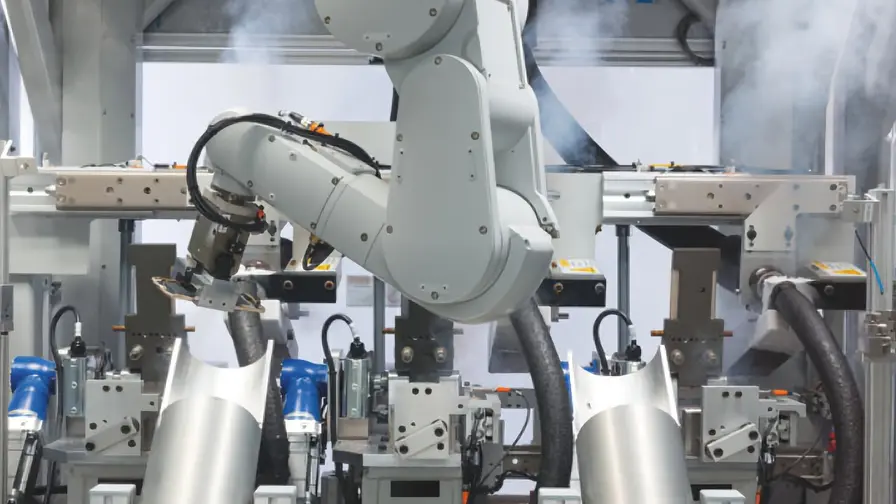
This cross-section of form factors suggests OpenAI is testing both mainstream categories (smart speakers) and niche, voice-first wearables where tight AI integration could provide a distinct advantage.
What Apple is doing in response
Apple has taken notice. Internal moves — including changes to executive travel plans — reflect concern about staff retention and competitive leakage. More than 70% of Apple’s revenue still derives from devices, so talent loss and supplier diversion could materially affect its competitive position if AI-first hardware becomes a major market trend.
At the same time, the relationship between the two companies is complex. Apple has licensed OpenAI models for enhancements to Siri and image tools, and both sides have discussed deeper integrations. That makes the dynamic part-collaboration, part-competition.
Market implications and strategic context
A few broader takeaways:
- Integration matters: Apple’s strength has been end-to-end control of hardware and software, supported by proprietary chip programs (A-series and M-series). OpenAI’s play is to marry model performance and cloud-edge AI experiences with polished industrial design.
- Speed vs. scale: OpenAI’s challenge is scaling product quality and reliability to consumer levels in a short timeframe. Partnering with experienced suppliers and former Apple engineers reduces, but does not eliminate, that risk.
- Winners may change: If AI models and ecosystem-level services become the primary differentiator for devices, design and materials could shift from being the top selling point to a supporting role.
Short-term use cases
Potential early-use scenarios include advanced voice assistants for privacy-preserving, on-device inference; seamless transcription and meeting capture; personal AR/assistant experiences in glasses; and always-on ambient audio companions. These use cases highlight where specialized hardware plus optimized AI models may create new product categories rather than mere iterations of existing gadgets.
OpenAI’s approach — recruiting design and supply-chain expertise while leveraging high-level AI assets — is an aggressive, calculated attempt to compress years of product development into a much shorter timeline. Whether that gamble pays off will depend on execution across design, manufacturing quality, software integration, and the user value delivered by the underlying AI models.
"The interplay between model quality and hardware design will likely define the next wave of consumer devices," one industry analyst commented. "Companies that can combine both effectively will shape user expectations for years to come."


Leave a Comment
Comments
No comments yet. Be the first.