

SEC signals limited enforcement on DePIN tokens
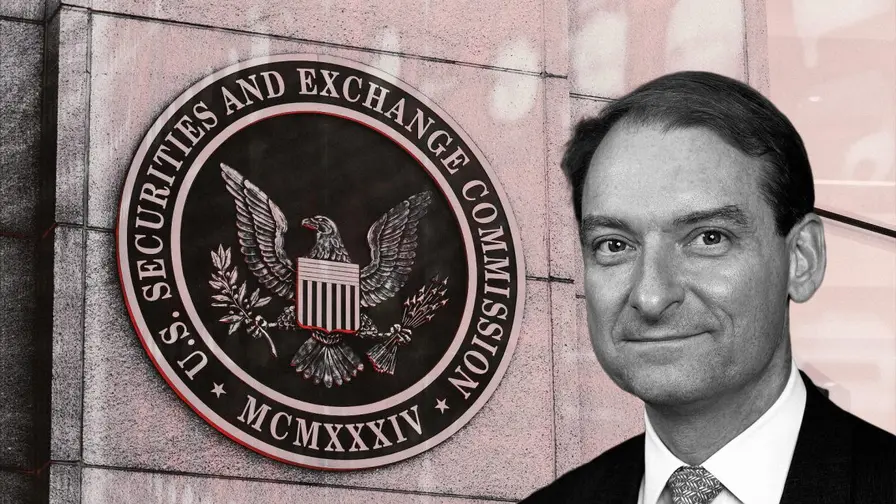
The U.S. Securities and Exchange Commission has signalled it will not pursue enforcement against certain tokens issued by Decentralized Physical Infrastructure Networks (DePIN). In a rare no-action letter, Michael Seaman, chief counsel in the SEC's Division of Corporation Finance, said he "will not recommend enforcement action" regarding the planned token launch by DePIN project DoubleZero. The decision marks a notable development in token classification, offering clearer guidance for builders of decentralized infrastructure and crypto projects considering tokenized incentives.
What the no-action letter covers
Seaman's letter evaluated the mechanics of DoubleZero's programmatic token transfers and concluded that the planned 2Z token "is not registered as a class of equity securities" under current U.S. securities laws. DoubleZero's design, according to the filing, rewards contributors who provide underutilized private fiber links and other physical infrastructure with tokens, rather than selling traditional equity or promising profits derived from managerial efforts.
About DoubleZero and the 2Z token
DoubleZero described a protocol that enables blockchain systems to access underused private fiber links operated by a distributed set of contributors. Participants who add capacity or services to the network would receive the 2Z token as compensation or incentive. Austin Federa, DoubleZero co‑founder and former strategy lead at the Solana Foundation, framed the ruling as evidence that founders can work with regulators to obtain clarity while moving quickly in innovation.
Commissioner Peirce: SEC shouldn't "regulate all economic activity"
SEC Commissioner Hester Peirce supported the no-action stance, emphasizing that the "economic reality of DePIN projects differs fundamentally from the capital-raising transactions Congress charged this Commission with regulating." Peirce argued regulators should not force every tokenized activity into existing securities frameworks, warning that overreach could stifle decentralized infrastructure development and broader blockchain innovation.


How the ruling relates to Howey and token classification
DoubleZero's general counsel, Mari Tomunen, said the letter highlights a path to launch tokens when their value largely derives from the work of other network participants. In such cases, Tomunen contends, the Howey test — the traditional U.S. securities test that focuses on an expectation of profit from the efforts of others — does not neatly apply. Peirce echoed this view, noting DePIN tokens function primarily as incentives that compensate contributors rather than as investment contracts promising profits.
Implications for DePIN, token issuers and crypto regulation
The no-action letter is part of a broader easing of enforcement under the current U.S. administration, which has signalled a desire to attract blockchain projects and crypto companies back to the U.S. market. For DePIN developers and token issuers, the decision provides a precedent for using tokens as functional incentives to build distributed networks of physical infrastructure—such as private fiber, shared compute, or sensor grids—without necessarily triggering securities registration requirements.
However, the ruling is narrow and fact-specific: it applies to DoubleZero's described token mechanics and does not create blanket immunity for all DePIN tokens or similar models. Market reaction was muted; CoinGecko data showed tokens in the DePIN sector fell roughly 2% in the 24 hours following the announcement, suggesting investors are weighing the long-term regulatory landscape.
Takeaway for builders and investors
For builders, the SEC guidance underscores the importance of careful token design, transparent documentation, and direct engagement with regulators to reduce legal uncertainty. For investors, the decision indicates regulators may differentiate between tokens that serve as functional network incentives and those structured primarily as investment products. Still, teams should seek legal counsel and consider how token economics, distribution, and governance could affect classification under securities law.
Overall, the SEC's no-action letter for DoubleZero marks a consequential moment for DePIN tokens, clarifying that properly structured, utility-focused tokens can fall outside the Commission's securities remit—so long as their economic reality aligns with the functional incentives described in the filing.
Discussion
Leave a Comment
Comments
No comments yet. Be the first.