
2 Minutes
TSMC's customer mix is changing rapidly. Apple, which made up roughly 24% of TSMC's revenue in 2024, may soon face a serious challenge as AI GPUs and high-performance computing orders surge in 2025.
Why NVIDIA is closing the gap
High-performance computing (HPC) workloads have exploded, and TSMC's recent results reflect that shift. HPC-related revenue reached about 60% of TSMC's total in Q2 2025, far outpacing smartphone demand. NVIDIA, the dominant supplier of AI GPUs, now occupies more than half of TSMC's CoWoS advanced packaging capacity and is positioned to capture a much larger slice of wafer and packaging revenue.
Industry estimates suggest NVIDIA could account for roughly 19–21% of TSMC's revenue in 2025 if current trends hold — enough to challenge Apple for the top customer slot. The move from mobile-first orders to datacenter and AI-focused demand is reshaping where TSMC earns its money.
Apple's counterpunch: big bets on 2nm and next-gen silicon
Apple isn't standing still. The company reportedly pre-purchased more than half of TSMC's initial 2nm capacity and is developing multiple next-gen chips, including four 2nm chipsets, a second-generation C2 5G modem for the iPhone 18 era, and possibly an N2 wireless networking chip. Two TSMC fabs in Taiwan are said to be fully booked for 2026 2nm production, and full-scale 2nm production is expected to ramp by late 2025.
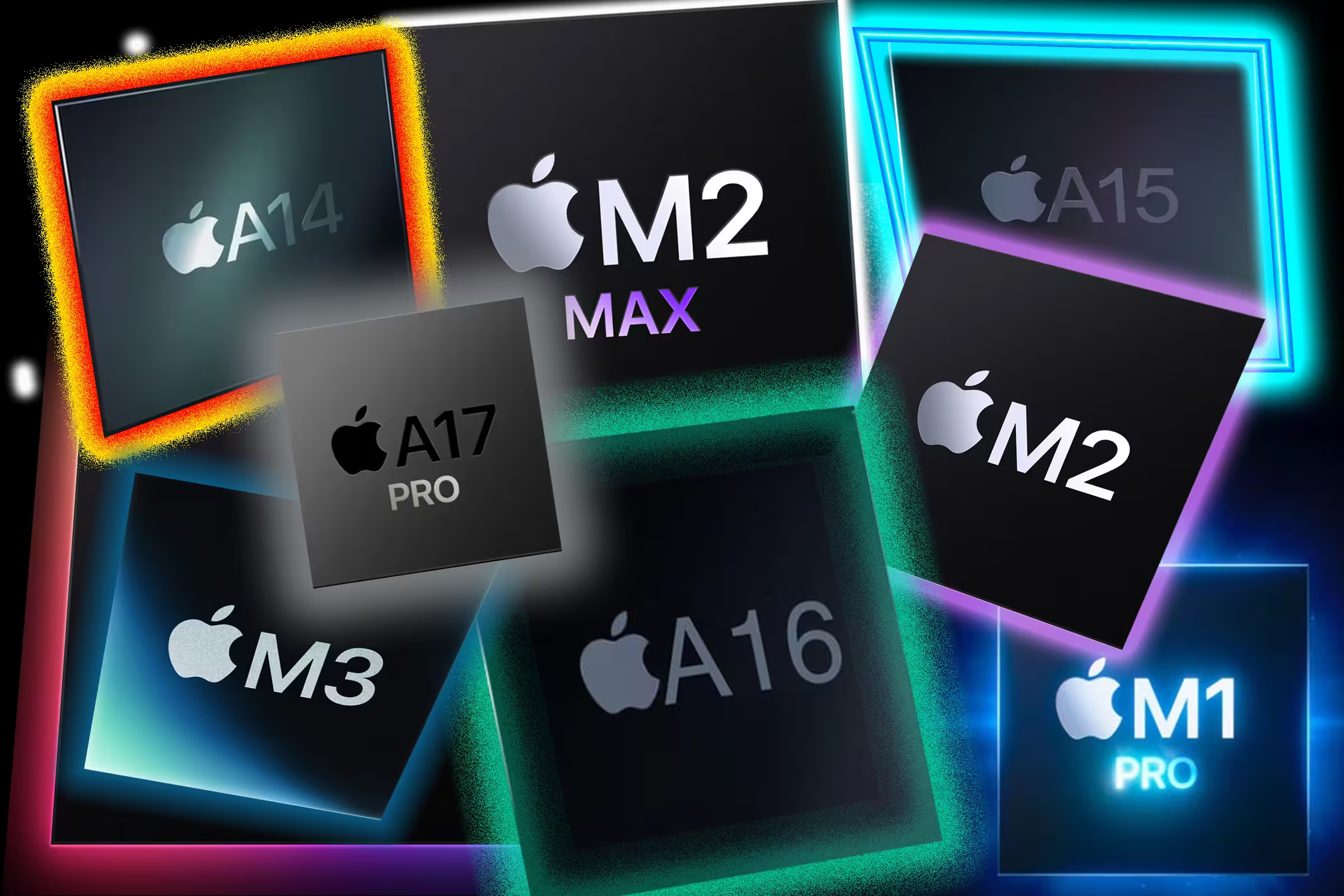
Why does that matter? 2nm wafers carry a premium price — market sources put a single 2nm wafer at roughly $30,000 — so Apple’s heavy preorders represent a significant revenue commitment for TSMC and a potential lever to reclaim top-customer status by 2026.
What this means for TSMC and the broader chip industry
TSMC benefits either way: whether the revenue comes from smartphones or AI accelerators, demand for advanced nodes fuels R&D and capital investment in next-generation fabs like the planned 1.4nm lines Apple reportedly wants online fast. But the mix matters for margins, packaging needs, and capacity planning.
- AI and HPC demand drives advanced packaging and CoWoS capacity utilization.
- Smartphone declines could pressure near-term wafer volumes, but high ASPs for cutting-edge nodes partially offset that.
- Diversified customer demand may accelerate investment in 1.4nm and other future nodes.
Imagine a world where datacenter GPUs rival phones as the principal revenue engine for the largest foundry in the world. That future is arriving faster than many expected — and TSMC's 2025 financials are already showing the early effects.








.webp "Redmi 17C 5G: 6.9-inch Screen and 6,000mAh Power Lands")

Leave a Comment
Comments
No comments yet. Be the first.