

4 Minutes
Fed liquidity boost lifts equities — crypto outlook remains cautious
The Federal Reserve’s recent pivot toward looser monetary policy is providing a clear tailwind for stock markets, but Bitcoin derivatives are signaling low conviction that BTC will hit or exceed $100,000 in the near term. Market participants are weighing increased liquidity against macroeconomic uncertainty, and options traders appear skeptical that a sustained Bitcoin breakout will accompany the Fed’s policy shift.
Fed decision and liquidity program explained
The Fed held rates at 3.75% in a split decision and signaled a cautious tone on inflation and labor-market risks. Chairman Jerome Powell emphasized persistent economic headwinds while two committee members voted to keep policy rates at 4% — an unusually visible divergence for the FOMC. More consequential for markets was the Fed’s announcement of a new program to purchase short-dated Treasuries, initially authorized at $40 billion. This marks a notable reversal from the balance-sheet reductions of the past few years, which peaked near $9 trillion in 2022 and now stand at about $6.6 trillion.
By injecting liquidity, the Fed aims to increase bank lending capacity, support credit growth, and spur business investment and consumer borrowing during a soft patch for the economy. Equity markets have reacted positively as lower funding costs improve corporate financial prospects and reduce borrowing expenses for consumers.
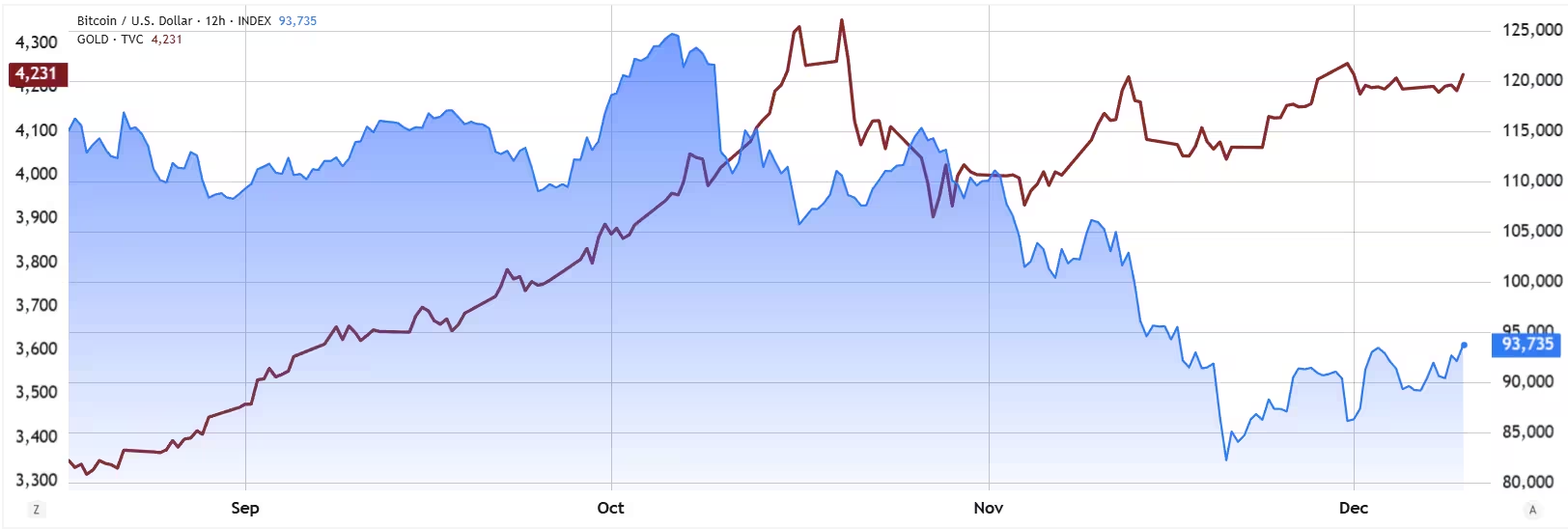
Gold/USD (left) vs. Bitcoin/USD (right)
Bitcoin options price in low probability of a $100K move
Despite the Fed’s accommodative tilt, Bitcoin options markets show a pronounced lack of confidence that BTC will reach $100,000 by late January. Using a Black & Scholes valuation framework, the $100k call option for Jan. 30 implies roughly a 70% probability Bitcoin will stay at or below that strike. The premium required to buy that option today is around $3,440 — sharply lower than the roughly $12,700 premium observed a month earlier.

$100k BTC call option at Deribit, USD

Options buyers pay the premium upfront to secure the right to acquire Bitcoin at the fixed strike price on expiry. If BTC finishes below $100,000, the calls expire worthless; if it finishes above, upside remains unlimited. The material compression in premium suggests traders view a near-term $100K BTC as significantly less likely than just weeks ago.
Timing and Fed calendar risks
The January monthly expiry for Bitcoin options sits two days after the next FOMC meeting on Jan. 28, adding an extra layer of macro uncertainty. The CME Group FedWatch Tool currently prices about a 24% chance of an interest-rate cut in January. Political and fiscal noise — including a government funding shutdown last November — has clouded the economic data flow, making it harder for markets to gauge labor and inflation trends with confidence.
Why stocks may outperform Bitcoin for now
Stocks typically respond more predictably to easier monetary policy: lower real yields make equities appear relatively more attractive, especially when corporate financing costs fall. Bitcoin’s role in that dynamic is less deterministic. Investors rotating out of short-term government debt may not treat BTC as a direct alternative to Treasuries or gold, given lingering questions around its safe-haven status and shorter performance track record versus traditional assets.
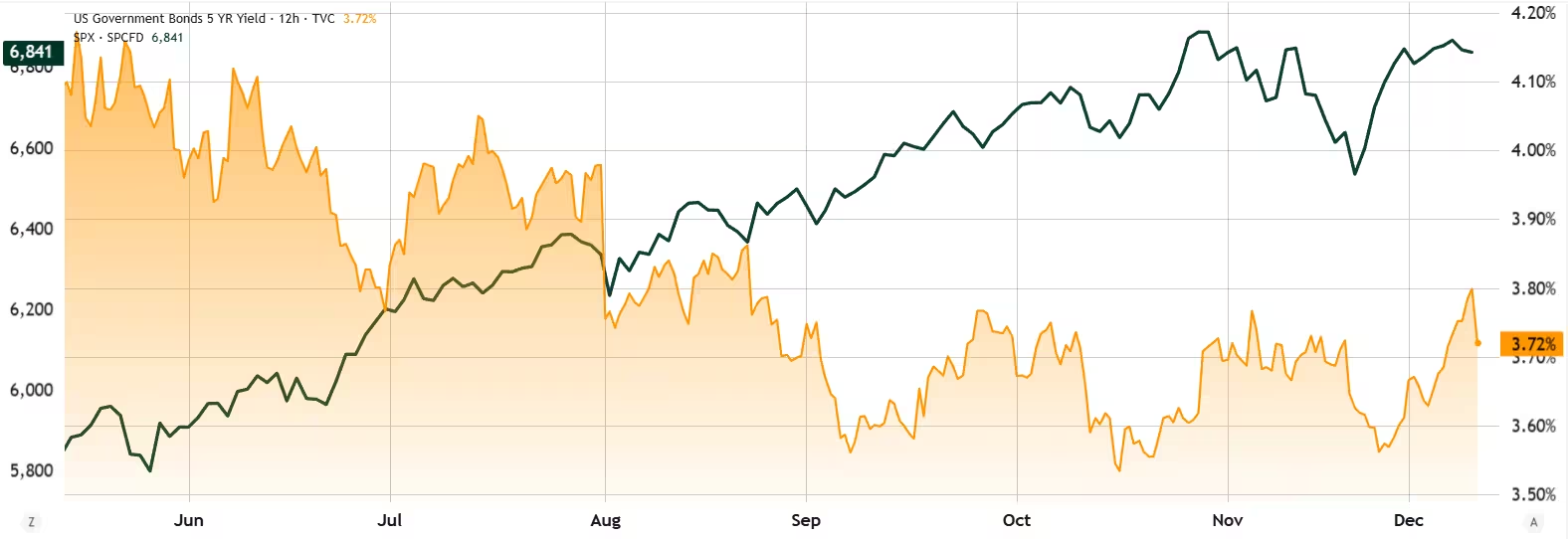
S&P 500 index (left) vs. US five-year Treasury yield (right)
Yields on the five-year Treasury have retreated to about 3.72% from roughly 4.1% six months ago, while the S&P 500 has climbed around 13% over the same window. At the same time, concerns about growing US government debt and potential dollar weakness keep inflation risks on investors’ radars, which can push some capital into scarce assets — but that hasn’t translated into decisive Bitcoin accumulation by whales or market makers.
Whales stay cautious, catalysts remain unclear
Liquidity from Fed operations has certainly improved macro conditions, yet major Bitcoin holders — often called whales — and professional market makers remain hesitant to underwrite a persistent move over $100K. Traders are monitoring cross-asset signals, such as the rising cost of default protection in technology and AI-linked sectors; that could eventually nudge some risk allocation away from equities and into crypto, but it’s not an immediate given.
For now, key drivers that could ignite a Bitcoin rally—accelerating institutional inflows, a clear macro shift toward higher inflation expectations, or a marked decline in Treasury yields—remain hypothetical. Option-implied probabilities and cheaper call premiums suggest the market expects any January upside to be limited or short-lived unless a major, unexpected catalyst appears.

In summary, while the Fed’s liquidity actions support risk assets broadly, BTC derivatives markets currently price in a modest chance of a breakout above $100,000 by late January. Traders and investors should watch the FOMC calendar, macro data revisions, and flows into institutional crypto products for signs that sentiment is changing.










Leave a Comment
Comments (2)
Feels a bit safe to claim stocks win here, BTC needs a clear catalyst. options prices tell the tale, imo
Is options market always this pessimistic? looks like whales are staying out, but could flip fast if yields drop... hmm