

2 Minutes
Samsung's newly unveiled Exynos 2600 is already turning heads. Beyond claiming the title of the world's first 2nm smartphone chip, reports now credit it with a major architectural milestone: an in-house GPU built on AMD's RDNA technology.
A milestone: 2nm silicon and a Samsung-made GPU
The Exynos 2600 is expected to power next year’s Galaxy S26 series, but the buzz isn’t just about transistor density. According to Yonhap News Agency, the chip includes the Xclipse 960 GPU — reportedly designed by Samsung in-house while leveraging AMD's RDNA architecture. That’s a distinct shift from the co-developed AMD-Samsung GPUs that began with the Exynos 2200.
What makes this GPU development significant?
GPUs are central to modern mobile experiences: gaming, UI rendering, AI pipelines and more all rely on efficient graphics processing. Building an in-house GPU is a complex, resource-heavy effort. Until now, only a few players — AMD, Intel, Nvidia and Qualcomm — have established their own mobile-capable GPU stacks at scale. If Samsung’s claims hold, it joins that select group.
From Windows drivers to mobile optimizations
Insiders say Samsung’s GPU work began on the Windows side before the company retooled the design for low-power, high-performance mobile use. That evolution required adapting the RDNA foundation for Android workloads and tight battery budgets — a different challenge than desktop graphics.
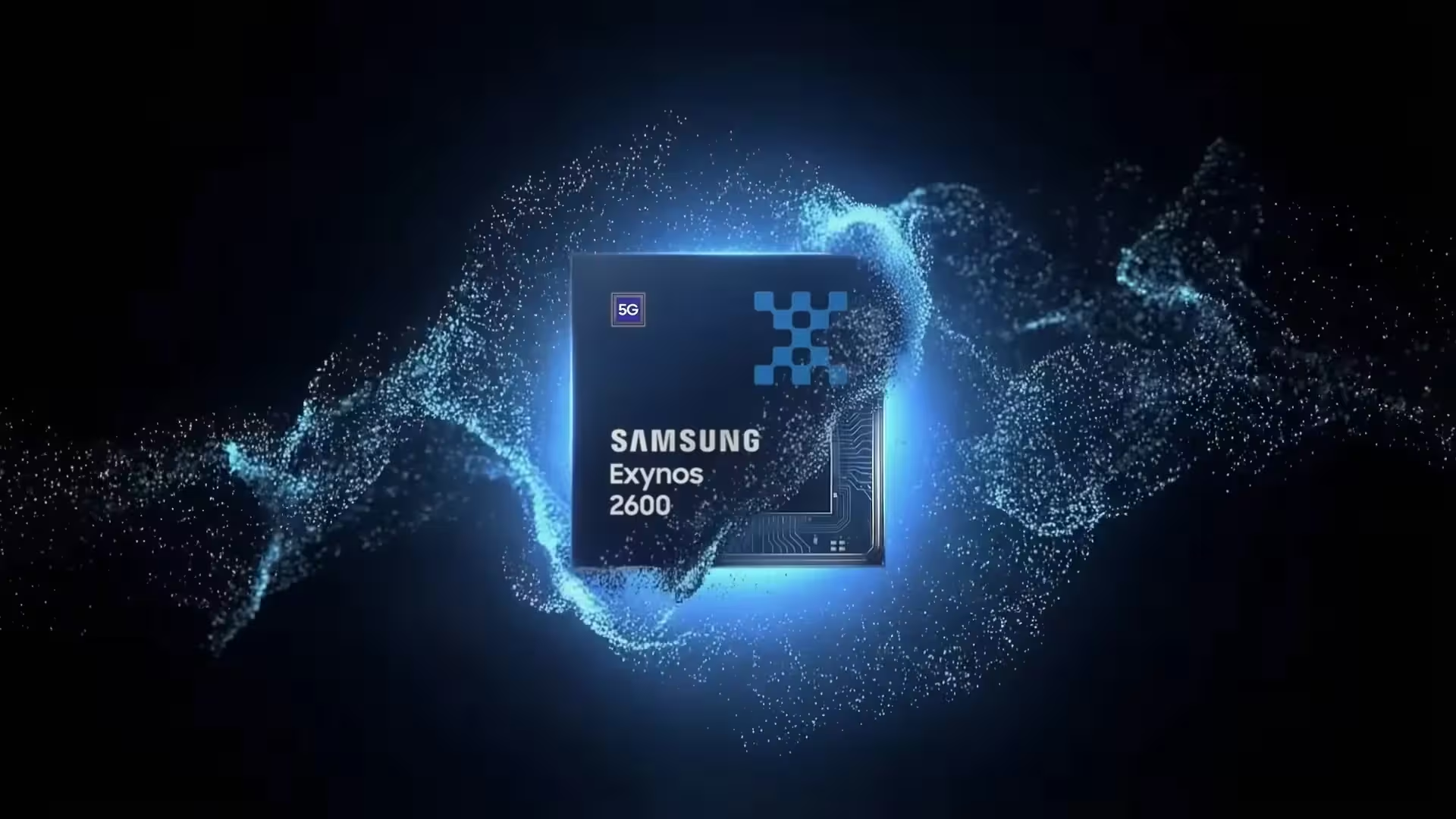
Why does that matter to users? Imagine the combination of a 2nm process and a GPU tailored specifically for Samsung devices: better power efficiency, improved thermal behavior, and potentially smoother gaming performance without relying on third-party IP.
Looking ahead: less dependence on external partners
Reports also suggest Samsung plans to move fully away from AMD’s GPU architecture starting with the Exynos 2800, effectively ending reliance on AMD for future Exynos GPUs. That strategy could lower licensing costs and give Samsung tighter control over performance tuning and feature roadmaps.
Will this translate to faster releases, better battery life, or stronger graphics on Galaxy flagships? Time will tell — but the Exynos 2600 marks a clear inflection point in Samsung’s silicon ambitions.











Leave a Comment
Comments
No comments yet. Be the first.