
.webp)
3 Minutes
BYD claims the top spot in the global EV race
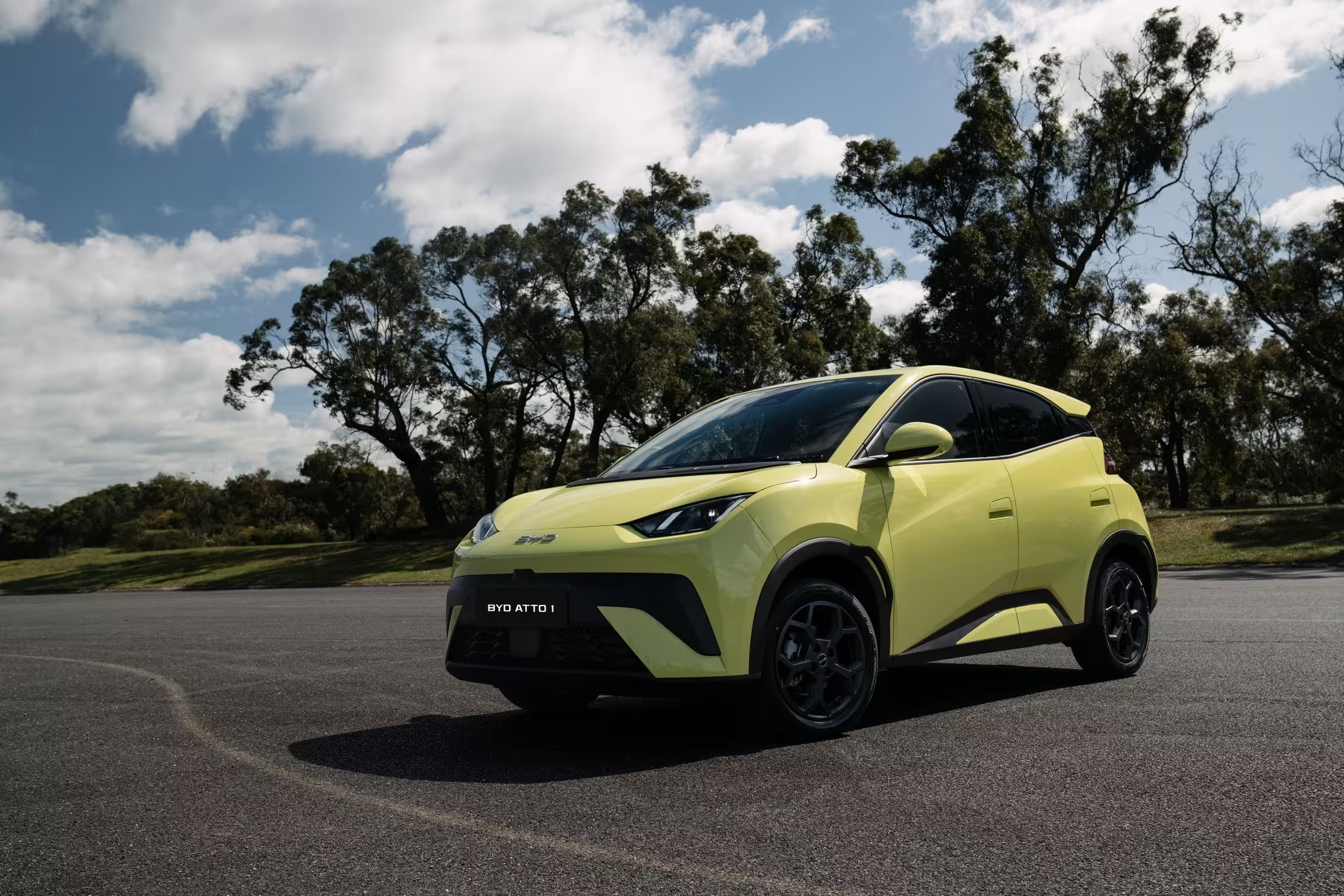
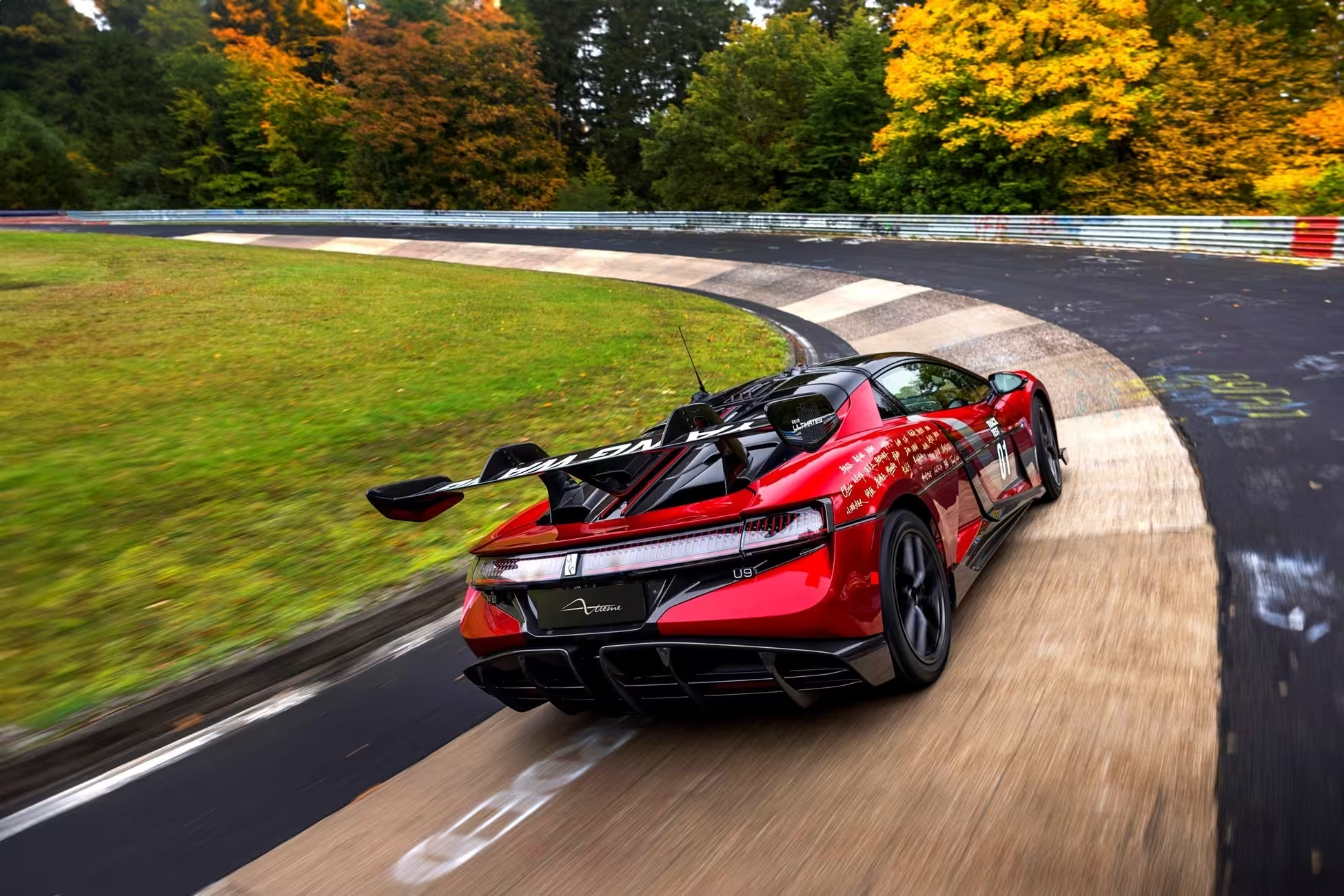
Chinese automaker BYD has overtaken Tesla to become the world’s largest electric-vehicle maker, marking the first time Tesla has finished second in annual EV sales. The shift underscores how fast China's EV industry has matured and how fragile market leadership can be when competitors combine aggressive pricing, long range, and broad market reach.
Key figures and market context
In 2025 Tesla's deliveries fell by nearly 9% to about 1.64 million vehicles globally, the brand’s second consecutive year of decline. BYD, by contrast, posted a roughly 28% rise in sales of electric vehicles, selling more than 2.25 million EVs and a total of around 4.6 million cars across all segments. The United Kingdom emerged as BYD’s largest market outside China after sales surged dramatically.
Why BYD pulled ahead
- Competitive pricing: BYD has undercut many rivals while maintaining acceptable margins.
- Range and battery tech: Generous range figures helped BYD models appeal to buyers prioritizing practicality.
- Global expansion: Rapid rollouts in Europe, Southeast Asia, and Latin America widened BYD's addressable market.
These factors combined to boost BYD’s market share at a time when several traditional automakers scaled back all-electric plans.
Tesla’s headwinds in 2025
Tesla faced a difficult year: declining deliveries, the faltering appeal of the Cybertruck, and regulatory hurdles that affected its ability to certify certain models in China and Europe. In the United States, the expiration of the federal EV tax credit after September 30, 2025 removed up to $7,500 in incentives for many buyers — a policy change that blunted demand and encouraged price promotions that did not fully recover lost momentum.
Public perception also played a role. High-profile controversies surrounding CEO decisions and outside commitments drew scrutiny and, according to some analysts, contributed to a segment of buyers switching loyalty to alternative brands.
What this means for the wider market
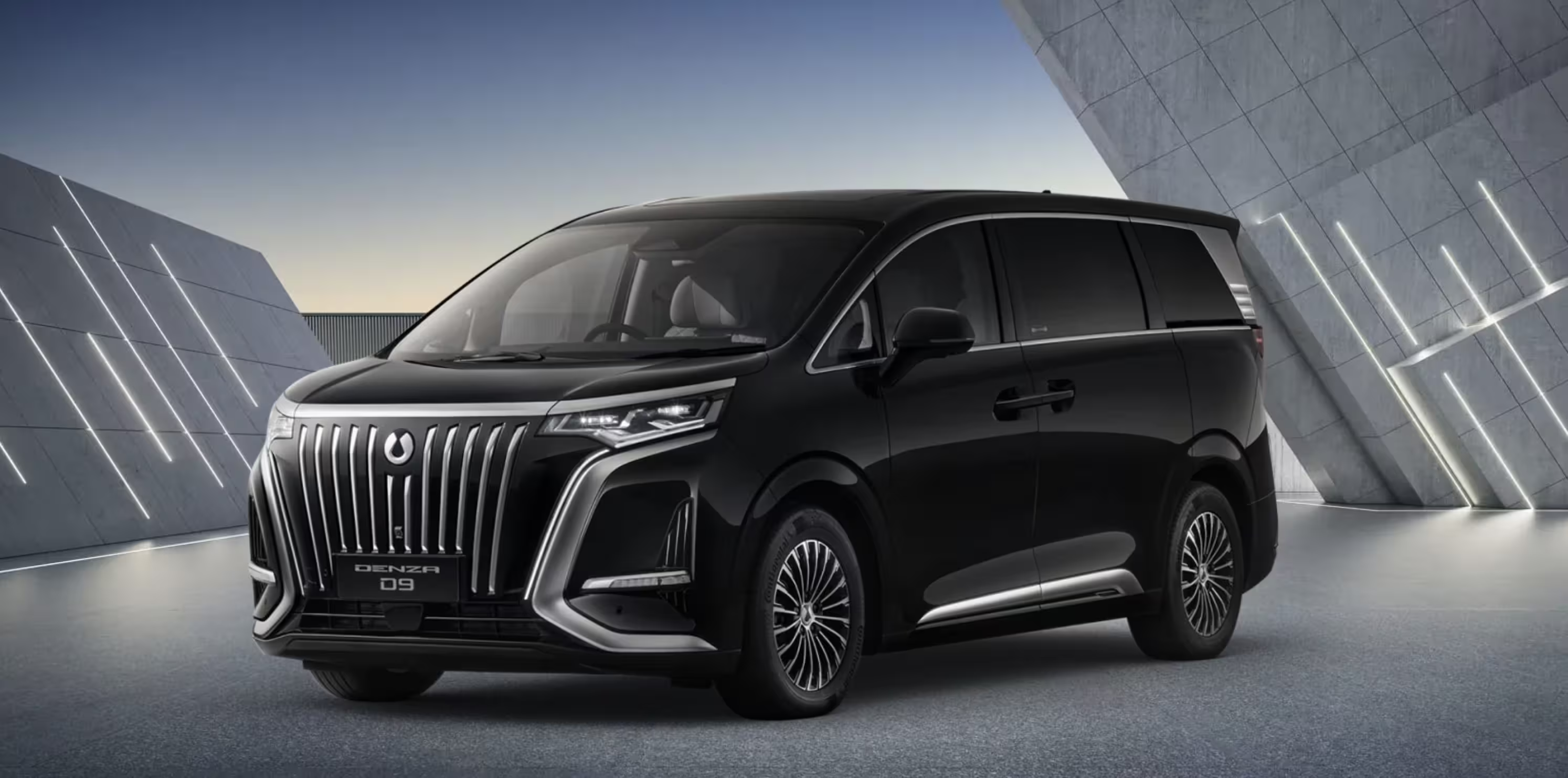
The rise of BYD illustrates a broader trend: Chinese EV makers are not only competitive on cost but are increasingly strong on design, range, and overall value proposition. While legacy automakers such as Ford, Stellantis, and General Motors have scaled back some full-EV rollouts in favor of hybrids or continued internal combustion development, brands like Geely and MG are gaining traction too.
Outlook and strategic moves
BYD had been preparing to enter the U.S. market, but potential trade tariffs and higher import taxes altered those plans. Instead, the company is concentrating on markets where it can scale quickly and maintain attractive prices. Tesla, meanwhile, will need to regain growth through new models, improved certification across markets, and stronger marketing to counter rising competition.
For car buyers and industry watchers, the leaderboard change is a reminder that the EV market is dynamic. Innovation, pricing, regulatory compliance, and market expansion all matter — and market leaders can change quickly when those levers move.
"BYD's rise is a result of volume, value and aggressive expansion — a combination that caught many competitors flat-footed."
Highlights:
- BYD sold over 2.25 million EVs in 2025 and 4.6 million cars total.
- Tesla deliveries dropped to about 1.64 million vehicles in 2025.
- UK became BYD's largest market outside China, with steep annual growth.


Leave a Comment
Comments
No comments yet. Be the first.