
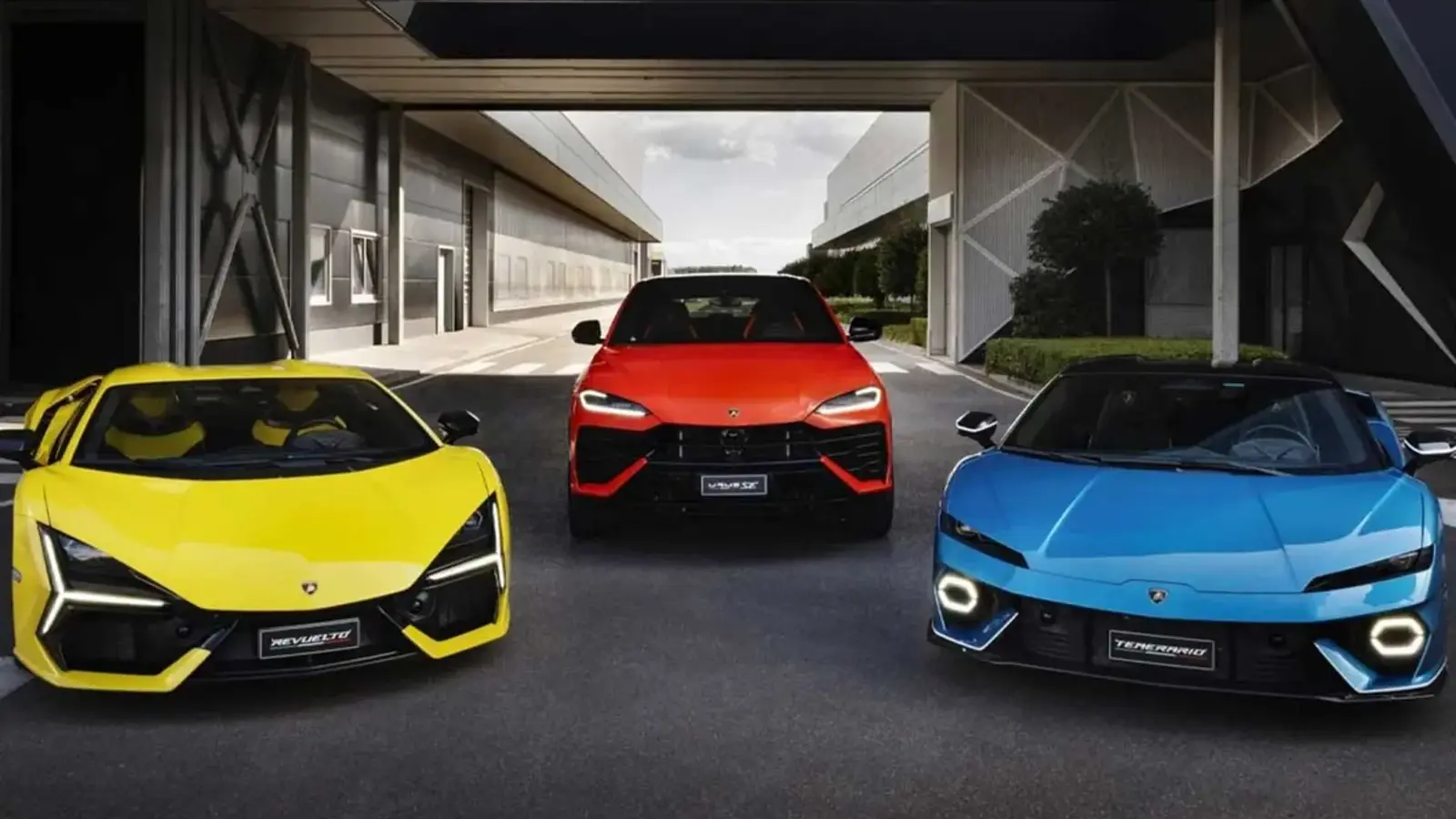
Record Year for Lamborghini: 10,747 Deliveries in 2025
Lamborghini reached a new commercial high in 2025, delivering 10,747 cars worldwide. That figure continues an impressive upward trajectory that began after the company first topped 10,000 deliveries in 2023, and underscores how a modern supercar brand can thrive while transitioning toward hybrid drivetrains and stricter emissions rules.
From Survival to Boom: A Short Market Snapshot
Few brands prompt the question "Where would Lamborghini be without Volkswagen's 1998 takeover?" The pragmatic answer is that ownership and investment helped stabilize and scale Sant'Agata Bolognese into a global luxury performance business. Production has more than doubled since 2017—when Lamborghini sold 3,815 cars—and is nearly three times the volume of 2015 (3,245 units). The shift to hybrid powertrains has not deterred buyers; on the contrary, it appears to have broadened Lamborghini's appeal.
.avif)
Model Momentum: Who’s Carrying the Brand?
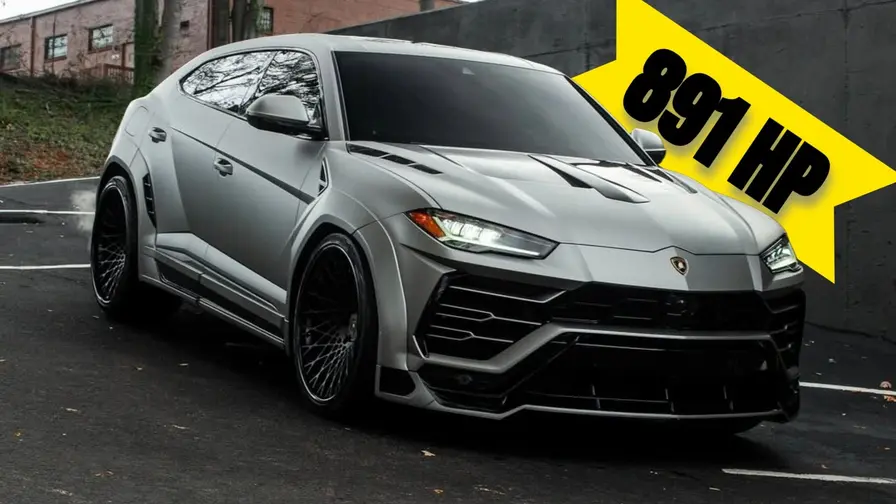
Lamborghini does not break down sales by model, but analysts and order activity point to the Urus SUV as the backbone of the company's commercial success. The Urus—now available only as a plug-in hybrid (PHEV)—remains the best-selling Lamborghini.
Geographic distribution in 2025:
- EMEA (Europe, Middle East & Africa): 4,650 units
- Americas: 3,347 units
- Asia-Pacific: 2,750 units
These regional figures show balanced global demand, with EMEA still the largest market but the Americas and Asia-Pacific also contributing strongly.
.avif)
Temerario: The New V8 Hybrid Hits the Road
The successor to the Huracán, introduced in August 2024 and referred to here as the Temerario, officially began customer deliveries in early 2026. Its new V8 hybrid powertrain has started strongly: order books already fill the next 12 months of production capacity. Lamborghini has indicated possible future variants, including a rear-wheel drive version, though that is unlikely to debut this year.
Quote: "The new V8 hybrid has generated exceptional demand from the first day," industry insiders report, reflecting how buyers are embracing hybrid supercar performance.
What’s Next: Roadsters, Derivatives, and New Generations
Lamborghini appears to be moving deliberately with launches and derivatives. Rumors and company hints suggest the Ruelto roadster (a topless variant related to the Temerario) is approaching introduction, and additional Temerario derivatives—such as a convertible—are expected to follow.
Urus remains the longest-serving model in the current lineup, first launched in 2017. The second-generation Urus is scheduled for 2029. Notably, the new Urus was originally planned as a battery-electric vehicle (BEV), but Lamborghini changed course: the forthcoming model will retain a gasoline engine paired with electric assistance (a PHEV solution) rather than going fully electric.
The fourth model, the Lanzador, faces a similar recalibration. CEO Stephan Winkelmann has confirmed that global demand for ultra-luxury BEVs is waning relative to forecasts, so the Lanzador's launch has been pushed from 2028 to 2029 and may arrive as a plug-in hybrid rather than a pure EV.
.avif)
Key Takeaways
- Lamborghini set a new sales record in 2025 with 10,747 deliveries.
- The Urus plug-in hybrid remains the commercial engine of the brand.
- The Temerario V8 hybrid has filled 12 months of production orders.
- Future models (Urus II, Lanzador) will likely emphasize hybrid solutions over pure battery-electric power.
For car enthusiasts and market watchers, Lamborghini’s 2025 performance is confirmation that exclusivity and high-performance engineering can coexist with hybridization—and that intelligent product strategy can sustain growth even amid changing emissions regulations and shifting customer preferences.

Leave a Comment
Comments
No comments yet. Be the first.