
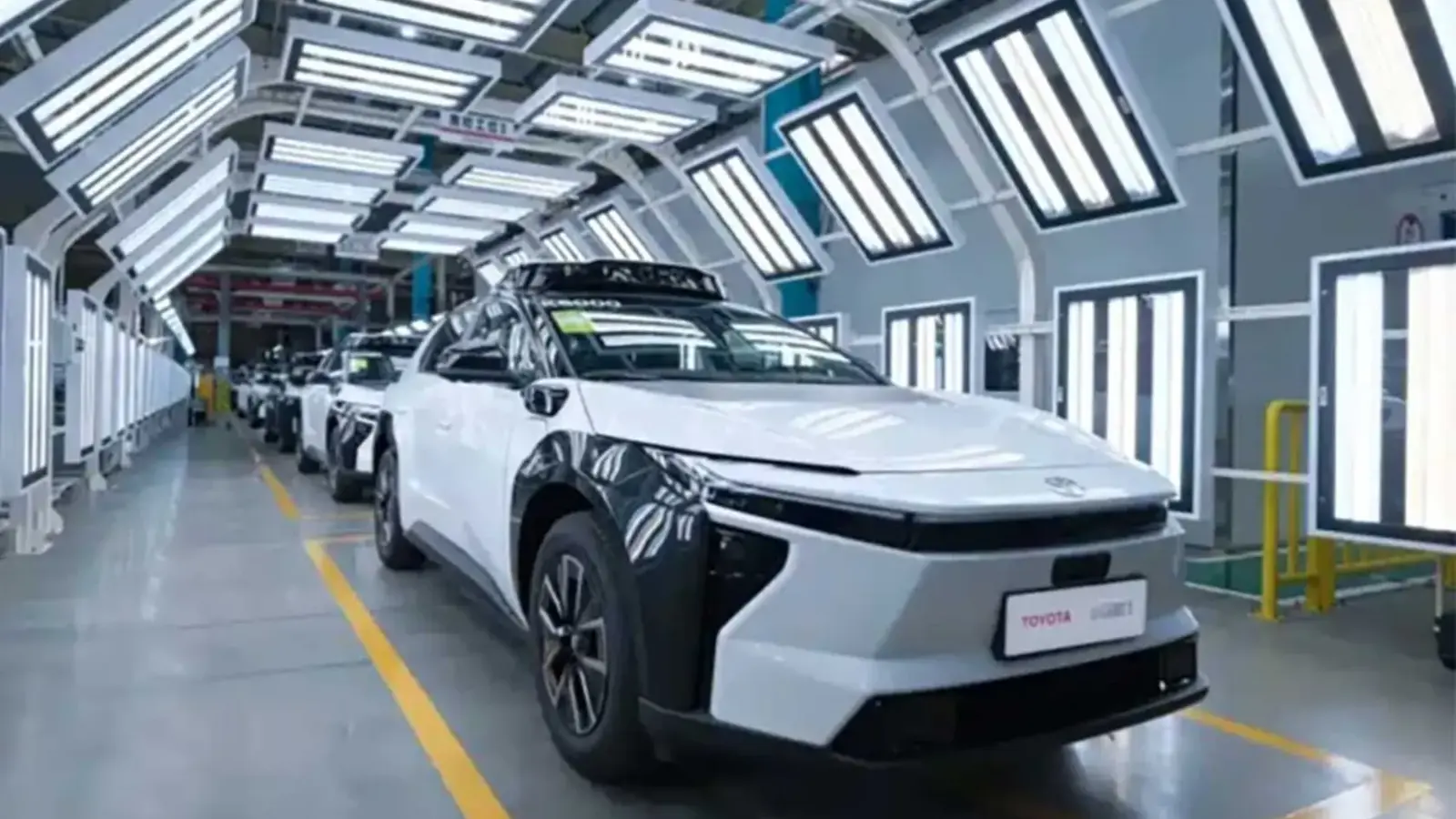
Toyota and Pony.ai Unveil Their First Production Robotaxi
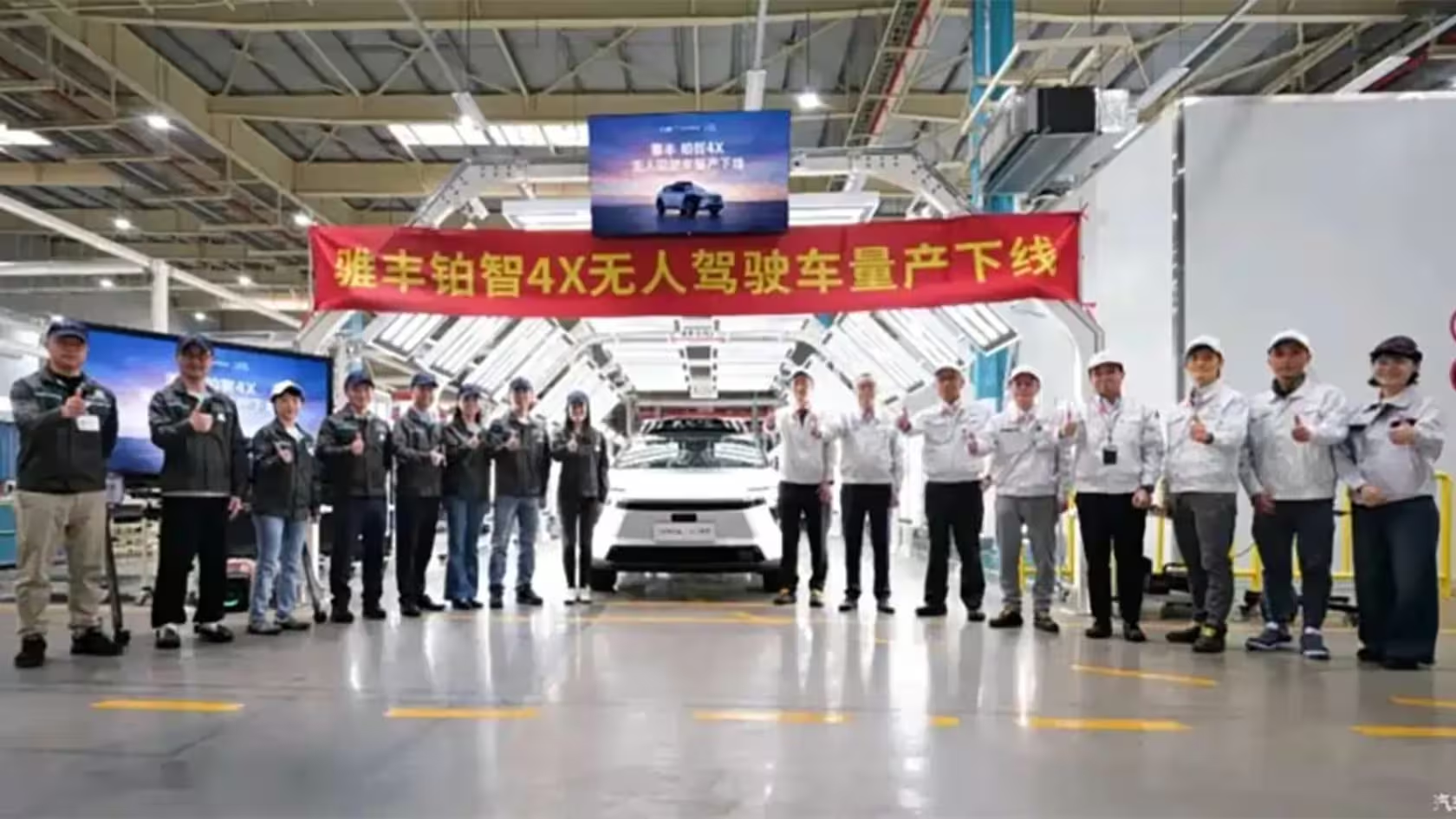
Toyota, in collaboration with Chinese autonomy specialist Pony.ai, has revealed its first production robotaxi based on the electric bZ4X crossover. The joint venture GK Toyota announced that the self-driving bZ4X has rolled off the production line, marking a major step from research partnership to commercial deployment.
From strategic partnership to large-scale rollout
The two companies have worked together since 2019, and Toyota’s $400 million investment in Pony.ai in 2020 is now delivering tangible results. The robotaxi uses Pony.ai’s seventh-generation autonomous driving stack and the automaker plans to deploy a 1,000-vehicle fleet in major Chinese cities — Beijing, Shanghai, Guangzhou and Shenzhen — by the end of 2026 to provide fully automated passenger services.
Technology and safety: what’s inside the robotaxi
Pony.ai’s latest hardware package focuses on reliability and cost-efficiency. The company says hardware production costs for this kit have dropped roughly 70% compared with the previous generation. The system combines multiple sensors — LiDAR, radar and cameras — and can detect objects up to 650 meters away, a capability designed to improve safety at highway speeds and in challenging weather.
- Sensor suite: LiDAR, radar, multi-camera array
- Perception range: up to 650 meters
- Hardware lifespan: engineered for around 600,000 km
- Cost reduction: ~70% lower production hardware cost vs prior generation
Onboard convenience features have also been added to enhance the passenger experience: Bluetooth-enabled automatic door opening, in-cabin voice interaction and pre-entry climate control to deliver a calm, stress-free ride.
Design, dimensions and drivetrain
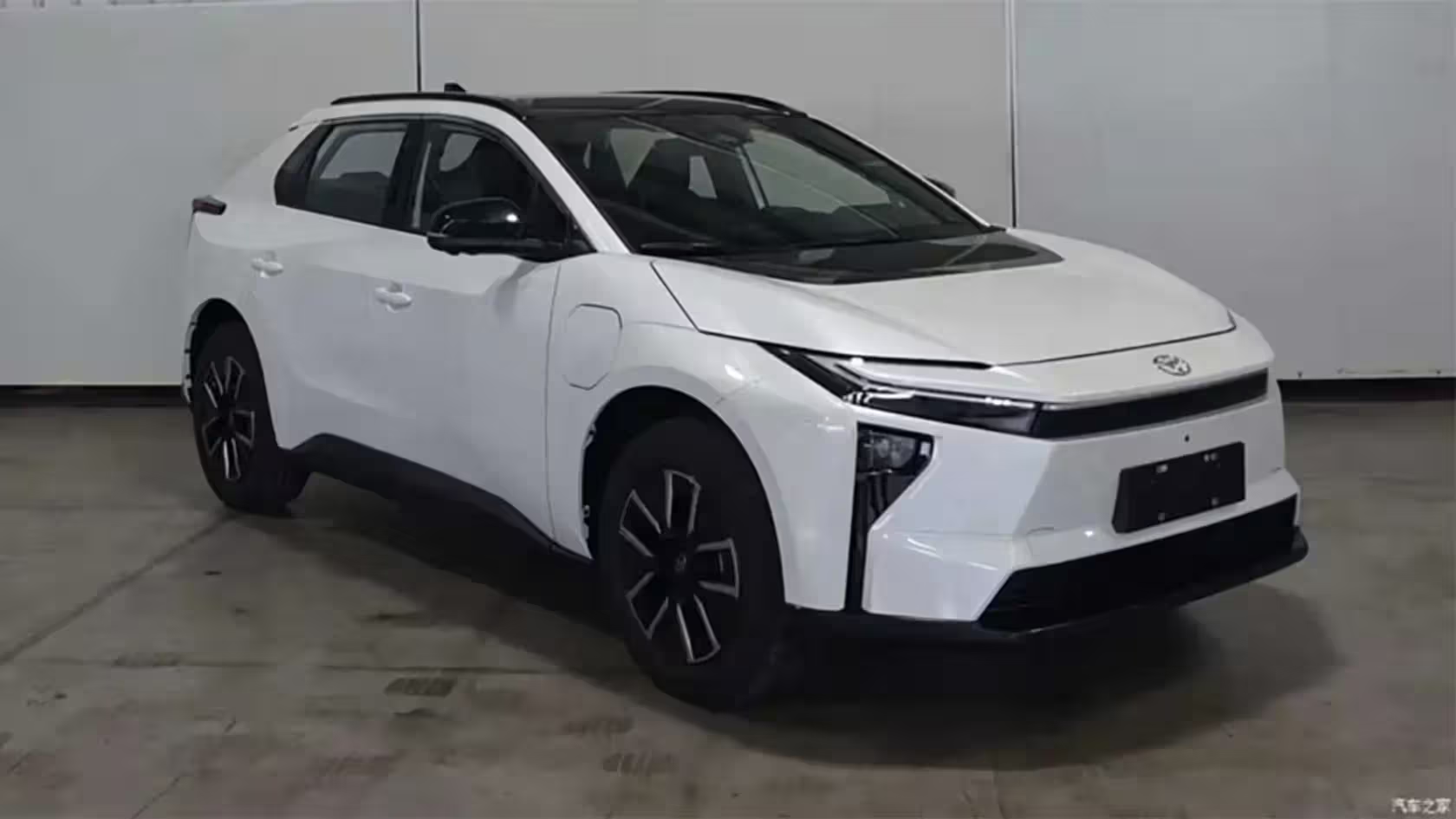
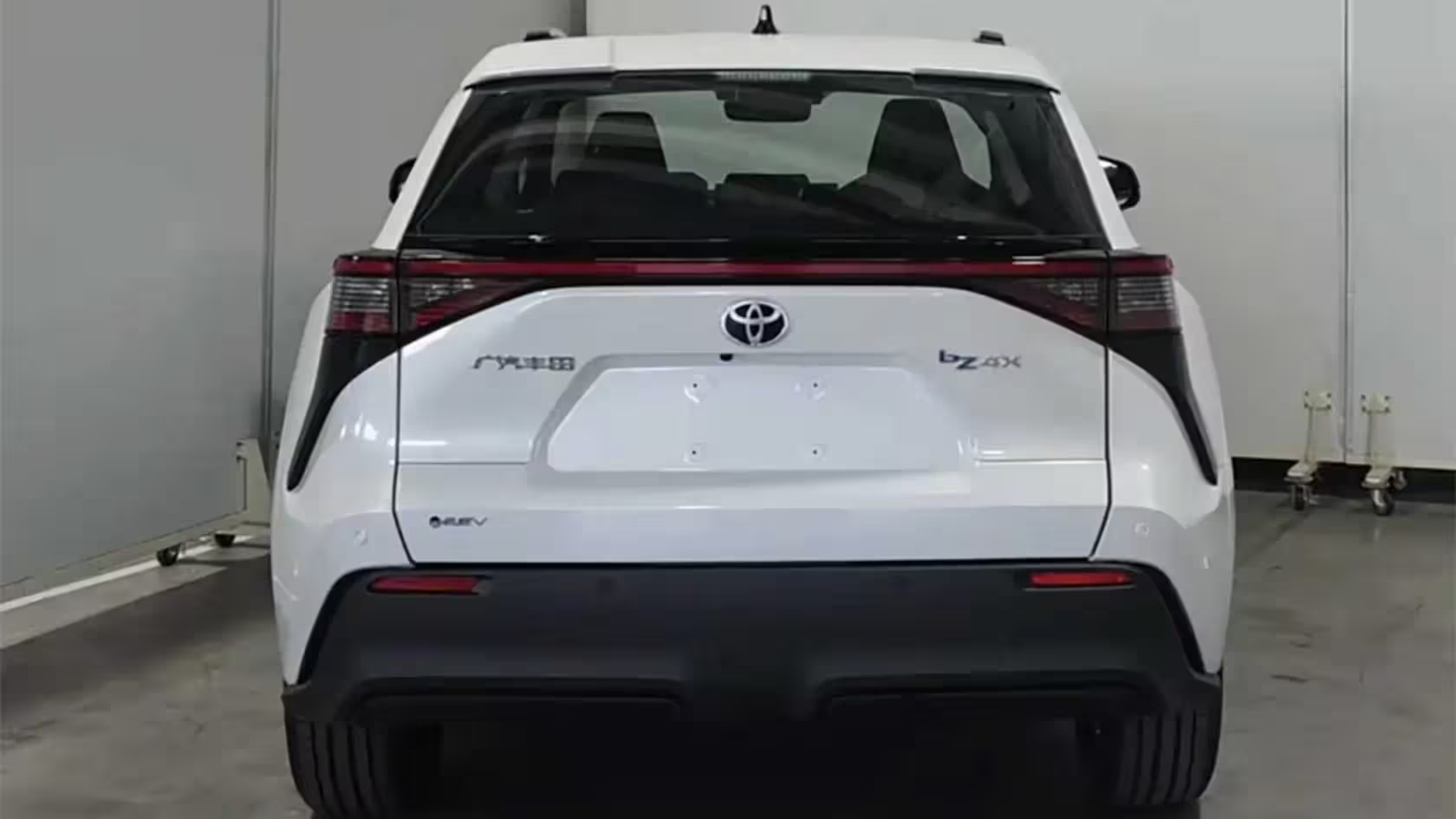
The robotaxi retains the physical footprint of the standard bZ4X. That means a length of 4,690 mm, width of 1,860 mm and height of 1,650 mm with a 2,850 mm wheelbase — generous rear legroom for passengers. Powertrains include a single-motor variant producing 219 hp and an optional dual-motor all-wheel-drive version for tougher operating conditions or routes that demand higher traction.
What this means for the market
For Toyota, mass-producing an autonomous vehicle with a partner is a strategic move to accelerate mobility services while leveraging Pony.ai’s software expertise. Pony.ai’s finance head noted a rapid fleet expansion: from about 200 vehicles in 2024 to nearly 1,000 by the end of 2025, with a target of 3,000 by the close of 2026. The company hopes that scaling to 100,000 units by 2030 will lead to full profitability in autonomous mobility services.
Quote: "This rollout represents the transition from pilots to scaled commercial robotaxi operations," a source familiar with the program said. "The combination of Toyota’s manufacturing and Pony.ai’s autonomy creates a compelling blueprint for future urban mobility."
As the robotaxi industry moves quickly, this bZ4X-based vehicle underscores how traditional automakers and autonomy startups can combine strengths — production quality, safety validation and advanced perception — to bring self-driving ride-hailing closer to everyday reality.

Leave a Comment
Comments
No comments yet. Be the first.