
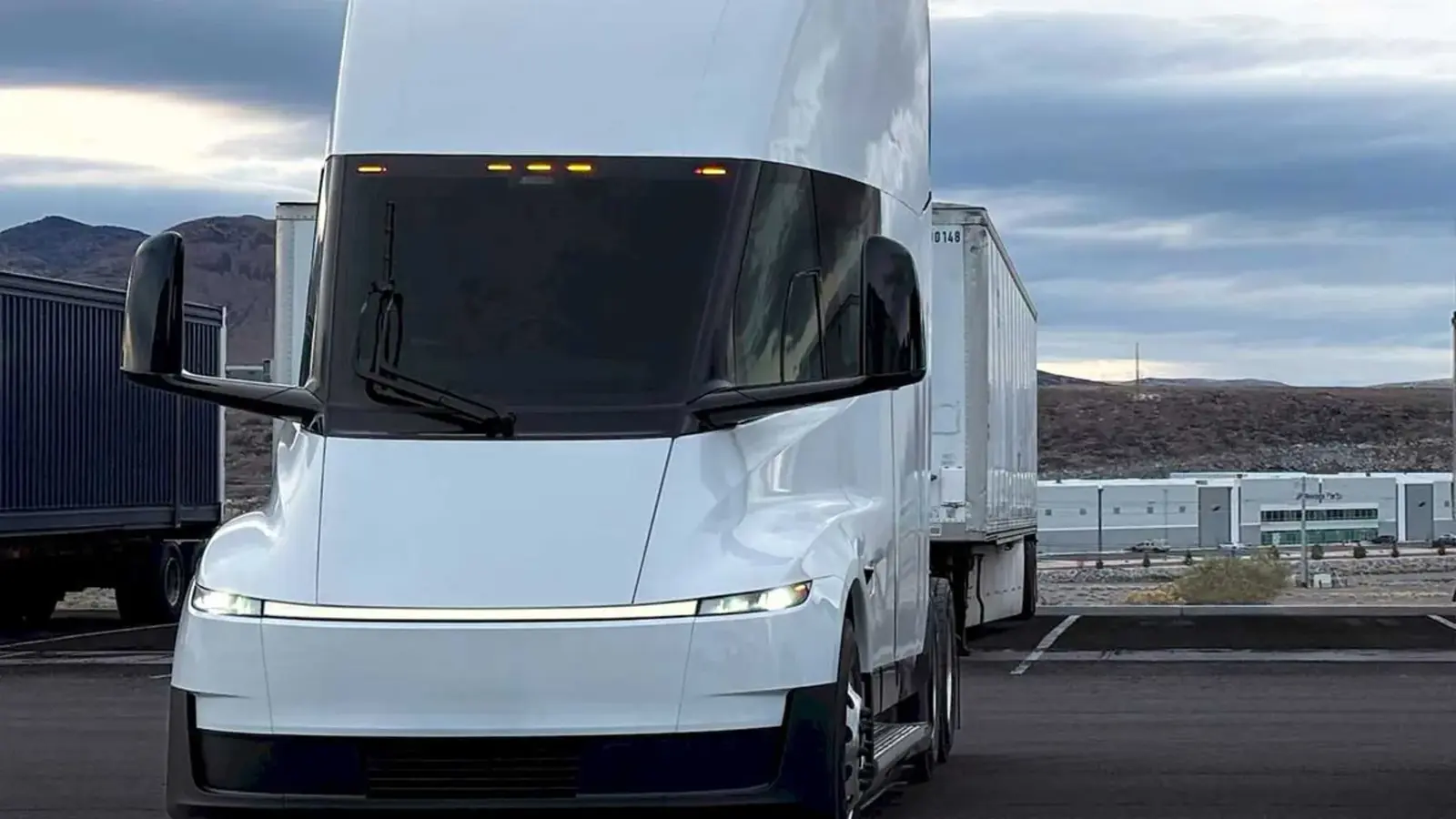
Tesla posts final Semi specs as mass production looms
Tesla has finally published the long-awaited final specifications for the Semi electric truck as it prepares to ramp up mass production. First unveiled in 2017 as a radical push toward decarbonizing long-haul freight, the Semi has endured years of delays and development twists. Now, with updated details on Tesla's official site, the truck looks ready to move from promise to production.
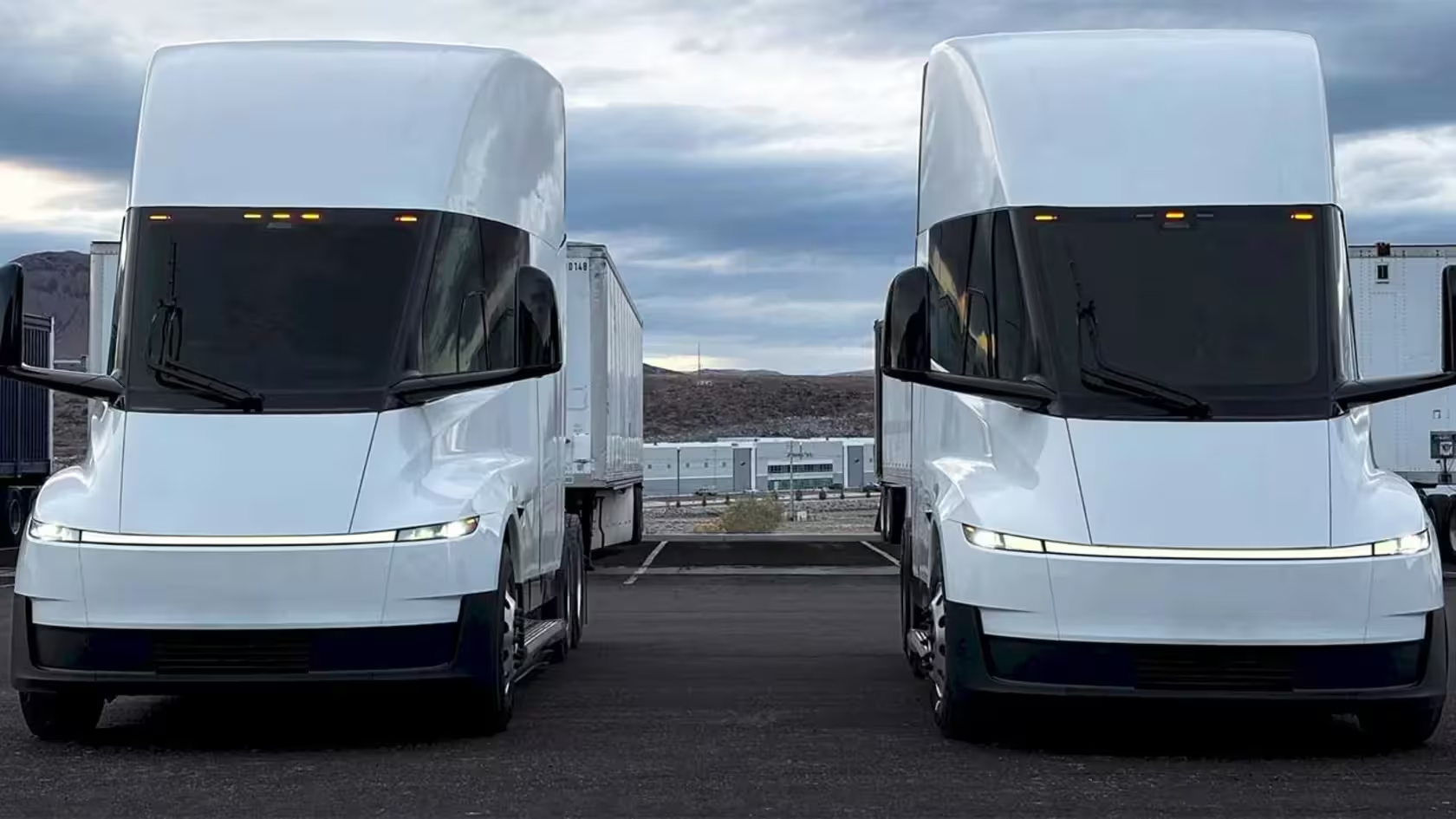
Key specifications at a glance
- Two range options: Standard and Long Range, both rated for a gross combination weight of up to 37 tonnes.
- Range: about 523 km for the standard version and 805 km for the long-range variant.
- Energy consumption: roughly 1.1 kWh per km, reflecting a highly efficient electric drivetrain.
- Powertrain: three independent electric motors on the rear axles, with combined output up to 1,070 hp.
Charging, power output and practical features
One standout is the megawatt charging port on the long-range Semi that allows a rapid top-up: Tesla claims charging from low state to roughly 60 percent in about 30 minutes. That fast-charge capability targets real-world fleet operations where quick turnaround is essential.
The Semi also includes a 25 kW auxiliary power outlet to run reefers, tools or trailer equipment without a diesel generator. For carriers looking to cut fuel and maintenance costs, that onboard power is a practical advantage.
Performance and autonomy
Tesla hasn’t provided minute-by-minute powerband figures, but the 1,070 hp equivalent from the three-motor layout should be more than enough to sustain highway speeds and handle steep grades while hauling heavy loads. Tesla highlights the Semi’s low energy consumption as proof of optimized battery and drivetrain packaging for long-distance trucking.
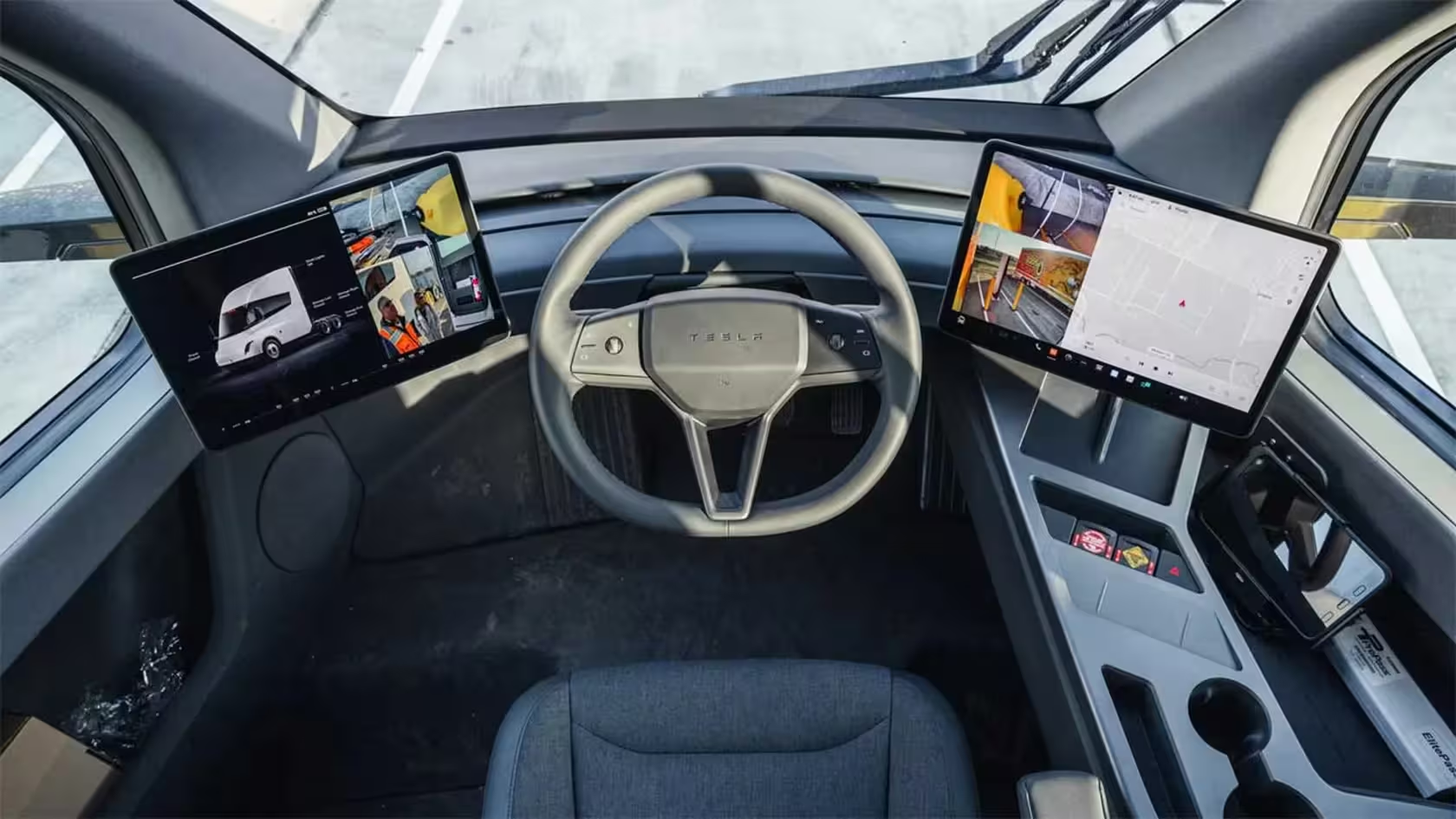
From day one the Semi has been designed with autonomy in mind. Tesla says the truck comes equipped with the hardware needed for its Full Self-Driving (FSD) system, positioning the Semi for future ADAS and autonomy-enabled platooning or routing improvements.
Market positioning, customers and production targets
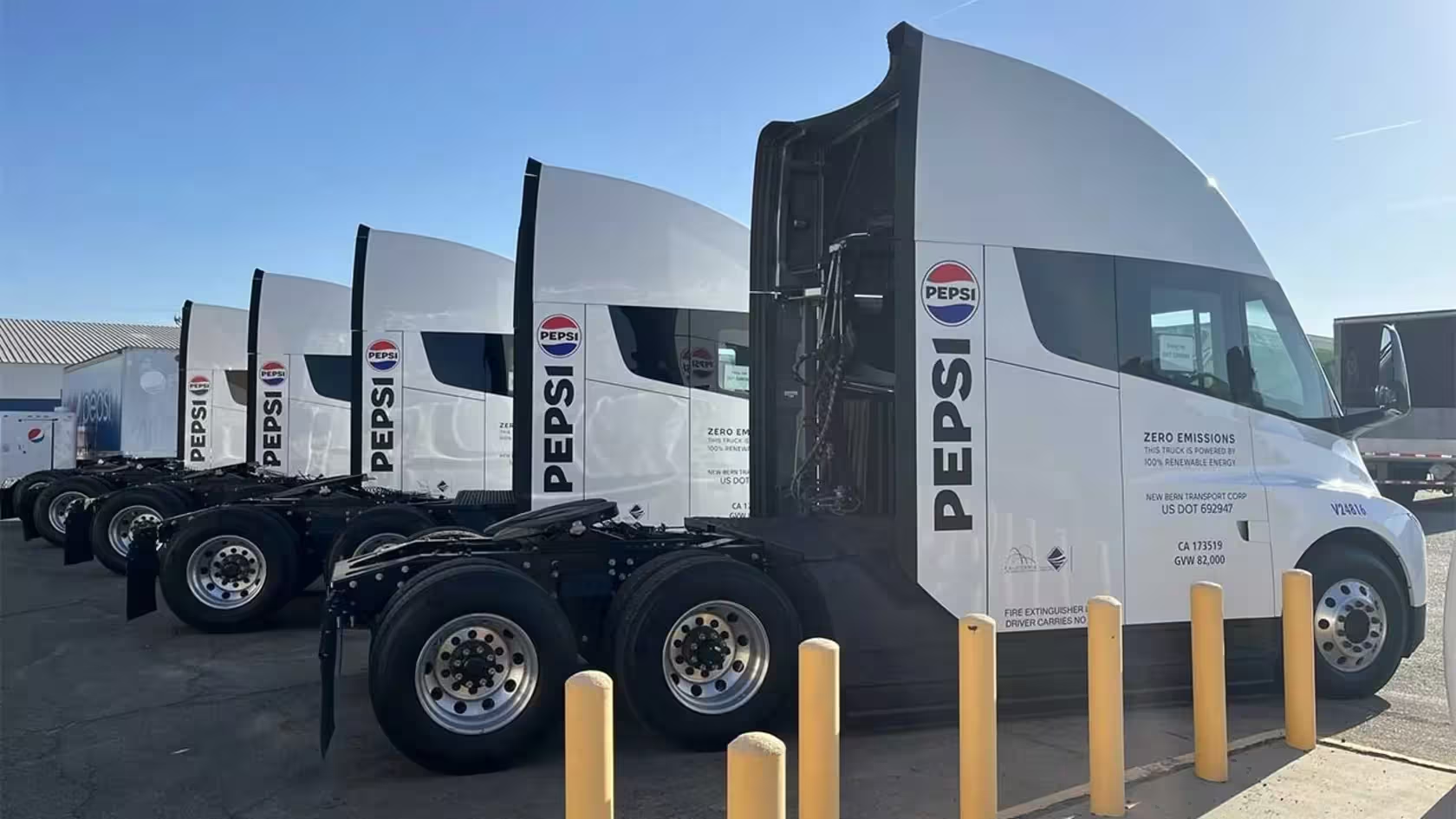
A small number of Semis have already been delivered to fleet customers, including Pepsi and DHL, as pilot units. Tesla’s stated ambition is bold: produce up to 50,000 Semis a year once the program scales. Achieving that will depend on factory throughput, supply chain stability and how quickly fleets convert from diesel.
One major headwind Tesla acknowledges is shifting economics. When the Semi was first shown, electricity pricing and diesel costs favored electric adoption more strongly. By 2026, those dynamics will be different, so Tesla plans to lean on lower maintenance costs, higher uptime and improved safety to make the total cost of ownership attractive for fleets.
Why it matters
The Semi could accelerate fleet electrification if real-world performance and charging infrastructure match Tesla’s claims. For operators focused on emissions, operating costs and reliability, the Semi brings compelling specifications: long range, fast charging, significant onboard power and autonomy-ready hardware.
Highlights:
- 523 km / 805 km range options
- 1.1 kWh per km efficiency
- 60% charge in ~30 minutes with megawatt charging
- 25 kW trailer power outlet
Tesla’s Semi is no longer just a concept. With final specs public and pilot deliveries underway, the truck is on the brink of testing whether electric heavy hauling can truly replace diesel at scale.


Leave a Comment
Comments
No comments yet. Be the first.