
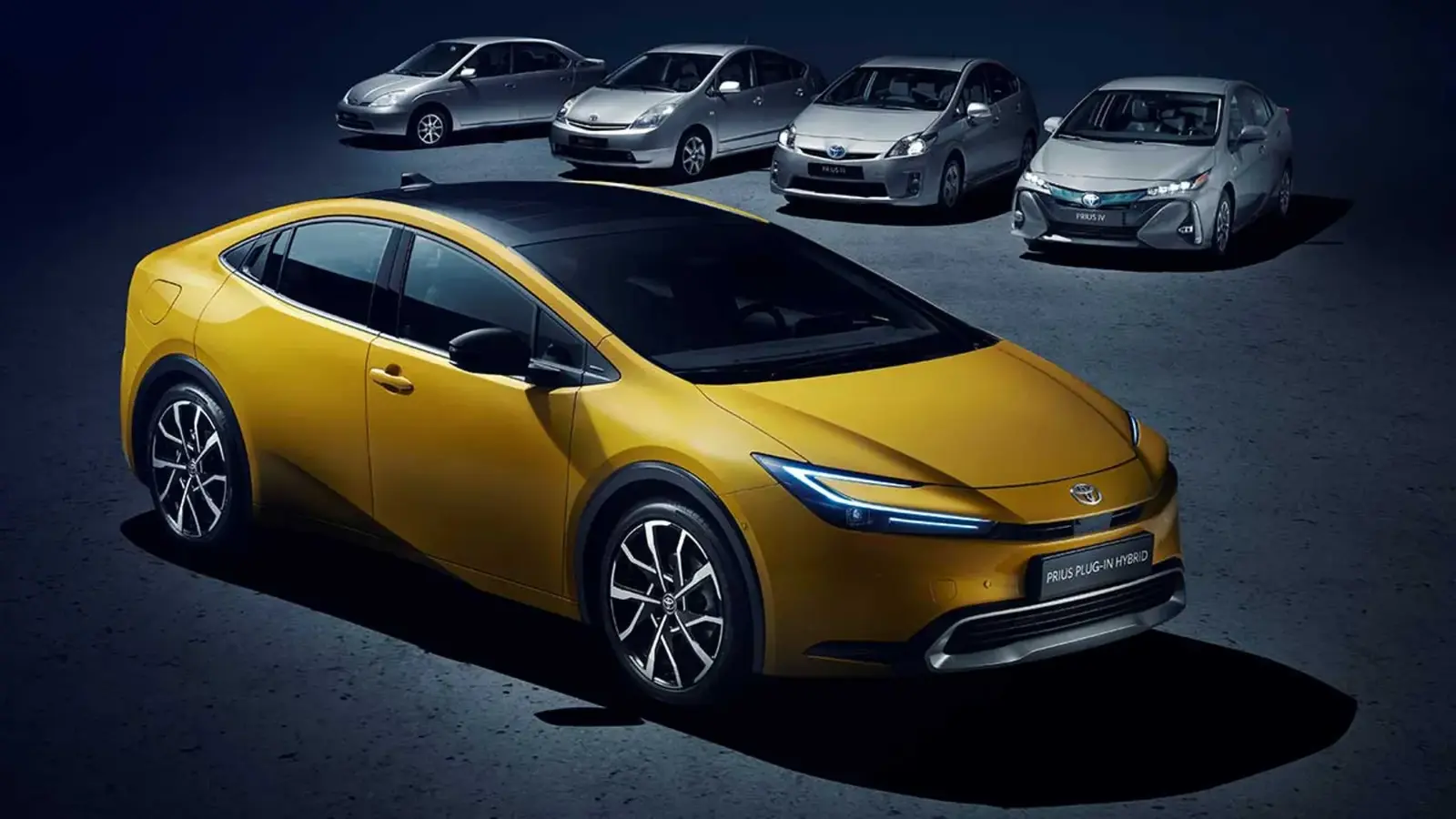
Auto Express names Prius the most influential modern car
In a surprising and widely debated decision, Auto Express has declared the Toyota Prius the most influential modern car in the world. The choice sparked reactions across automotive media — from The Mirror and The Times to outspoken pundits like Jeremy Clarkson — because this is not a story about speed or glamour, but about impact.
How the contest worked
The competition focused on production cars that appeared on the market from 2000 onwards, with an initial longlist of 100 models. A judging panel then voted to produce a ranked list of the top 50. The Prius emerged ahead of notable contenders such as BMW’s modern Mini and Tesla’s Model S — the latter widely seen as the emblem of the EV revolution — underscoring that influence can outshine headline-grabbing performance.
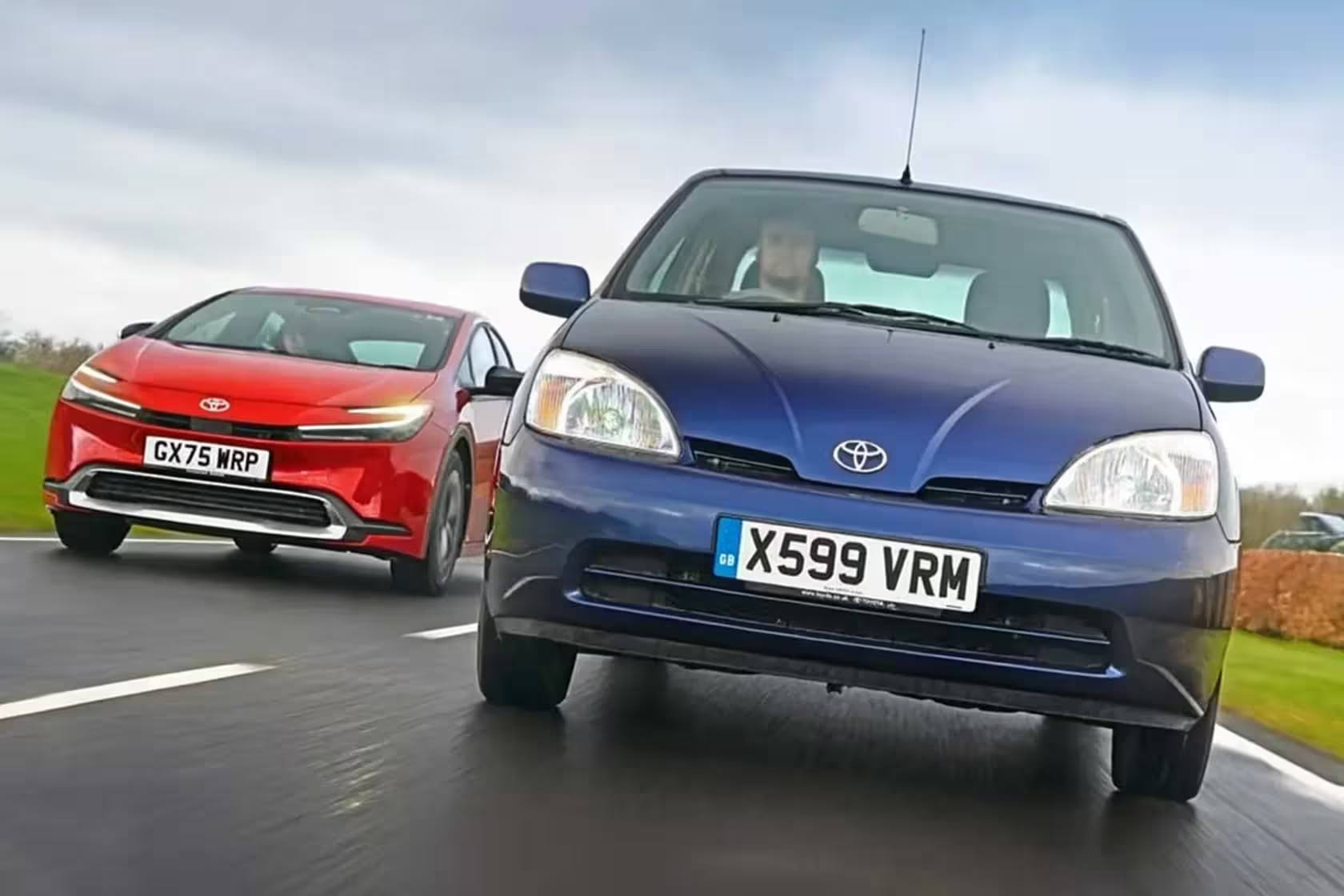
Why Prius won: pioneering hybrid technology
The heart of Prius’s victory is simple: it was first. Introduced in Japan in 1997 and launched internationally in 2000, Toyota’s hybrid hatchback took a major risk on hybrid powertrains when most manufacturers were squeezing more mileage from conventional engines. The Prius proved that a mass-market car could pair a gasoline engine with an electric motor to dramatically improve fuel efficiency and lower emissions.
It never aimed to be a sports car. Instead, it became a practical blueprint for large-scale electrification:
- Introduced hybrid power to mainstream buyers
- Demonstrated real-world fuel efficiency and emissions reductions
- Encouraged regulatory and market confidence in electrified drivetrains
- Forced competitors to accelerate hybrid and electric development
Design, performance and market positioning
Early Prius models emphasized aerodynamics, lightweight construction, and a system-level approach to efficiency rather than outright power. The hybrid system combines a petrol engine with one or more electric motors and a battery pack to deliver smoother urban performance and superior fuel economy. Over successive generations Toyota refined battery management, regenerative braking, and power electronics — technologies now central to the broader EV and hybrid market.
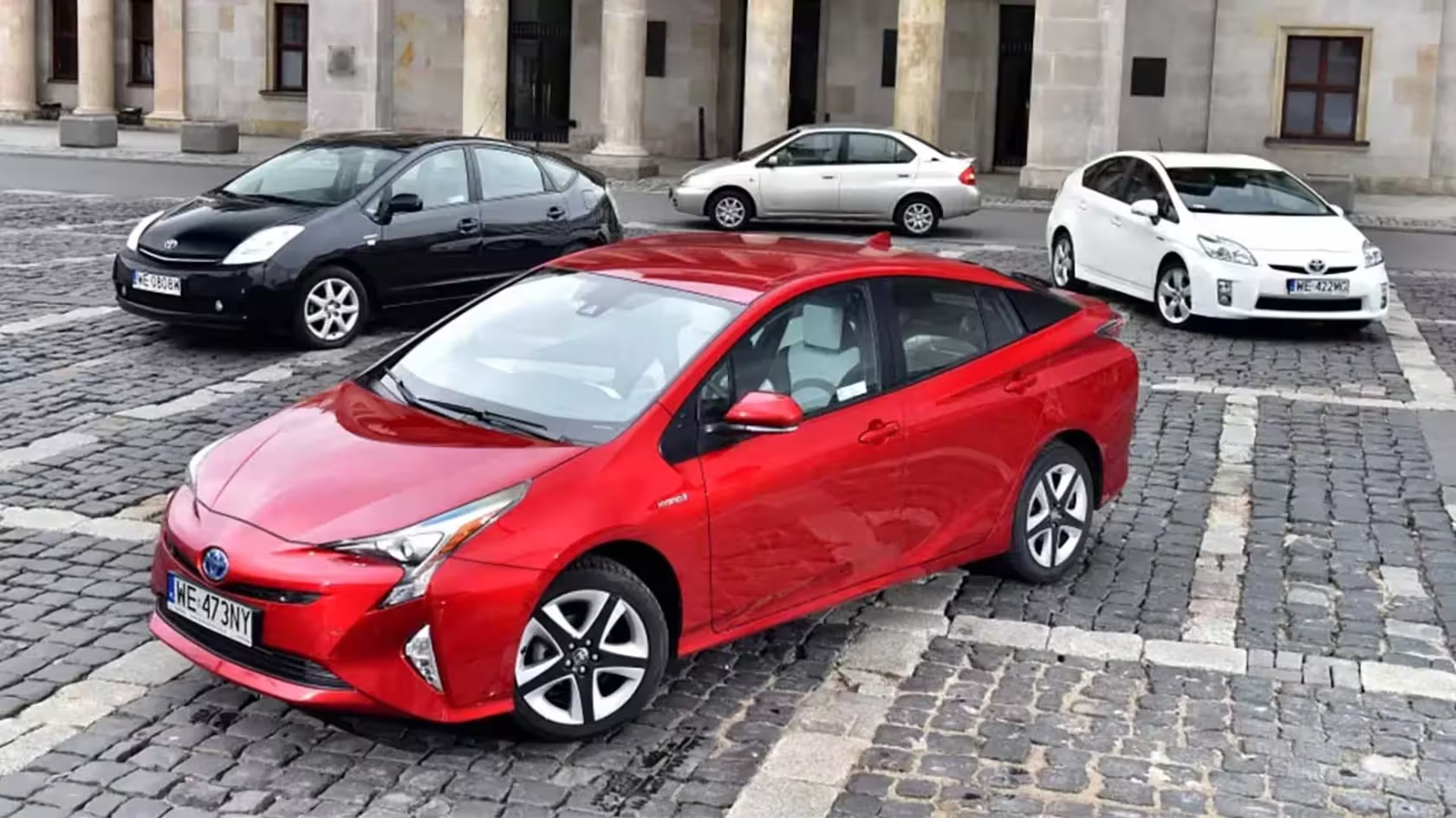
Market-wise, Prius positioned itself as an environmentally conscious family car with real-world savings on fuel costs. Its success convinced many automakers that electrification could be profitable at scale, shifting industry investment toward hybrids, plug-in hybrids, and full battery-electric vehicles.
“It wasn’t flashy, but it changed the direction of the entire industry.”
Legacy and comparison
Compared with the Tesla Model S — which redefined performance and desirability for EVs — Prius’s legacy is subtler but arguably broader. Where Tesla proved electric cars could be aspirational, Prius proved they could be everyday. That cultural and industrial shift is precisely what Auto Express recognized when naming Prius the most influential modern car.
For car enthusiasts tracking electrification, the Prius remains a reminder that transformational change often starts with practical engineering and market patience, not headlines. Whether you love or mock the Prius, its role in kickstarting the mainstream electrification of transport is undeniable.


Leave a Comment
Comments
No comments yet. Be the first.