

Meet the Horizon OVO — a new chapter in aviation design
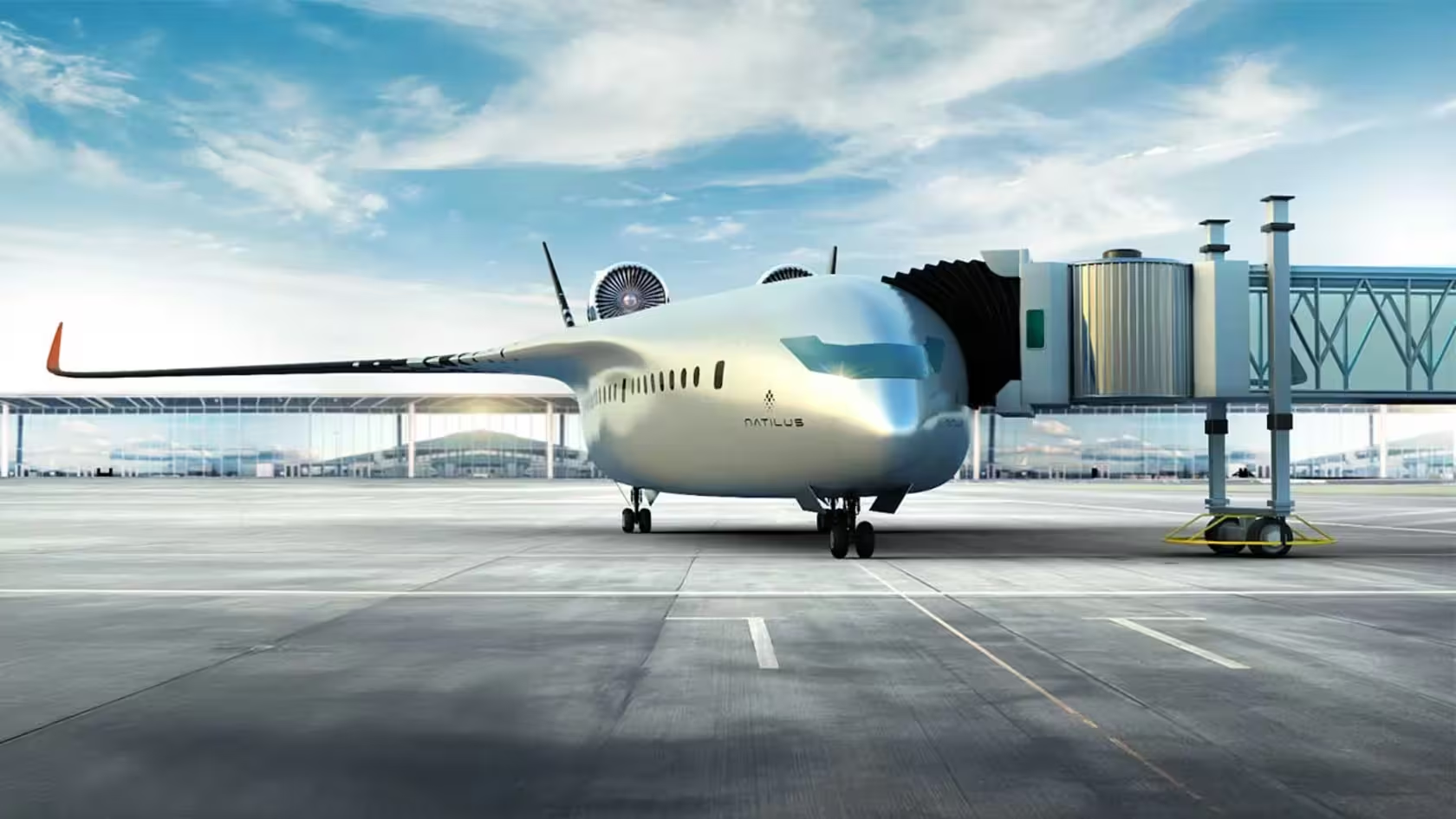
Nautilus, a U.S. aerospace startup, has unveiled the Horizon OVO: a two-deck blended-wing aircraft designed to carry passengers and cargo simultaneously. Backed by a $28 million funding round, the company says this radical layout could reshape short- and medium-haul aviation by combining superior aerodynamics with flexible payload capability.
Why the blended-wing concept matters
Unlike conventional tube-and-wing airliners, a blended-wing—or wing-body—aircraft integrates the fuselage into the wing so that the entire structure contributes to lift. The result is lower aerodynamic drag, improved fuel economy, and a larger usable interior volume. For airlines and fleet planners focused on operational efficiency and lifecycle cost, these gains translate directly into better fuel efficiency, lower emissions, and reduced operating costs.

"This isn't just a new shape—it's a rethinking of how aircraft can serve both passengers and freight in a single mission," says an aviation analyst. That hybrid approach has obvious appeal to carriers looking to diversify revenue per flight without overhauling airport infrastructure.
Design and passenger experience
Horizon OVO takes the blended-wing idea a step further by adding a second deck. The upper level is dedicated to passengers while the lower deck accommodates freight—up to 12 standard cargo containers. Nautilus says the design narrows the cabin profile enough to address a common criticism of earlier blended-wing layouts, where some seats sat too far from emergency exits. Narrowing the cross-section preserves interior volume while improving evacuation paths and increasing the number of window seats.
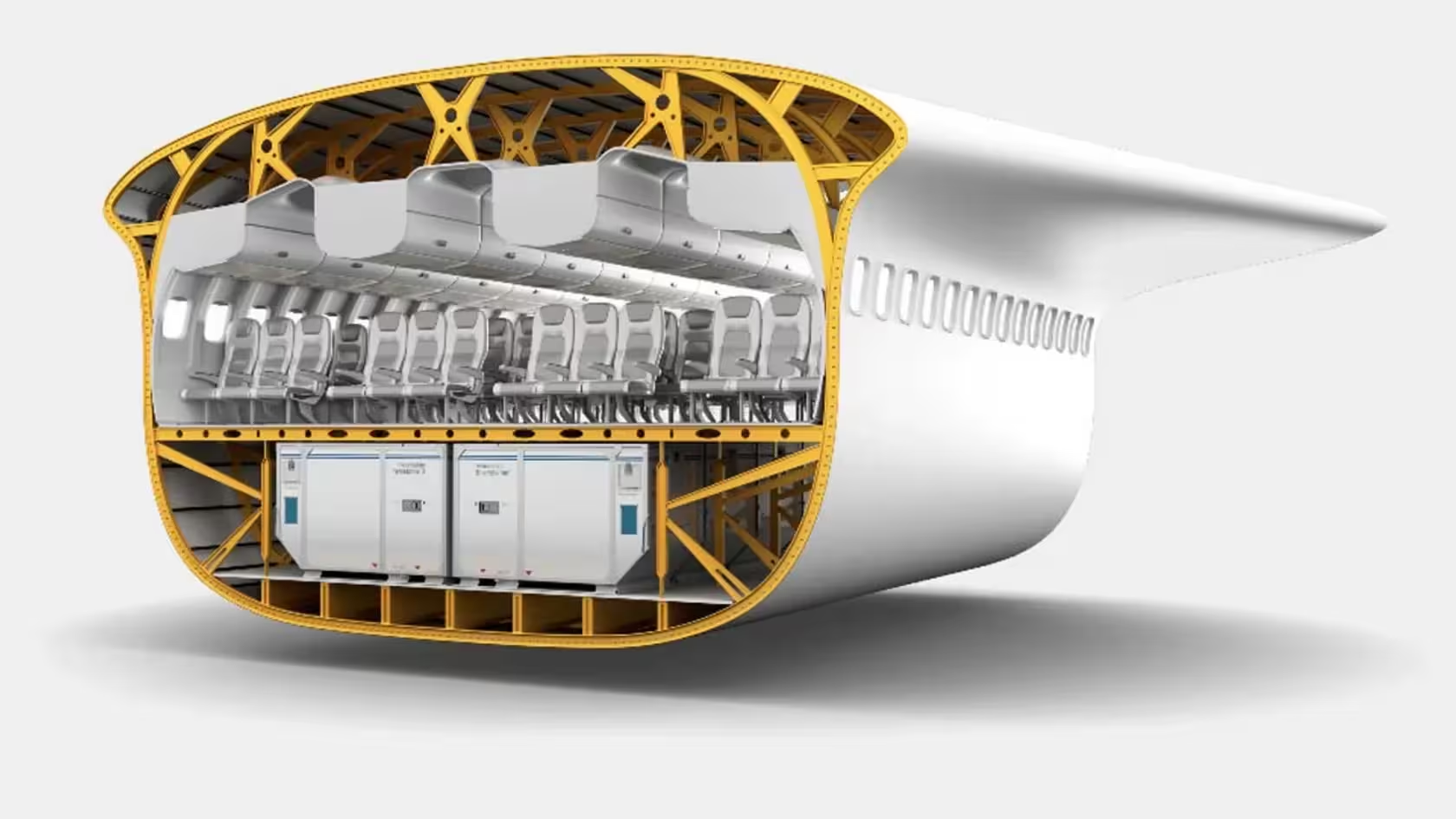
The two-deck format also provides a safety benefit in emergency water landings; more of the hull volume remains buoyant which can improve survivability during a ditching scenario.
Technical highlights and performance
- Materials: carbon-fiber composites for a lightweight, strong airframe
- Propulsion: two powerful turbofan engines
- Interior volume: ~40% greater than a typical single-aisle narrowbody
- Fuel burn: approximately 30% lower than comparable narrowbodies
- Operating cost: projected reductions up to 50% in certain metrics
- Cruise speed: about 980 km/h (approximately Mach 0.8)
- Range: roughly 6,500 km
- Capacity: 150–250 passengers depending on cabin layout
- Cargo capacity: up to 25 metric tons and space for 12 standard containers
These figures position Horizon OVO as a potential game-changer for medium-range routes where both passenger demand and cargo opportunity exist.
Market positioning and fleet implications
Nautilus aims to enter service in the early 2030s, targeting a projected market shortfall of some 17,000 narrowbody aircraft over coming decades. Airlines facing fleet renewal or expansion might view a blended-wing twin-deck as a way to increase revenue per trip while cutting fuel and maintenance costs—making it attractive for both passenger-focused and cargo-integrated business models.
For automotive-minded readers interested in aerodynamics, materials, and efficiency, Horizon OVO showcases trends that echo modern vehicle design: lightweight composites, integrated aerodynamic shaping, and multi-role utility that prioritizes total cost of ownership.
Final thoughts
The Horizon OVO is not an incremental update—it's an ambitious reimagining of the airliner. If the technical and regulatory challenges can be overcome, it could offer airlines a powerful tool to serve mixed passenger-cargo markets more efficiently. Expect more prototypes, wind-tunnel testing, and regulatory milestones in the coming years as Nautilus moves from concept to certified product.
Highlights:
- Blended-wing design for lower drag and higher volume
- Twin-deck layout: passengers above, cargo below
- Major fuel and operating-cost advantages claimed by the manufacturer
Whether you follow aircraft design, fleet strategy, or simply love engineering innovation, the Horizon OVO is a concept worth watching as aviation approaches its next big shift.


Leave a Comment
Comments
No comments yet. Be the first.