
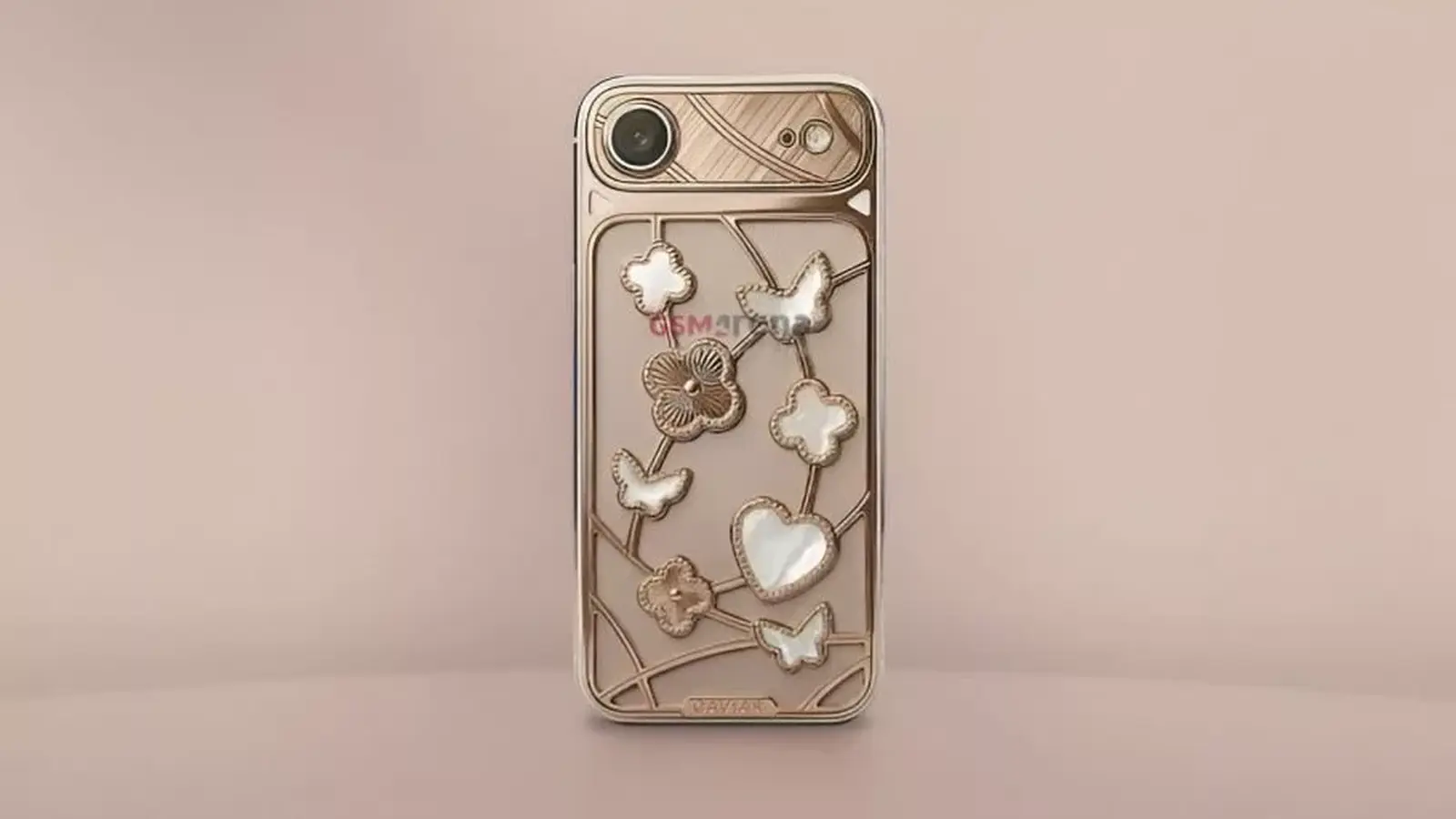
It costs more than some cars. That blunt number—$11,213—sits at the heart of Caviar’s latest stunt: a one-off iPhone Air reworked into a wearable piece of Art Nouveau jewelry.
The phone isn’t merely plated. Designers wrapped its back in neutral-toned calf leather, inlaid mother-of-pearl, layered 24K gold decorative elements and engraved minute filigree before finishing everything by hand. The effect intentionally echoes Alphonse Mucha’s flowing lines and floral motifs, translating turn-of-the-century ornament into 21st-century tech couture.
Why would anyone buy this? Collectibility. Statement. Craftsmanship. The handset is configured with 1TB of storage, and every trim piece is assembled by hand so that each tiny imperfection becomes part of its singular identity. In short: it’s built to be owned rather than used as a daily-driver.
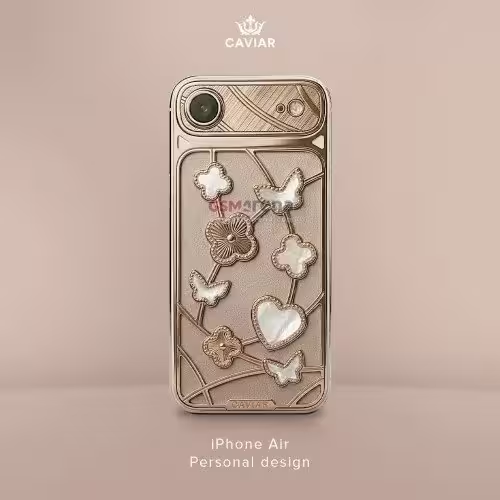
Caviar has carved out a niche selling luxury takes on mainstream flagships—gold, diamonds, limited runs aimed at wealthy collectors across the Middle East, Russia and Europe. This iPhone Air continues that pattern: one unit only, priced well above typical premium smartphones, drifting into the world of auction-room rarities rather than retail counters.
There’s a theatrical quality to the design process. Imagine a conservator restoring a vintage poster, but the canvas is aluminum and glass. Elements of mother-of-pearl catch light like punctuation. The 24K accents read like jewelry rather than industrial trim. Close your eyes and you can almost hear the chisel tapping.
Is this practical? Not really. That’s the point. It’s a cultural artifact wrapped in tech hardware—an object that says more about taste and wealth than about megahertz or megapixels. For buyers who collect limited editions, that narrative is the product.
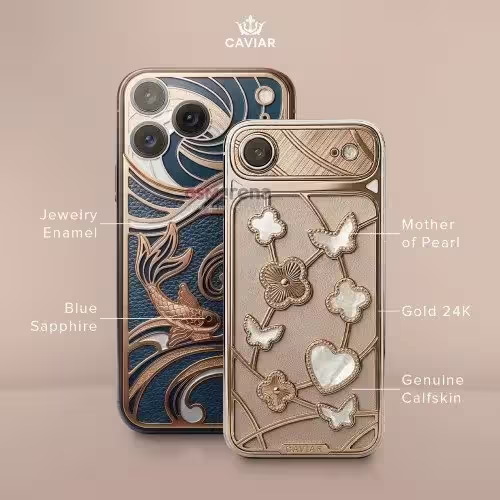
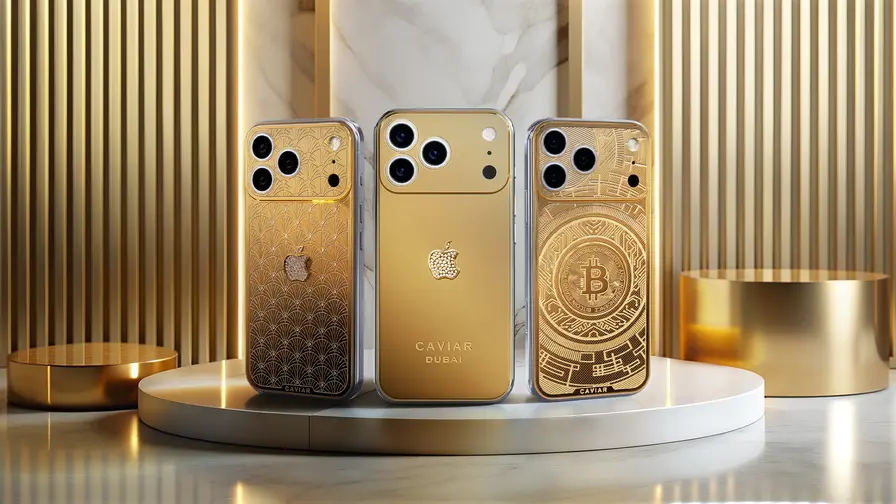
Caviar’s recent cadence shows the brand doubling down on such theatrics: last week’s Valentine’s release of a gold-and-diamond iPhone 17 Pro was more red-carpet prop than phone plan accessory. Expect this iPhone Air to follow the same path—exhibited, photographed, traded among collectors rather than slipped into pockets.
If the handset is a museum piece in smartphone form, it also raises a question about the future of luxury tech: will handcrafted, single-unit objects become a parallel ecosystem to mass-market devices? Time, and the collectors who write the checks, will tell.

Leave a Comment
Comments
No comments yet. Be the first.