
3 Minutes
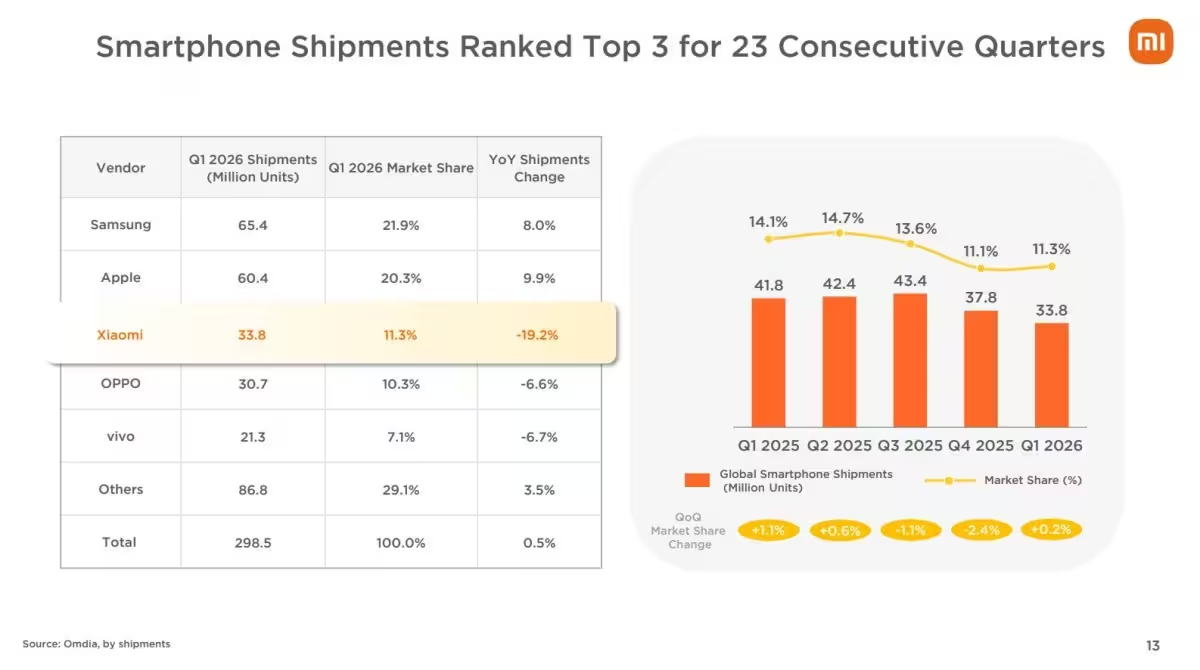
Component costs have been biting hard. Xiaomi moved 33.8 million phones in Q1 2026, a 19.2% drop from the same quarter last year. Sharp. Uncomfortable. Yet the numbers don’t tell the whole story.
Despite the steep decline — the largest among the global Top 5 — Xiaomi kept third place, with enough cushion to stay ahead of Oppo and vivo, which fell by 6.6% and 6.7% year on year respectively. Samsung and Apple, by contrast, grew shipments by 8.0% and 9.9%. Volume slipped; the competitive pecking order barely shifted.
Regionally the picture is mixed. Xiaomi sits at number two in Latin America, number three across Europe, Africa, the Middle East and Southeast Asia, and number four in India. At home in China it held roughly a 16% market share at the end of March — good, but not dominant.
Here’s the twist: while units fell, the average selling price climbed. After ending 2025 with an ASP of CNY 1,211, Xiaomi pushed that up to CNY 1,310 in Q1 — about an 8% rise year over year. Higher prices per device helped offset weaker volumes. That balancing act—trading volume for margin—will define the near-term strategy.

Fewer phones, pricier phones, and a tighter bottom line.
Xiaomi’s wearables and audio business still shows muscle. The company remains a top-three smart band maker globally and number two in China, while its true wireless earbuds rank second both worldwide and at home. Those categories are steady revenue streams when handset growth stalls.
Tablets, however, tell a different tale. Xiaomi fell out of the global top three to fifth place after a 13.6% decline. Huawei surged ahead with a 28.6% jump into third, and Lenovo climbed 20.0% to fourth. The tablet segment is reshuffling fast, and Xiaomi needs fresh product momentum to reclaim ground.

Outside phones and tablets, Xiaomi’s EV arm shipped 80,856 vehicles in Q1. The YU7 series raced past the SU7 as the top seller — a reminder that the company’s automotive push is gaining traction and shifting the revenue mix in subtle ways.

Financially the toll was clear. Revenue for the quarter was CNY 99.1 billion, with profit of CNY 6.1 billion. That profit figure slid 43.1% from Q1 2025, which saw CNY 10.7 billion on CNY 111.3 billion in revenue. Margins are under pressure even as the company lifts its price points.

So what’s next for Xiaomi? Push premium phones harder and hope higher ASPs offset shrinking volume? Lean into wearables and TWS while rebooting tablet strategy? Or accelerate EV investment as a longer-term growth anchor? The company has options. Execution will decide whether Q1 becomes an outlier or a preview of a tougher year ahead.


Leave a Comment
Comments
No comments yet. Be the first.