

3 Minutes
They built the ketogenic diet to shrink fat stores, not to shield synapses. Yet researchers scanning the literature found a surprising pattern: metabolic tinkering through fat and low carbs might blunt the mechanisms that wreck brains.
Scientists at the University of Coimbra in Portugal compiled dozens of studies probing the ketogenic diet’s relationship to neurodegenerative disorders — think Alzheimer’s, Parkinson’s, Huntington’s. Their interest wasn’t weight loss. It was metabolism: how the body and brain handle energy, and whether rerouting that traffic away from glucose toward ketones changes disease trajectories.
Put simply, the ketogenic diet forces a fuel switch. Cut carbs hard enough and the liver converts fats into ketone bodies, which cells can burn in place of glucose. The state, ketosis, is familiar to clinicians because ketogenic regimens are effective for some forms of epilepsy. But could those same biochemical shifts protect aging neurons?
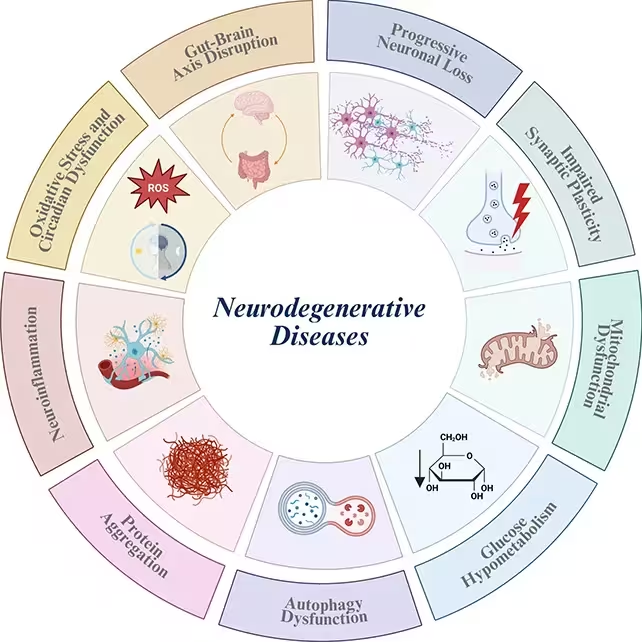
Evidence points in multiple directions. When glucose processing falters — a common theme in neurodegeneration — ketones can act as an alternative energy source, stabilizing neuronal activity in experimental Alzheimer’s models. In animal experiments, ketones also tamp down neuroinflammation, enhance autophagy (the cell’s garbage-disposal and recycling system), and reshape gut microbes in ways that favor brain health. Each of those effects targets a different fault line in diseases that progressively erode cognition and motor control.
There’s biological plausibility, then. And an accumulation of preclinical studies that together sketch how a high-fat, low-carb metabolic state might increase the brain’s resilience. The authors summarize this as the ketogenic diet offering a metabolically oriented strategy with both preventive and therapeutic potential for neurodegenerative conditions.
That enthusiasm comes with clear caveats. Most of the studies in the review are preclinical. Translation from mice to humans is notoriously tricky. Compliance is another hurdle: strict ketogenic regimens are among the hardest diets to maintain. Side effects — constipation, sleep disruption, elevated cholesterol for some people — are not uncommon. Longer-term observational work has even raised concerns that extreme low-carb, high-fat patterns could increase risks for type 2 diabetes and cardiovascular disease in certain populations.

While animal models show promise, robust clinical trials are still required to determine whether ketogenic therapies are safe, practical, and effective for people at risk of or living with neurodegenerative disease.
So where does this leave clinicians and curious readers? The review paints a picture of potential, not prescription. It highlights specific metabolic mechanisms worth targeting in future human trials, and suggests that ketogenic strategies might one day complement disease-specific drugs by boosting metabolic resilience and symptom management. But it also signals the need to optimize protocols — for example, intermittent or modified ketogenic approaches that deliver benefits without intolerable side effects.
Science rarely hands us a miracle in a brown paper bag. What the new review does offer is direction: testable hypotheses, mechanistic clues, and a roadmap for clinical investigation. If future trials confirm benefit, ketogenic-based interventions could become another tool in the fight against neurodegeneration. For now, though, the prudent move is measured curiosity rather than wholesale adoption — and rigorous research rather than guesswork leading the way.


Leave a Comment
Comments
No comments yet. Be the first.