
4 Minutes
Imagine a gray plume rising as a lander settles onto the lunar soil—dust spewing, optics blinded, and tiny rocks flung like confetti. That messy, dangerous moment is exactly what NASA wants to understand before humans start living on the Moon for months at a time.
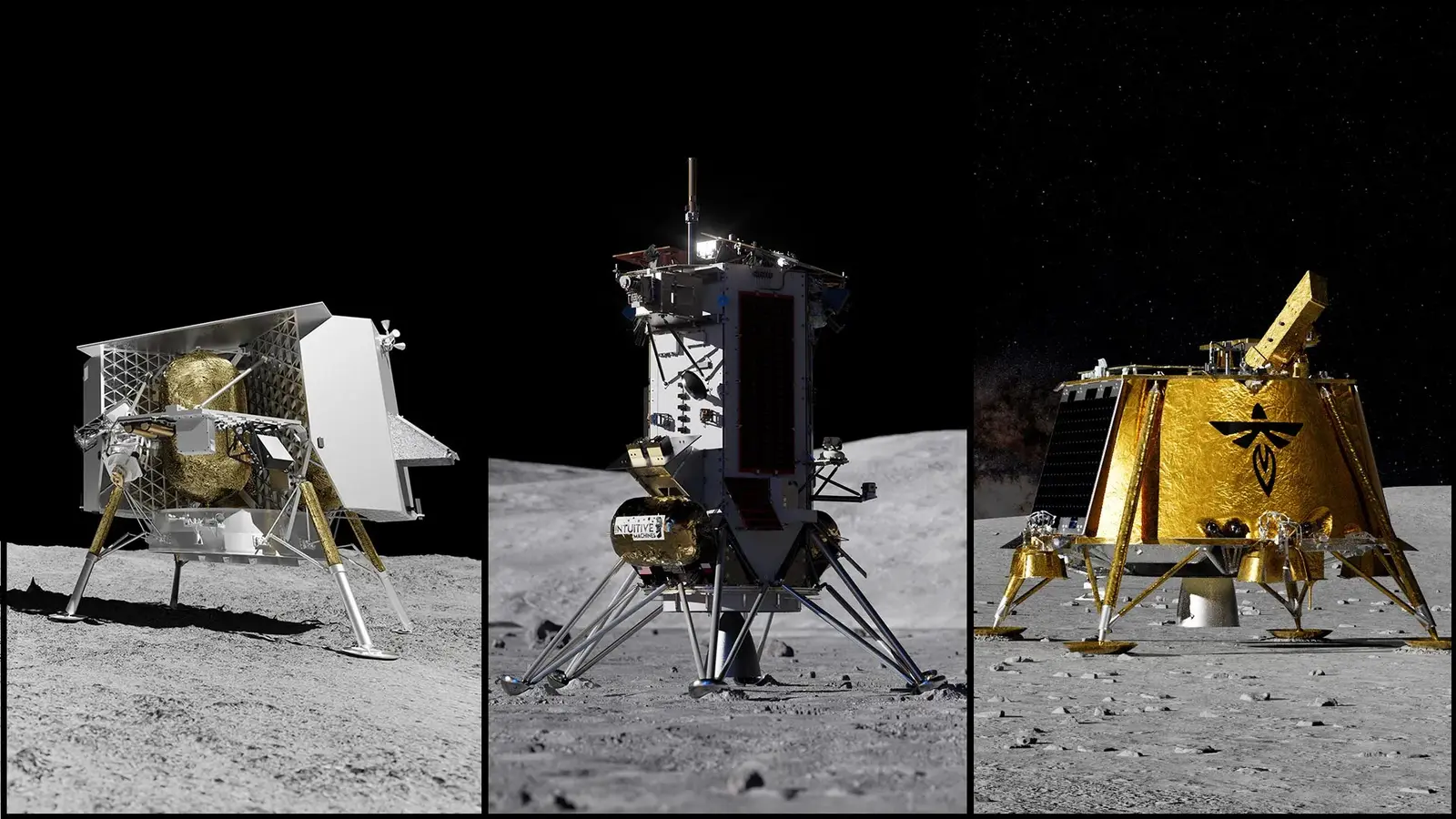
On June 30, NASA handed nearly $600 million to three commercial partners—Astrobotic, Firefly Aerospace and Intuitive Machines—to fly four CLPS (Commercial Lunar Payload Services) missions targeted for late 2028. These are not one-off hops. They’re the next step in building a proving ground where engineers, scientists and private companies learn how to operate reliably on another world.
Astrobotic will fly two of the missions with a combined award of $297.9 million. Firefly received $144.2 million for one delivery, and Intuitive Machines was awarded $148.3 million for a fourth flight. Each company will use upgraded versions of landers that have already flown—faster iterations, lessons applied, risks shaved away.
Why repeat flights with similar hardware? Because repetition turns mystery into data. Each of the four landers will carry the same three NASA science instruments to different lunar locations: a stereo camera suite to watch how engine plumes scour the surface, a passive laser retroreflector array to act as precise location markers, and a compact radiation spectrometer to measure the space environment where astronauts will someday live and work.
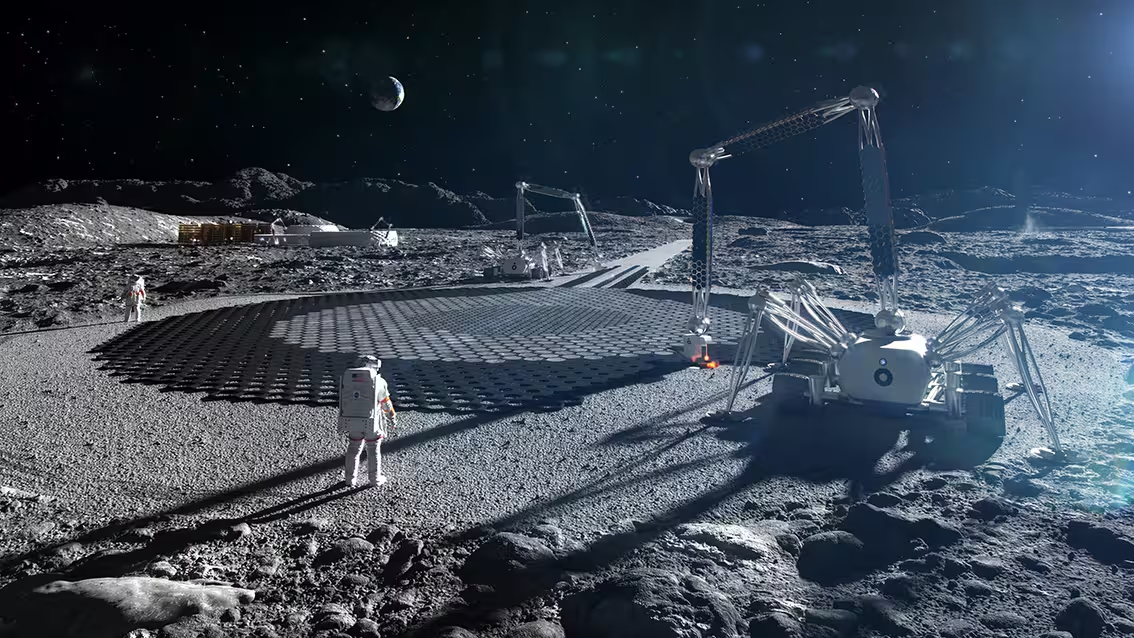
The Stereo Camera for Lunar Plume Surface Studies (SCALPSS) uses four synchronized eyes and stereo photogrammetry to build three-dimensional views of how exhaust interacts with regolith. Different engine sizes, propellants and landing slopes will be observed. The aim is simple: predict where dust goes so habitats, solar arrays and critical hardware don’t get buried or damaged by neighbors arriving next door.
The Laser Retroreflector Array (LRA) is almost charming in its simplicity. Cookie-sized and passive, each unit houses eight quartz corner-cube prisms in a dome. No power needed. Orbiters and landers can bounce laser beams off these reflectors to sharpen navigation and pin down locations across the surface—think of them as permanent survey markers for the Moon.
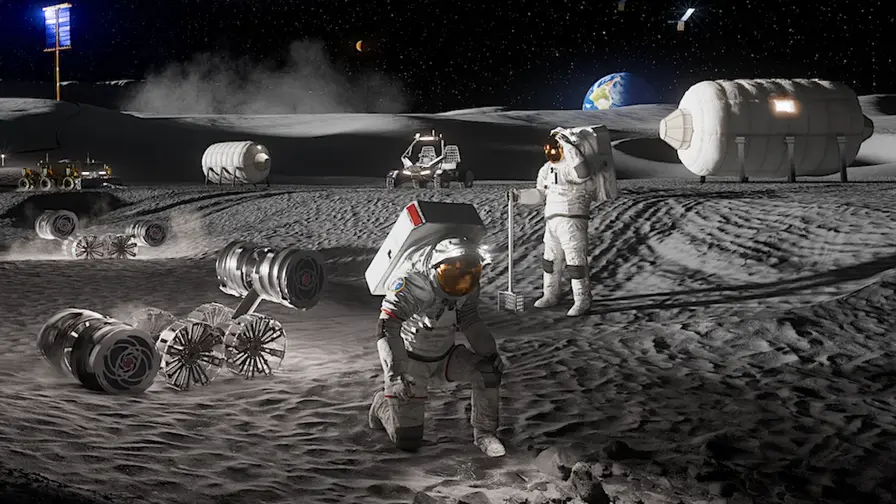
Radiation is another non-negotiable. The Linear Energy Transfer Spectrometer (LETS) is a small silicon detector that reads the energy and type of incoming particles. Different approach angles and surface spots sample different radiation conditions. These measurements feed designs for shielding, operational timelines and risk assessments for the humans who will follow.
There’s more than instruments in the plan. NASA now has 17 planned surface deliveries on the books with multiple commercial teams, and it’s sketching out additional solicitations: a PROMISE polar rover concept inspired by the Mars rovers, landers to test power and avionics systems, an optical imager for the South Pole, and even proposals for a lunar communications and navigation relay constellation.
“We’re building a proving ground for Moon Base operations,” Ryan Stephan, acting director of cargo landers for NASA’s Moon Base effort, explained: faster ordering, more launches, quicker learning cycles. The logic is clear—practice on many missions reduces surprises on crewed flights.
Flying identical, flight-proven payloads to multiple sites will knit together a network of environmental and navigational data essential for sustained human operations on the Moon.
Think of it like weather stations scattered across a new continent. Dust behavior, radiation levels and precise location markers will help planners decide where to place habitats, how to design landing corridors and when it’s safe to send astronauts beyond short sorties.
These commercial missions are both scientific and infrastructural. They serve immediate research goals while laying foundational services—navigation beacons, environmental sensors and tested logistics—that future explorers, entrepreneurs and scientists will rely on. The Moon is becoming a workshop where failure is learning and iteration is the currency.
There’s a certain thrill in watching that first cloud of lunar dust settle. It tells a story about engineering, risk and the stubborn human habit of pushing outward. The next plume NASA studies could help ensure the plumes that follow don’t strand the pioneers who will call the Moon home.


Leave a Comment
Comments (2)
Is this even true? Repeating landers to map dust makes sense, but who pays for cleanup or repairs if a plume buries gear? if that's real...
Whoa, that dust plume bit is wild! Wonder how solar panels survive the spray... risk math pls NASA